
UNESCO World Heritage Sites in Myanmar
Heritage Overview
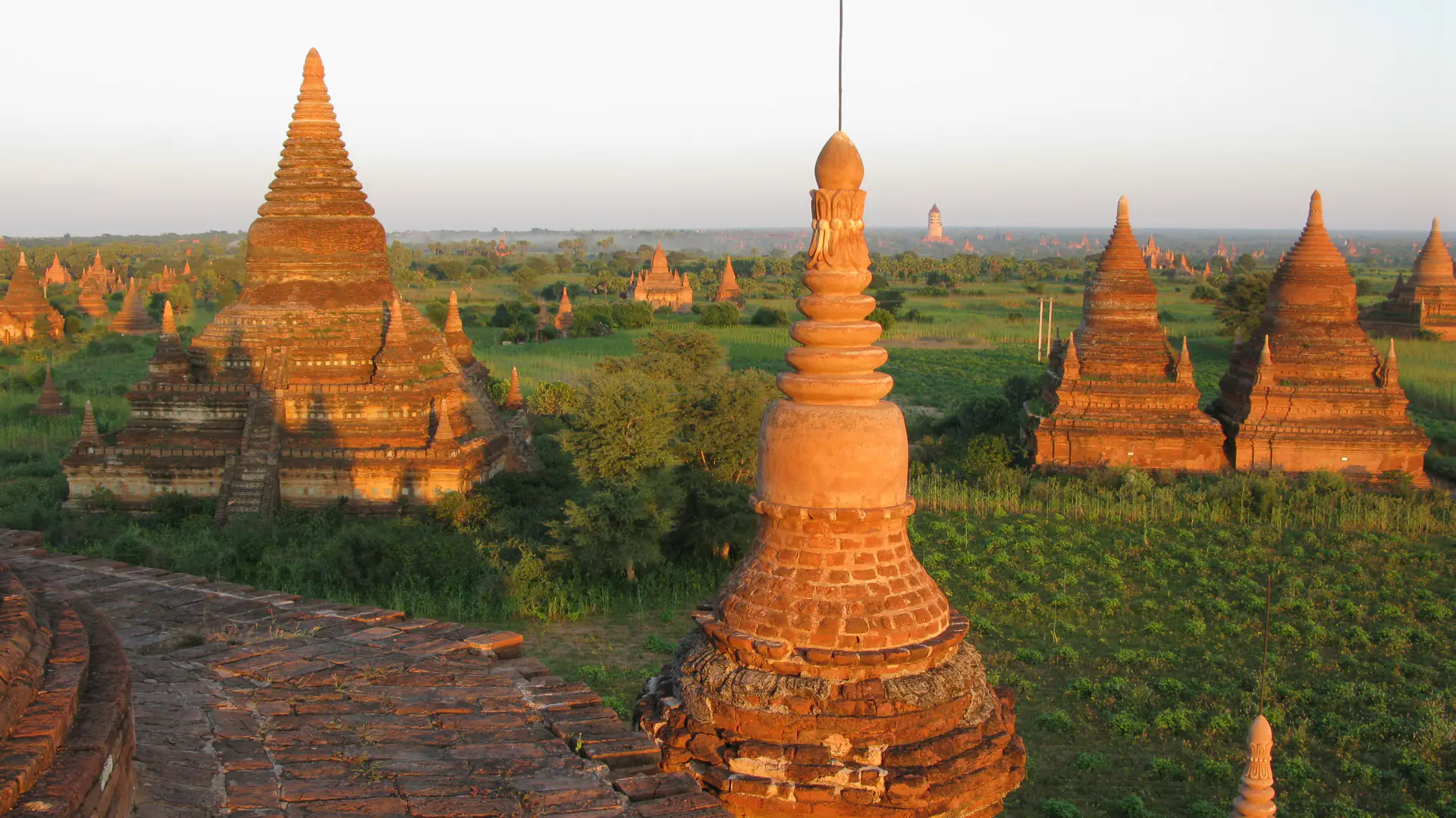
Myanmar preserves some of Southeast Asia's most remarkable Buddhist heritage, with ancient temple cities, wooden monasteries, and living religious traditions that have shaped Theravada Buddhism across the region. The Pagan Kingdom's construction of over 10,000 Buddhist monuments during the 11th-13th centuries created one of the world's densest concentrations of religious architecture, while later capitals like Mandalay maintained royal Buddhist patronage traditions. The archaeological landscape of Bagan represents the pinnacle of Burmese Buddhist civilization, where successive kings and donors built temples to accumulate religious merit in a practice that influenced Buddhist traditions throughout mainland Southeast Asia. These monuments preserve exceptional murals, sculptures, and inscriptions documenting the cultural flowering of medieval Burma and the establishment of Theravada Buddhist orthodoxy. Myanmar's heritage conservation faces unique challenges balancing religious function, tourism development, and authenticity concerns. The 2016 earthquake damaged hundreds of Bagan's temples, prompting international cooperation for restoration, and the strong March 2025 earthquake centered near Mandalay also affected the wider region. Travel conditions vary by region, so travelers should check current official advice before visiting, while recognizing that heritage sites remain important to local communities and Buddhist practitioners.
Essential Information
Visa Requirements
Most visitors require a visa for Myanmar, obtainable as an e-Visa through the official Myanmar eVisa website. The tourist e-Visa costs $50 USD, is valid for 28 days, and allows entry through Yangon, Mandalay, and Naypyidaw international airports. Processing typically takes 3 business days. Passports must be valid for at least six months beyond arrival date with at least two blank pages. Keep a printed copy of your e-Visa approval letter. Note: Conditions in parts of Myanmar can change quickly—check current travel advice from your government before planning travel.
Currency
The official currency is the Myanmar Kyat (MMK). ATMs are available in major cities and tourist areas but can be unreliable and may dispense only limited amounts. Most payments, including the Bagan archaeological zone fee, are made in kyat, though some hotels quote prices in US dollars. Bring clean, unmarked, recent-issue USD notes to exchange, as older or damaged bills are often rejected. Credit cards have very limited acceptance. Exchange services available at airports and licensed money changers in cities. Carry sufficient cash when visiting Bagan and other heritage destinations.
Language
Burmese is the official language, written in a distinctive rounded script. English proficiency is common in tourist areas, particularly among guides at heritage sites, hotel staff, and in restaurants catering to visitors. Heritage site signage is typically in Burmese and English. Tour guides at Bagan generally speak good English. Learning basic Burmese phrases (*mingalaba* for hello, *kyay zu tin bar day* for thank you) is appreciated by locals and enhances cultural connection.
Climate
Myanmar has three seasons: hot (March-May with temperatures exceeding 40°C), rainy (June-October with monsoon conditions), and cool (November-February with pleasant temperatures 20-30°C). The cool season offers ideal conditions for heritage visits with comfortable temperatures, minimal rainfall, and clear skies for sunrise and sunset photography at Bagan. Hot air balloons over Bagan operate mainly during this season (around November-February). Pack sun protection for temple visits, modest clothing covering shoulders and knees, and a flashlight for dark temple interiors.
Featured Heritage Sites
Last updated: 1 October 2026