
UNESCO World Heritage Sites in Vietnam
Heritage Overview
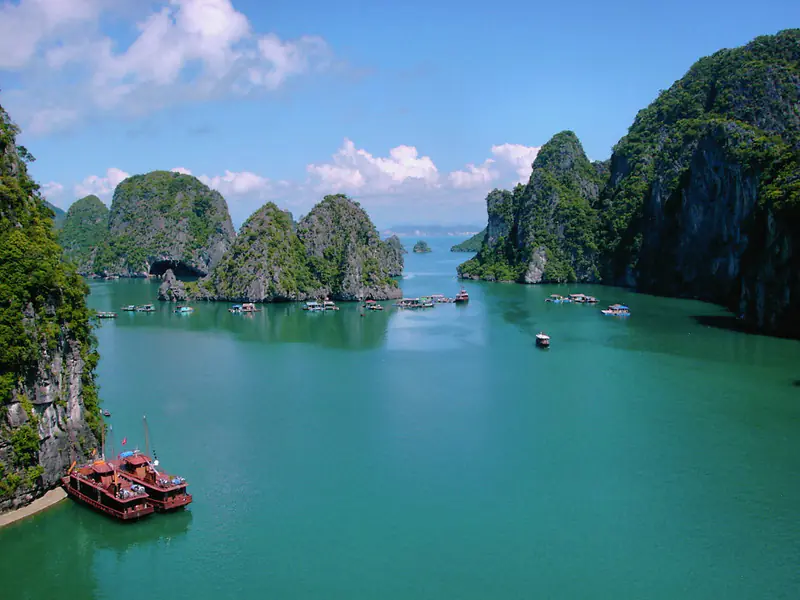
Vietnam's heritage reflects thousands of years of civilization shaped by diverse ethnic traditions, Chinese cultural influences, and later French colonial impact, all unified by resilient indigenous identity. The country's dramatic geography—from misty limestone karsts to tropical coastlines—frames exceptional natural heritage alongside ancient imperial cities and traditional villages. Successive dynasties established sophisticated urban centers with elaborate palace complexes, temples, and tombs demonstrating mastery of geomantic principles and architectural refinement. The Nguyen emperors created the imperial citadel at Hue, while earlier Cham civilization left remarkable Hindu temple complexes along the central coast. Traditional villages preserve vernacular architecture and agricultural landscapes representing centuries of harmonious human-nature relationships. Vietnam's natural heritage encompasses spectacular geological formations and diverse ecosystems supporting endemic species. The nation balances rapid economic development with conservation efforts, recognizing heritage tourism's economic importance for local communities. Vietnamese expertise in tropical monument conservation and traditional craft preservation contributes to regional heritage management practices while maintaining authentic cultural traditions that remain integral to contemporary Vietnamese identity.
Essential Information
Visa Requirements
Most nationalities require a visa for Vietnam. E-visas are available for citizens of 80+ countries through the official immigration portal, valid for 90 days with single or multiple entries. Processing takes 3 working days and costs $25 USD. Citizens of select ASEAN nations and a few others enjoy visa-free entry for 15-30 days. Passports must be valid for at least six months beyond arrival. Visa on Arrival requires a pre-approved letter from a Vietnamese travel agency. For extended stays, visa extensions are possible through travel agencies or immigration offices within Vietnam.
Currency
The official currency is the Vietnamese Dong (VND). ATMs are widely available in cities and tourist areas, dispensing dong. Credit cards (Visa, Mastercard) are accepted at hotels, restaurants, and larger establishments in urban areas, but cash remains essential for smaller vendors, markets, and rural regions. Large denominations (VND 500,000 notes) are common—verify change carefully. US dollars are sometimes accepted at tourist businesses but generally at unfavorable rates. Currency exchange is available at banks, jewelry shops, and hotels. Bargaining is expected at markets; heritage site entry fees are fixed.
Language
Vietnamese is the official language, a tonal language with regional dialect variations. English proficiency is growing in tourist areas, major cities, and among younger generations, though limited in rural regions. French is understood by some older Vietnamese. Heritage site information is typically available in Vietnamese and English. Learning basic phrases (*xin chào* for hello, *cảm ơn* for thank you) is appreciated. Written Vietnamese uses Latin script with diacritical marks. Tour guides at major heritage sites speak English; private guides can be arranged through hotels and travel agencies.
Climate
Vietnam's climate varies significantly by region due to its 1,650-kilometer north-south length. Northern Vietnam has distinct seasons—cool winters (15-20°C) from November to February and hot, humid summers. Central Vietnam is hottest from May to August with typhoon risk September-November. Southern Vietnam maintains tropical warmth year-round (25-35°C) with wet season May-October. For Ha Long Bay and northern sites, October-April offers the best conditions. Spring (February-April) provides comfortable temperatures across regions. Pack light, breathable clothing with rain protection; layers for air-conditioned spaces and cooler evenings in the north.
Featured Heritage Sites
Last updated: 12 December 2025