
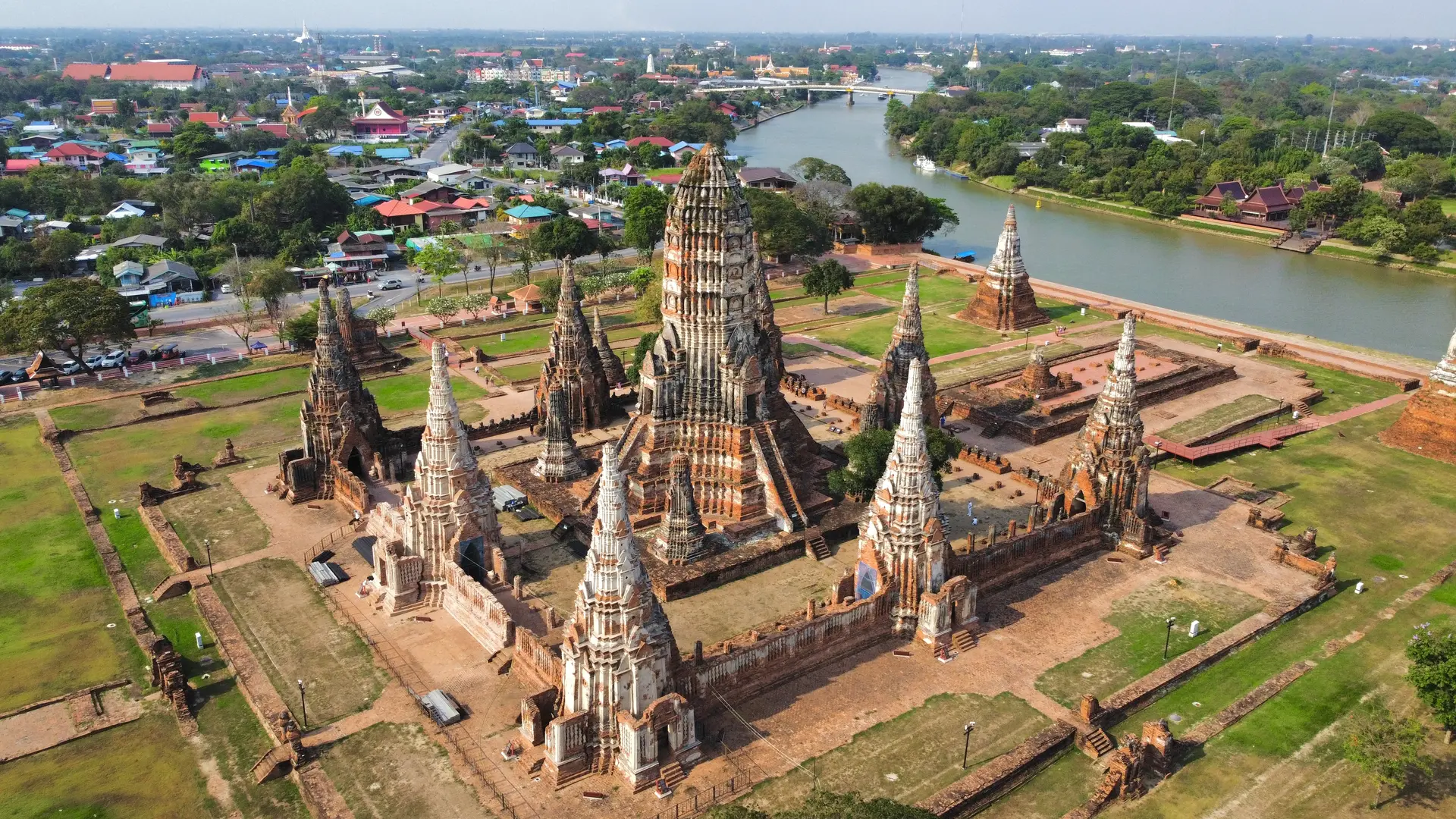
Thailand • UNESCO World Heritage Site
Historic City of Ayutthaya: Temple Ruins & Siamese Capital
Sacred Island with Haunting Buddha Statues and Ancient Wats
Inscribed: 1991
Category: Cultural
ID: #576
What Is Historic City of Ayutthaya and Why Visit?
King U Thong founded Ayutthaya in 1350 as the capital of the Siamese Kingdom to consolidate power and establish a strategic trading hub on the Chao Phraya River. For 417 years, this magnificent city flourished as one of Southeast Asia's most powerful kingdoms, commanding trade routes between East and West. The Burmese army destroyed the capital in 1767, leaving behind haunting temple ruins and headless Buddha statues that create one of Thailand's most atmospheric archaeological landscapes.
Why It Matters
Ayutthaya represents the architectural and cultural zenith of the Siamese Kingdom, blending Thai, Khmer, and Persian influences into a unique urban design. The ruins demonstrate sophisticated urban planning and artistic achievement during Southeast Asia's golden age of trade and diplomacy.
How to Visit Historic City of Ayutthaya
Essential information for visiting this destination
How to Get to Historic City of Ayutthaya
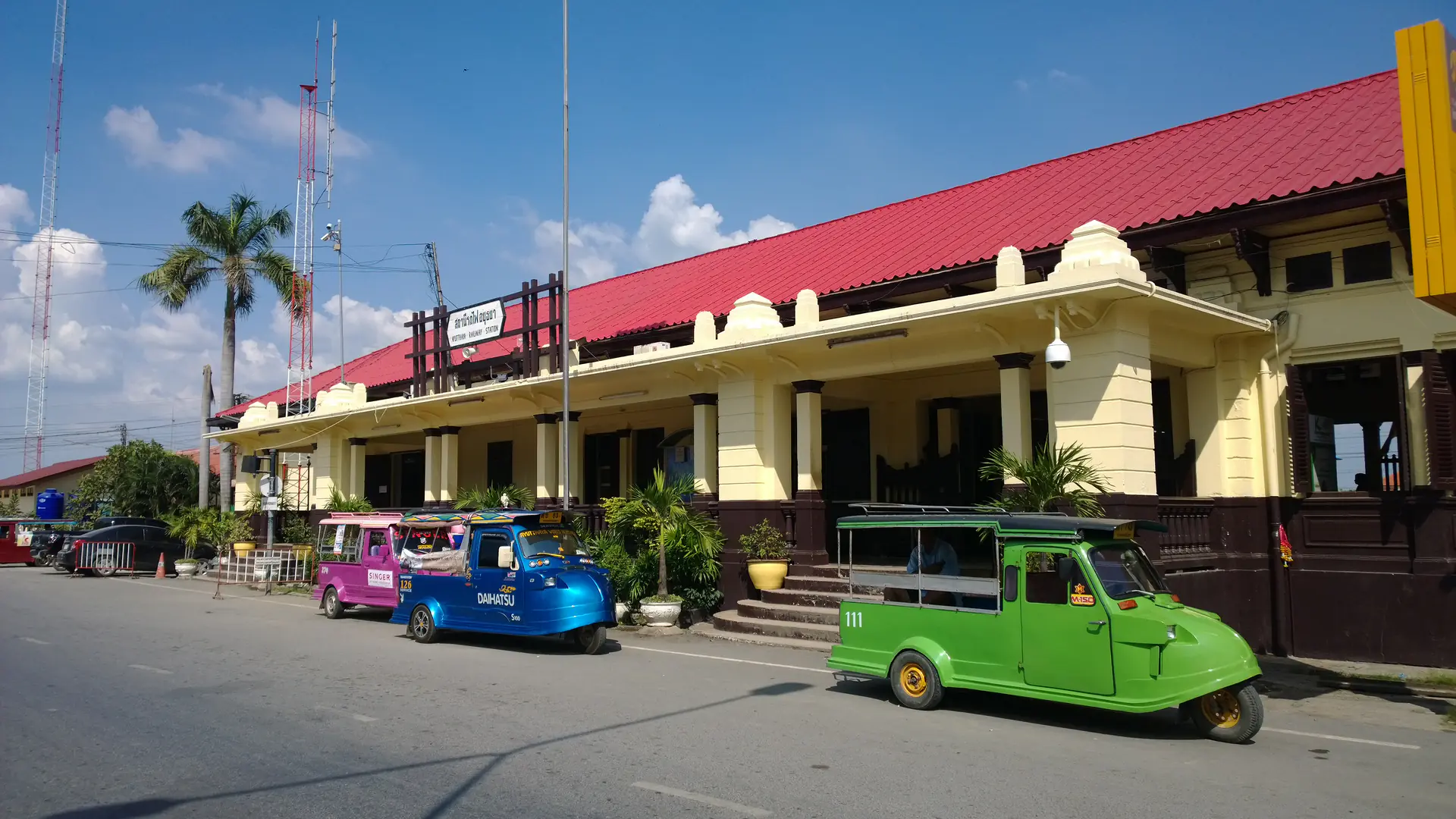
From Bangkok, take comfortable air-conditioned minivans (THB 60 / $1.80 USD, 90 minutes) departing frequently from Victory Monument or Mochit bus terminal to Ayutthaya's city center. The train from Bangkok's Hua Lamphong station offers scenic riverside views (THB 20 / $0.60 USD, 2 hours) but runs on slower schedules--take second or third class to experience local travel authentically. Private car services cost THB 2,500 ($75 USD) for roundtrip day tours with driver. Once in Ayutthaya, rent bicycles (THB 50 / $1.50 USD per day), hire tuk-tuks for temple circuits (THB 200-300 / $6-9 USD per hour), or take the Ayutthaya Tourist Pass boat (THB 200 / $6 USD) that stops at riverside temples.
Best Hotels Near Historic City of Ayutthaya
Stay on Ayutthaya island near the train station to access temples by bicycle or foot--guesthouses like Baan Lotus Guest House or Tony's Place offer clean rooms (THB 500-800 / $15-24 USD) with bicycle rentals and local advice. Budget travelers love Ayutthaya Retreat hostel (THB 300 / $9 USD for dorms) for its social atmosphere and organized tours. Splurge on luxury at Sala Ayutthaya hotel with river views and infinity pool (THB 4,500 / $135 USD) for romantic temple sunset vistas. Most visitors do day trips from Bangkok, but staying overnight lets you experience temples at sunrise and sunset when lighting transforms the ruins and crowds disappear.
Where to Eat Near Historic City of Ayutthaya
Eat authentic Thai cuisine at local restaurants around Ayutthaya's old town, where grilled river prawns (THB 200-300 / $6-9 USD) are a regional specialty served with spicy dipping sauces. Try boat noodles (kuay teow reua) from riverside stalls (THB 40 / $1.20 USD per bowl), traditionally eaten in multiple small portions. Roti sai mai (Ayutthaya's famous cotton candy wrapped in flatbread) makes an unusual dessert found at street vendors. Visit Chao Phrom Market for morning street food including khao lam (sticky rice in bamboo) and fresh tropical fruits. Avoid tourist buffets near major temples--walk 10 minutes into residential areas where locals eat for authentic flavors at half the price.
Historic City of Ayutthaya Entry Fees & Tour Prices
Individual temple admission costs THB 50 ($1.50 USD) per site at major temples (Wat Phra Si Sanphet, Wat Mahathat, Wat Ratchaburana, Wat Chaiwatthanaram), while many smaller ruins remain free to explore. Purchase the Ayutthaya Historical Park pass (THB 220 / $6.50 USD) to access six main temples if visiting multiple sites--calculate whether this beats individual tickets based on your itinerary. Beyond temple exploration, take sunset boat cruises along the Chao Phraya River (THB 250 / $7.50 USD) for unique perspectives on riverside temples. Visit the Ayutthaya Historical Study Center (THB 100 / $3 USD) for context through detailed models and exhibits before temple touring. Explore the night market near the train station for local street food, handicrafts, and evening atmosphere.
What to Bring to Historic City of Ayutthaya
Book accommodation 2-3 months ahead for peak season (November-February) when comfortable properties fill quickly. Download offline maps before visiting--Google Maps works well for navigating temple locations. ATMs are readily available near the train station and tourist areas, but bring cash for temple fees and bicycle rentals. Learn basic Thai phrases for directions and greetings--locals appreciate the effort in this less touristy destination. Consider hiring a local guide (THB 500-800 / $15-24 USD half-day) for historical context that transforms anonymous brick piles into stories of kings and kingdoms. Photography enthusiasts should bring telephoto lenses for architectural details and wide-angle lenses for capturing entire temple complexes. Avoid elephant camps entirely despite their prevalence--ethical travelers should not support cruel training practices inherent in elephant tourism.
Loading map...
Visitor Information
Everything you need to know for your visit
What to Bring
Wear modest clothing covering shoulders and knees for temple visits--sarongs available for loan at major sites. Bring sun protection (hat, sunscreen SPF 50+), water bottles (1-2 liters), and comfortable walking shoes for uneven terrain. Bicycle rentals require passport deposit or cash. Bring small bills (THB 50 notes) for individual temple admission fees.
Accessibility
Most temples have uneven ground, steep steps, and lack wheelchair accessibility due to archaeological nature. Wat Phra Si Sanphet and Wat Mahathat offer relatively flat outer areas for viewing architecture without climbing. Hire private car with driver for comfortable transportation if mobility is limited.
Safety Tips
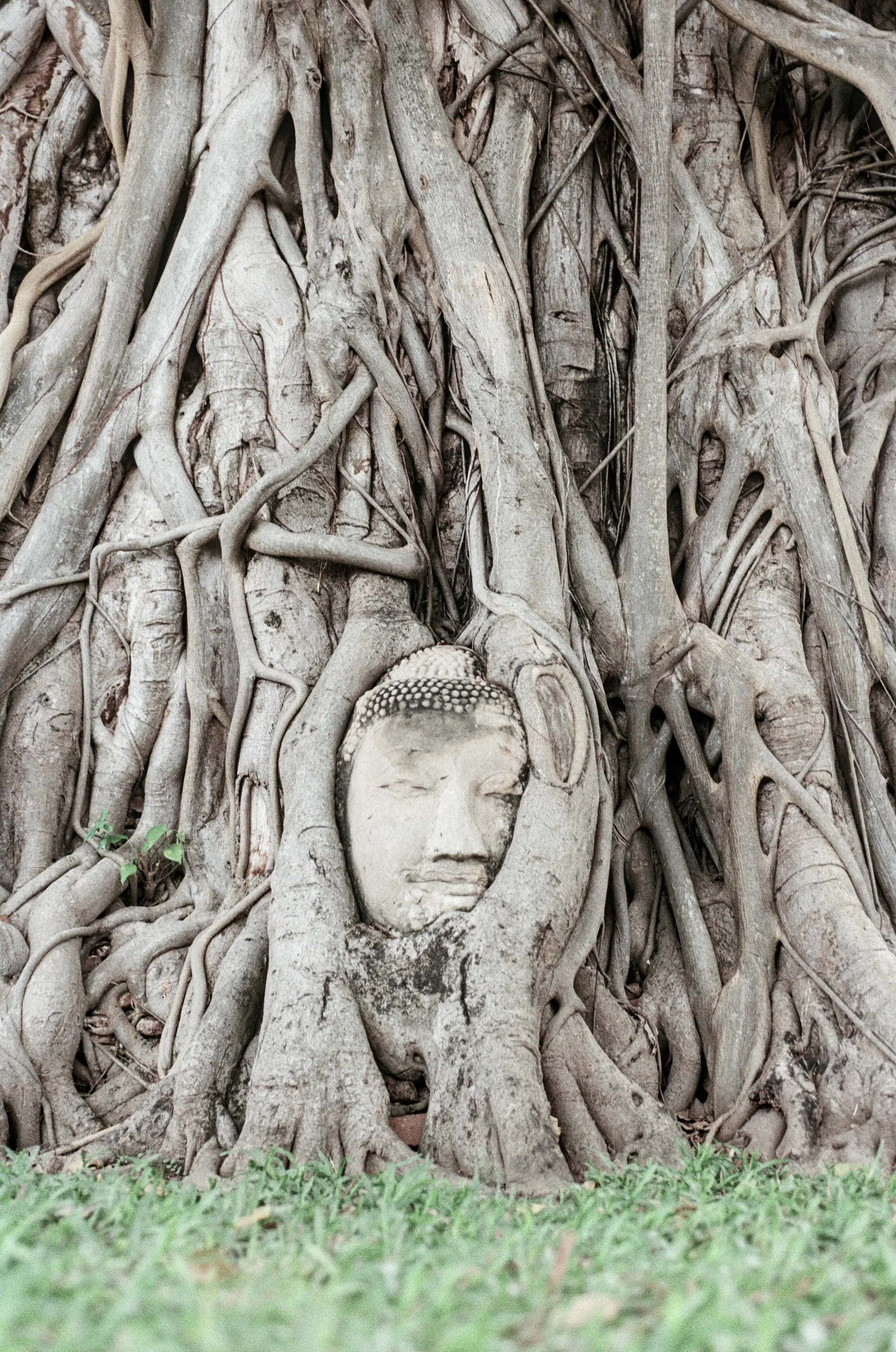
Never climb on ancient structures or Buddha statues--this accelerates deterioration and shows disrespect. Watch for uneven ground and exposed tree roots. During hot season (March-May), temperatures reach 35-40°C with limited shade--start at dawn. Respect temple rules: stand lower than Buddha heads when photographing the famous tree-root Buddha.
Temple Highlights

Must-See
Wat Phra Si Sanphet
The royal temple of Ayutthaya stands as the spiritual heart of the former capital, where three towering chedis (stupas) once held the ashes of Siamese kings. Built in 1448 and expanded over centuries, this temple complex served exclusively for royal ceremonies, forbidden to commoners during the kingdom's height. The distinctive bell-shaped stupas, now partially restored, rise against the skyline in architectural perfection that influenced temple design throughout Thailand. Walking among the brick foundations and weathered Buddha statues, you'll sense the grandeur that made this the Wat Phra Kaew of its era. Pro tip: Visit at 8am when golden morning light illuminates the three chedis, creating perfect photography conditions before tour groups arrive from Bangkok.
Must-See
Wat Mahathat's Buddha Head
A serene Buddha head nestled in the roots of a centuries-old banyan tree has become Ayutthaya's most iconic image, representing both destruction and nature's patient reclamation. This 14th-century royal monastery once stood as the religious center of the kingdom, housing important relics in its central prang (tower-shrine). After Burmese forces beheaded Buddha statues in 1767, this particular head fell and was gradually embraced by growing tree roots, creating an accidental masterpiece of profound beauty. The surrounding ruins reveal the temple's original grandeur through toppled prangs and rows of headless Buddhas. Pro tip: Stand lower than the Buddha head when taking photos out of respect--temple attendants strictly enforce this rule and will remind visitors who position their heads above the sacred image.
Must-See
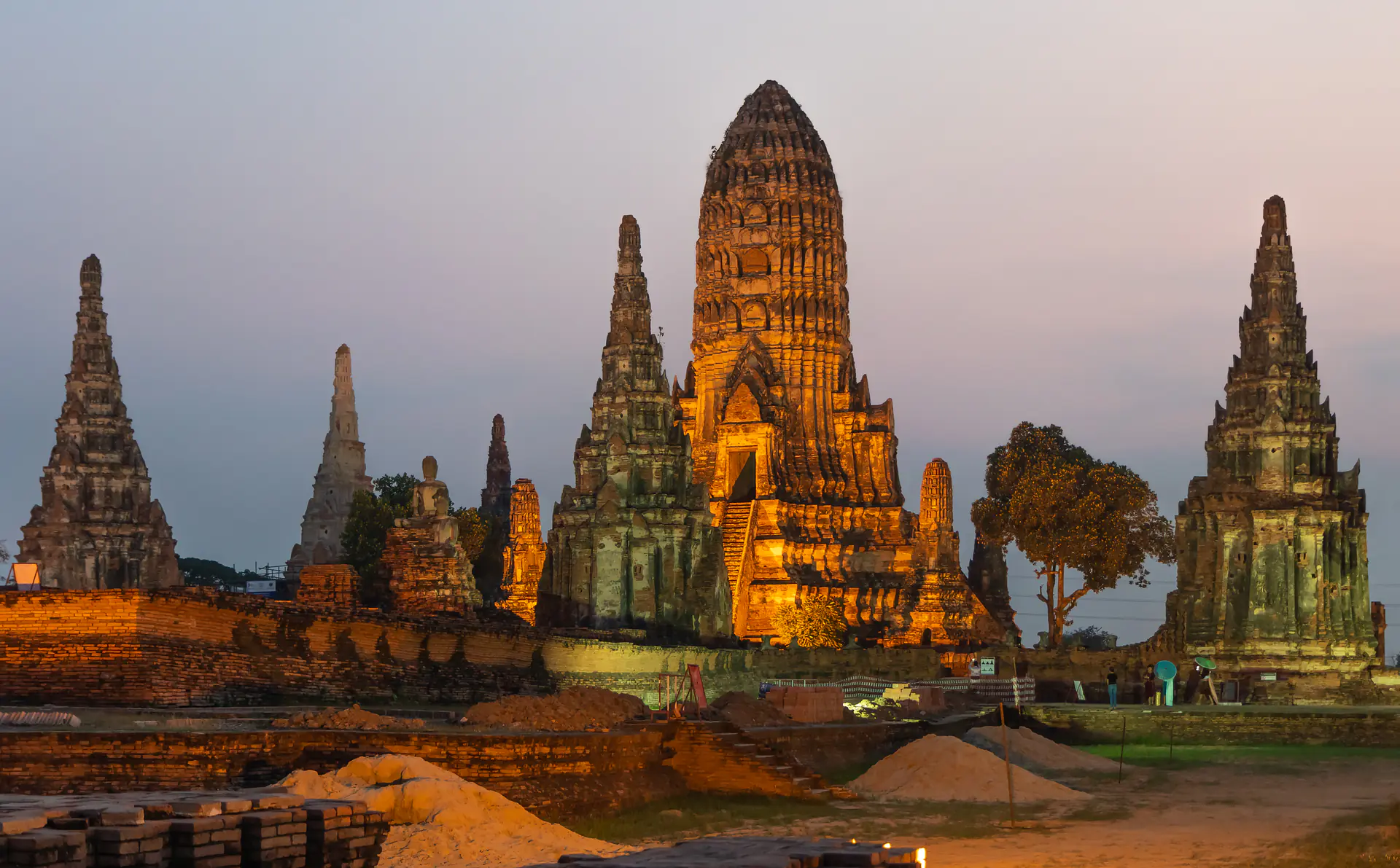
Wat Chaiwatthanaram
Inspired by Angkor Wat's cosmic symbolism, this riverside temple complex represents Mount Meru, the center of the Buddhist universe, through its towering central prang surrounded by smaller satellite towers. King Prasat Thong commissioned the temple in 1630 to honor his mother and demonstrate Ayutthaya's power, creating the kingdom's most impressive Khmer-style monument. The symmetrical layout and intricate stucco decorations (though heavily weathered) showcase the height of Ayutthaya's architectural ambition. Sunset transforms the complex into a photographer's paradise as golden light washes over the laterite and brick structures. Pro tip: Arrive 90 minutes before sunset to explore the temple thoroughly, then position yourself across the river at the western viewpoint where the prangs reflect perfectly in the Chao Phraya River for magical photography.
Recommended
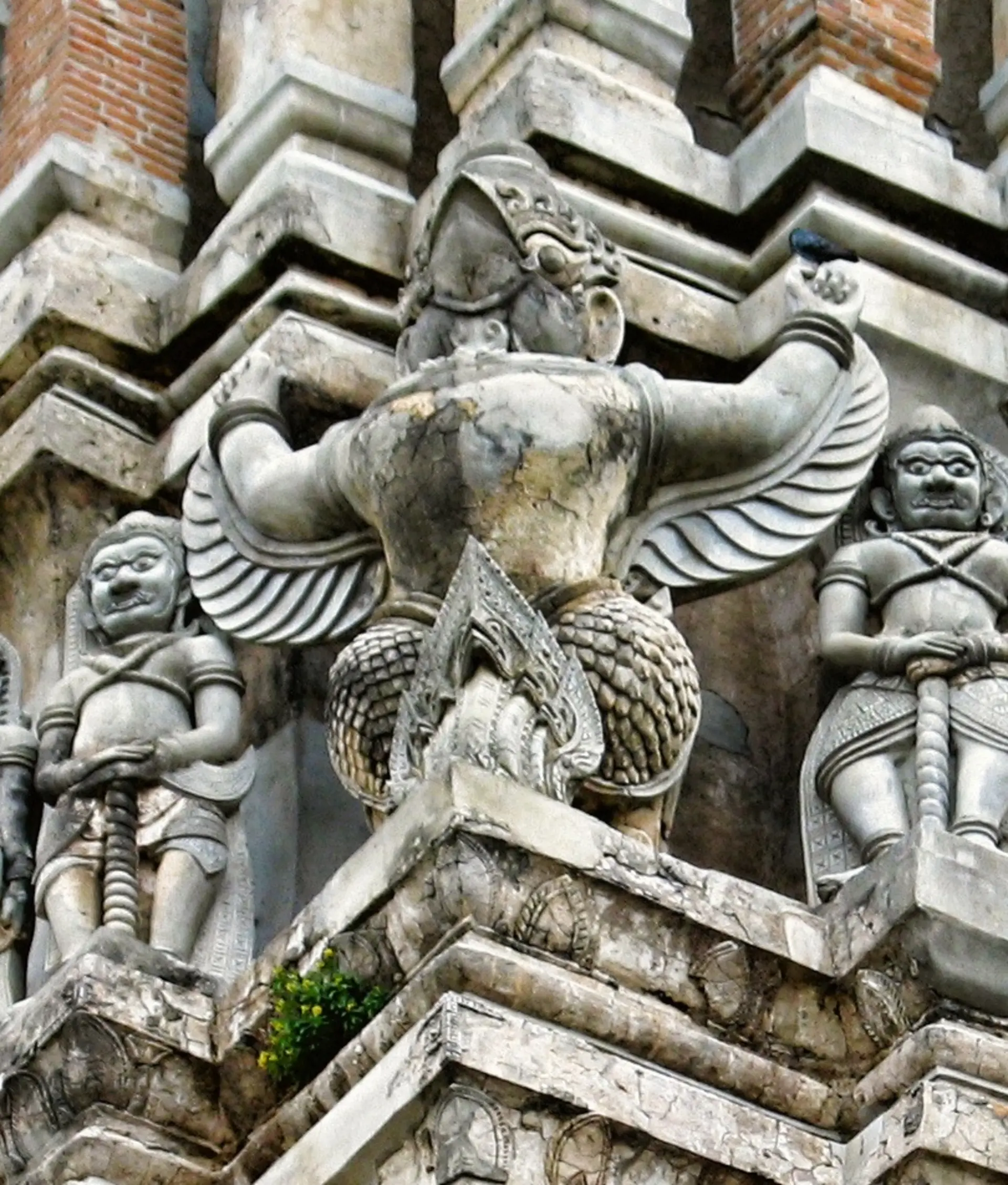
Wat Ratchaburana's Underground Crypt
Descend steep stairs into an underground crypt where remarkably preserved mural paintings from the 15th century reveal Ayutthaya's artistic sophistication and religious devotion. King Boromrachathirat II built this temple in 1424 where his two brothers died fighting each other for the throne, creating a memorial that housed incredible treasures until looters discovered the crypt in 1957. The murals depict celestial beings and Buddhist cosmology in colors that have survived five centuries underground. The towering prang above represents one of Ayutthaya's finest examples of early Ayutthayan architectural style. Pro tip: Bring a flashlight or use your phone's light to illuminate the crypt murals properly--the provided lighting is minimal, and you'll miss intricate details without additional illumination.
Recommended
Bicycle Tour Through Temple Ruins
Cycling through Ayutthaya's temple-dotted landscape offers the perfect pace to absorb the scale and atmosphere of this ancient capital spread across an island formed by three rivers. Rent a bicycle from guesthouses near the train station for THB 50 ($1.50 USD) per day and follow color-coded cycling routes connecting major temples across flat, easily navigable terrain. Stop spontaneously at lesser-known ruins where you might be the only visitor, discovering hidden Buddha statues and architectural details tour buses bypass. The combination of exercise, exploration, and easy parking makes cycling superior to tuk-tuks. Pro tip: Start your bicycle tour at 6am in hot season (March-May) to complete the major temples before brutal midday heat--rent the bike the evening before so you can start at dawn.
Historical Context
Foundation and Rise (1350-1569)
King U Thong established Ayutthaya when smallpox ravaged his former capitals, choosing an easily defended island position. The strategic location enabled control of trade routes between maritime Southeast Asia and inland kingdoms. Within decades, Ayutthaya absorbed Sukhothai and Angkor's declining influence.
Golden Age (1569-1688)
After surviving Burmese conquest in 1569, Ayutthaya entered its most prosperous period, trading with Portuguese, Dutch, French, English, Chinese, and Japanese merchants. European visitors marveled at the city's wealth, comparing it favorably to Paris, creating Southeast Asia's most cosmopolitan trading hub.
Decline and Destruction (1688-1767)
Internal political instability and renewed Burmese aggression weakened Ayutthaya throughout the 18th century. In 1767, after a 14-month siege, Burmese forces conquered and systematically destroyed the capital, burning libraries and melting down Buddha images for gold, forcing thousands into slavery.
Archaeological Rediscovery (1767-Present)
The ruins remained largely abandoned until King Mongkut began preservation efforts in the mid-19th century. Systematic archaeological study started in the 1950s, revealing sophisticated urban planning and artistic achievement. UNESCO recognition in 1991 brought international conservation support and ongoing restoration.
Conservation
Current Status
Thailand's Fine Arts Department actively manages ongoing conservation and restoration work addressing monsoon damage, vegetation overgrowth, and visitor impact across the 289-hectare archaeological site containing 67 temple complexes.
Challenges
- Annual monsoon damage and seasonal flooding threaten brick foundations across the river island, requiring constant maintenance and drainage management.
- Aggressive tropical vegetation overgrowth destabilizes ancient structures by forcing roots into cracks and toppling weakened walls over time.
- Rising groundwater levels on the river island complicate preservation of brick foundations through rising damp and salt crystallization damage.
- Visitor impact from tourists climbing on fragile ruins accelerates deterioration of weathered surfaces and destabilizes already weakened structures.
- Balancing essential tourism revenue against preservation requirements creates ongoing tension regarding visitor access to the most fragile temple structures.
Conservation Efforts
- Comprehensive stabilization projects reinforce leaning chedis and restore collapsed walls using traditional materials documented through careful archaeological research and analysis.
- Advanced monitoring systems track structural movement, environmental conditions, and moisture levels across major temples to identify problems before catastrophic failure.
- International partnerships with UNESCO technical advisors and Japanese conservation experts introduce specialized techniques for preserving brick monuments in tropical conditions.
- Improved visitor management systems limit access to the most fragile areas while directing tourists toward stabilized zones that can safely accommodate traffic.
- Professional training programs develop local conservation specialists who can maintain these irreplaceable monuments using both traditional techniques and modern scientific approaches.
Frequently Asked Questions
Yes, Ayutthaya works perfectly as a day trip from Bangkok, just 80km north with frequent connections. Leave by 8am to explore 5-7 major temples before returning. Staying overnight lets you experience magical sunrise and sunset lighting when crowds disappear.
Focus on 5-7 temples for satisfaction without exhaustion. Must-sees include Wat Phra Si Sanphet, Wat Mahathat, Wat Chaiwatthanaram, and Wat Ratchaburana. Quality over quantity creates better memories than rushing through all 67 temples.
Children enjoy the combination of cycling, flat terrain, and the dramatic Buddha head in tree. However, limited shade and facilities make hot season (March-May) challenging. Bring water, snacks, and research stories beforehand to engage young imaginations.
Cover shoulders and knees at all temples--no tank tops or short shorts. Lightweight long pants or skirts with short-sleeve shirts work well in tropical heat. Light colors reflect heat better than dark clothing.
Most temples have uneven ground and steep steps without wheelchair access due to archaeological nature. Wat Phra Si Sanphet and Wat Mahathat offer flatter outer areas. Hire private car with driver for comfortable transportation.
English-speaking guides (THB 500-800 / $15-24 USD half-day) add valuable historical context transforming ruins into stories. Licensed guides through tourism office provide quality information. Audio guides (THB 100 / $3 USD) offer flexible alternatives.
Individual temple admission costs THB 50 ($1.50 USD) per major site. The Historical Park pass costs THB 220 ($6.50 USD) for six temples. Calculate which option suits your itinerary. Many smaller ruins remain free.
Rent bicycles (THB 50 / $1.50 USD per day) for the perfect pace exploring flat terrain. Tuk-tuks cost THB 200-300 ($6-9 USD per hour) for temple circuits. Tourist boats (THB 200 / $6 USD) stop at riverside temples.
Early morning (6-8am) provides golden light and empty temples before tour groups arrive. Late afternoon (4-6pm) offers dramatic sunset lighting, especially at Wat Chaiwatthanaram reflected in the river. Midday creates harsh shadows.
Yes, the famous Buddha head at Wat Mahathat is accessible daily 8am-6pm year-round. Remember to stand lower than the head when photographing out of respect--temple attendants strictly enforce this rule.
UNESCO World Heritage Criteria
Inscribed in 1991, this site meets 1 of UNESCO's 10 criteria for Outstanding Universal Value
III
Criterion (iii): Testimony to cultural tradition
Ayutthaya bears exceptional testimony to the Siamese Kingdom's cultural traditions through its unique architectural synthesis of Thai, Khmer, and Persian influences. The city's temple complexes, urban planning, and artistic achievements represent the zenith of Ayutthayan civilization, profoundly influencing Thailand's cultural identity and architectural traditions.
Image & Content Attribution
Research & Content Sources
Photography & Visual Media
Average trinmo, CC BY-SA 4.0
Gary Todd, CC0
Jatoo, CC BY-SA 4.0
Stefan Fussan, CC BY-SA 2.0
Hdamm/Sodacan, CC BY-SA 3.0
trungydang, CC BY 3.0
Last updated: 24 December 2025