
Indonesia • UNESCO World Heritage Site
Borobudur: World's Largest Buddhist Temple and Stone Mandala
Ninth-Century Monument to Buddhist Enlightenment Path
Inscribed: 1991
Category: Cultural
ID: #592
What Is Borobudur Temple Compounds and Why Visit?
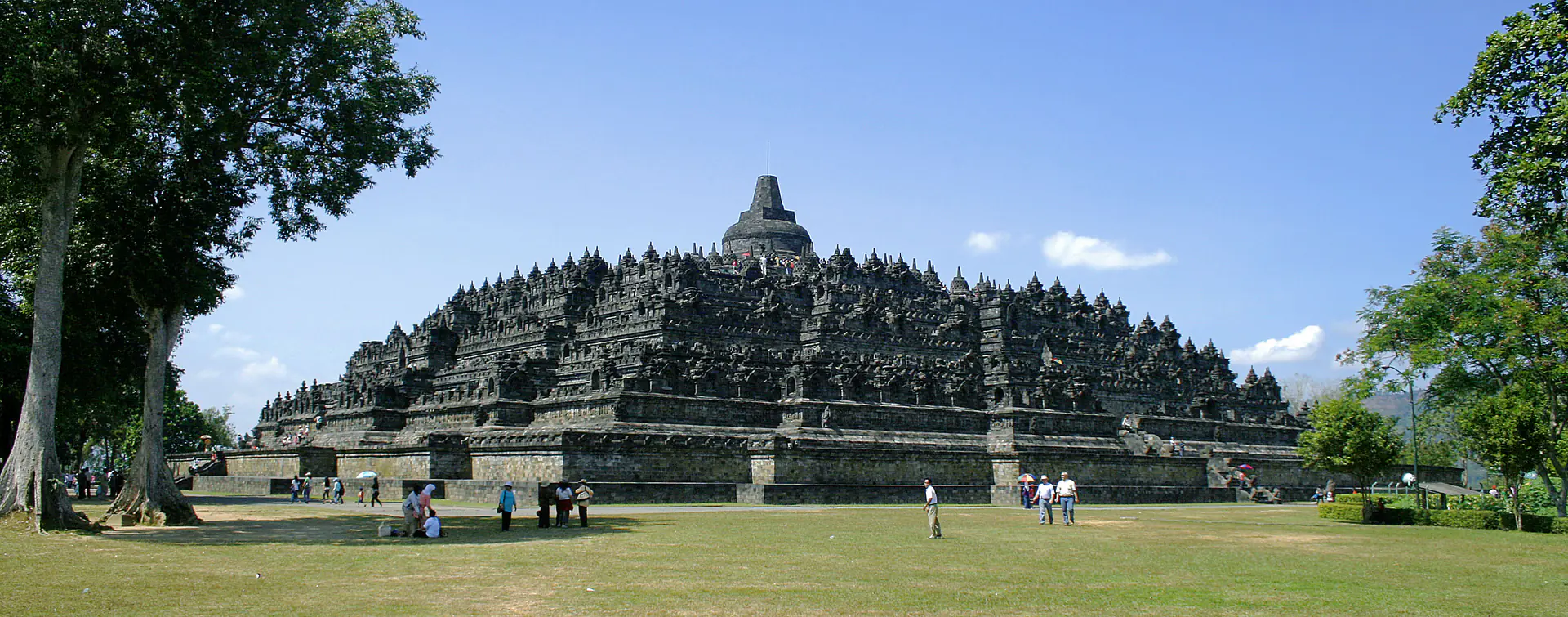
The Sailendra dynasty commissioned Borobudur around 780 AD to demonstrate Buddhist power and provide a monumental stone mandala for pilgrims seeking enlightenment, with construction completing around 825 AD after decades of extraordinary engineering effort mobilizing thousands of workers. This revolutionary structure rises through nine stacked platforms representing Buddhist cosmological realms where pilgrims walk three kilometers of gallery corridors past 2,672 narrative relief panels depicting Buddhist teachings, Jataka tales recounting Buddha's previous lives, and the path toward spiritual awakening through increasingly abstract representation culminating in 72 perforated stupas containing Buddha statues at the uppermost circular terraces. Borobudur established unprecedented architectural achievement through sophisticated stone-cutting techniques, complex drainage systems preventing tropical rainfall damage, and symbolic mandala geometry harmonizing spiritual philosophy with monumental construction that influenced Buddhist temple design throughout Southeast Asia for centuries.
Why It Matters
This monumental temple complex demonstrates outstanding universal value as an absolute masterpiece of Buddhist architectural genius, providing unique testimony to the flourishing Sailendra dynasty's Mahayana Buddhist civilization while representing exceptional Buddhist cosmological concepts directly associated with meditation practices, pilgrimage traditions, and spiritual enlightenment journey.
How to Visit Borobudur Temple Compounds
Essential information for visiting this destination
How to Get to Borobudur Temple Compounds
Yogyakarta International Airport (YIA) in Kulon Progo, roughly 60 kilometers from Borobudur, handles most flights to Jakarta, Bali, and other Indonesian cities, while the older Adisucipto airport serves a few domestic routes. From Yogyakarta city center, buses and private cars reach Borobudur in 90 minutes navigating rural roads through rice paddies and traditional villages. Trans Jogja buses provide economical public transport though routes require transfers and extended journey times. Most visitors arrange private drivers or join organized tours from Yogyakarta hotels providing direct convenient access. Motorcycle rentals offer adventurous transportation option for experienced riders comfortable with Indonesian traffic conditions. Within the temple complex, walking paths connect Borobudur, Mendut, and Pawon temples spanning three kilometers through scenic agricultural landscape.
Best Hotels Near Borobudur Temple Compounds
Yogyakarta city center 40 kilometers from Borobudur offers extensive accommodation options from budget guesthouses to luxury hotels, with Prawirotaman neighborhood providing backpacker-friendly hostels and mid-range hotels featuring traditional Javanese architecture and authentic warungs serving local cuisine. Central positioning enables exploration of Yogyakarta's attractions including Kraton Sultan Palace and Malioboro shopping street.
Hotels near Borobudur temple provide early sunrise access without long morning drives, with boutique resorts offering volcanic mountain views and traditional Javanese hospitality. Premium options include Plataran Borobudur featuring infinity pools overlooking temple and Manohara Hotel located inside the archaeological park, steps from the monument. Village guesthouses provide budget accommodation with authentic rural Javanese atmosphere.
Luxury travelers select Amanjiwo resort perched on hillside overlooking Borobudur, offering sophisticated design harmonizing with Buddhist heritage and exceptional service, though premium pricing reflects exclusive positioning and architectural distinction. Private villas provide ultimate seclusion with temple panoramas.
Where to Eat Near Borobudur Temple Compounds
Javanese cuisine emphasizes balanced flavors combining sweet soy sauce, aromatic spices, and palm sugar. Yogyakarta specialties include gudeg (young jackfruit curry) served with rice, chicken, and boiled egg. Sate klathak features grilled lamb skewers with minimal seasoning cooked over coconut shell charcoal. Bakpia pathok sweet pastries make popular souvenirs. Traditional warungs near Borobudur serve nasi campur mixed rice plates with multiple side dishes for IDR 25,000-40,000 ($2-3 USD). Kopi Joss coffee preparation involves dropping burning charcoal into sweet black coffee creating distinctive smoky flavor. Restaurants near temple cater to tourists with Indonesian and Western options though authenticity decreases with proximity to entrance. Jajan pasar traditional market snacks offer affordable authentic flavors.
Borobudur Temple Compounds Entry Fees & Tour Prices
Climbing the temple structure needs a timed ticket from the official ticket site, where current prices for international visitors are listed; a courtyard (grounds-only) ticket does not allow stepping onto the monument. Climber numbers are capped each day and sessions start at 08:30, so book online in advance; the ticket includes a licensed guide and woven upanat sandals you must wear on the stones. Special sunrise tickets, limited to 100 people a day, cost considerably more.
Prambanan Hindu temple complex 50 kilometers from Borobudur features magnificent ninth-century architecture contrasting Buddhist Borobudur with Hindu cosmology, with its own separate admission ticket. Ramayana Ballet performances at Prambanan, priced by seating class, showcase traditional Javanese dance-drama against illuminated temple backdrop.
Mount Merapi jeep tours use 4WD vehicles to reach viewpoints and lava tour museums. Traditional batik workshops in Yogyakarta offer hands-on classes in wax-resist dyeing techniques. The Kraton Sultan Palace charges a modest admission and hosts traditional gamelan performances. Jomblang Cave adventure tours lower visitors by rope into a vertical cave featuring heavenly light beams; prices for all these tours vary by operator.
What to Bring to Borobudur Temple Compounds
Travel insurance covering medical emergencies essential given limited rural healthcare facilities. International eSIM cards provide connectivity throughout Central Java for navigation, bookings, and translation apps. Book temple-structure climbing sessions online in advance, as the daily quota sells out during peak seasons June-August and December-January.
Indonesia uses Type C and F outlets (220V). Tropical climate maintains 28-33°C year-round with high humidity and afternoon thunderstorms during November-March wet season. Pack comfortable walking shoes, sun protection, mosquito repellent, and modest clothing respecting sacred sites. Indonesian Rupiah (IDR) is required for payments. ATMs available in Yogyakarta with limited temple-area options requiring advance cash planning. Most visitors need a visa on arrival or e-VOA (30 days, extendable once); some ASEAN nationals enter visa-free.
Loading map...
Visitor Information
Everything you need to know for your visit
What to Bring
Comfortable walking shoes with good grip for steep staircases. Sun protection including wide-brimmed hat and high-SPF sunscreen essential. Carry 1-2 liters water per person. Modest clothing covering shoulders and knees required. Camera with good low-light capability recommended for dawn visits. Small flashlight helpful for examining relief details in shadowed corridors.
Accessibility
Limited wheelchair accessibility due to steep staircases and uneven terraces throughout nine levels. Ground level areas accessible with views of lower relief panels. Accessible restrooms at visitor center. Contact park administration in advance for accessibility support. Audio guides available in multiple languages.
Safety Tips
Tropical temperatures reach 30-35°C with high humidity. Wear sturdy shoes with excellent grip for steep staircases that become slippery during afternoon rain. Carry 1-2 liters water for hydration. Watch footing on uneven surfaces and narrow stairways without handrails. Morning visits recommended. Respect Buddhist sacred site with appropriate behavior and modest dress. Seek shelter in covered corridors during tropical storms.
Buddhist Architectural Masterpieces of Central Java
Must-See
72 Perforated Stupas and Buddha Statues
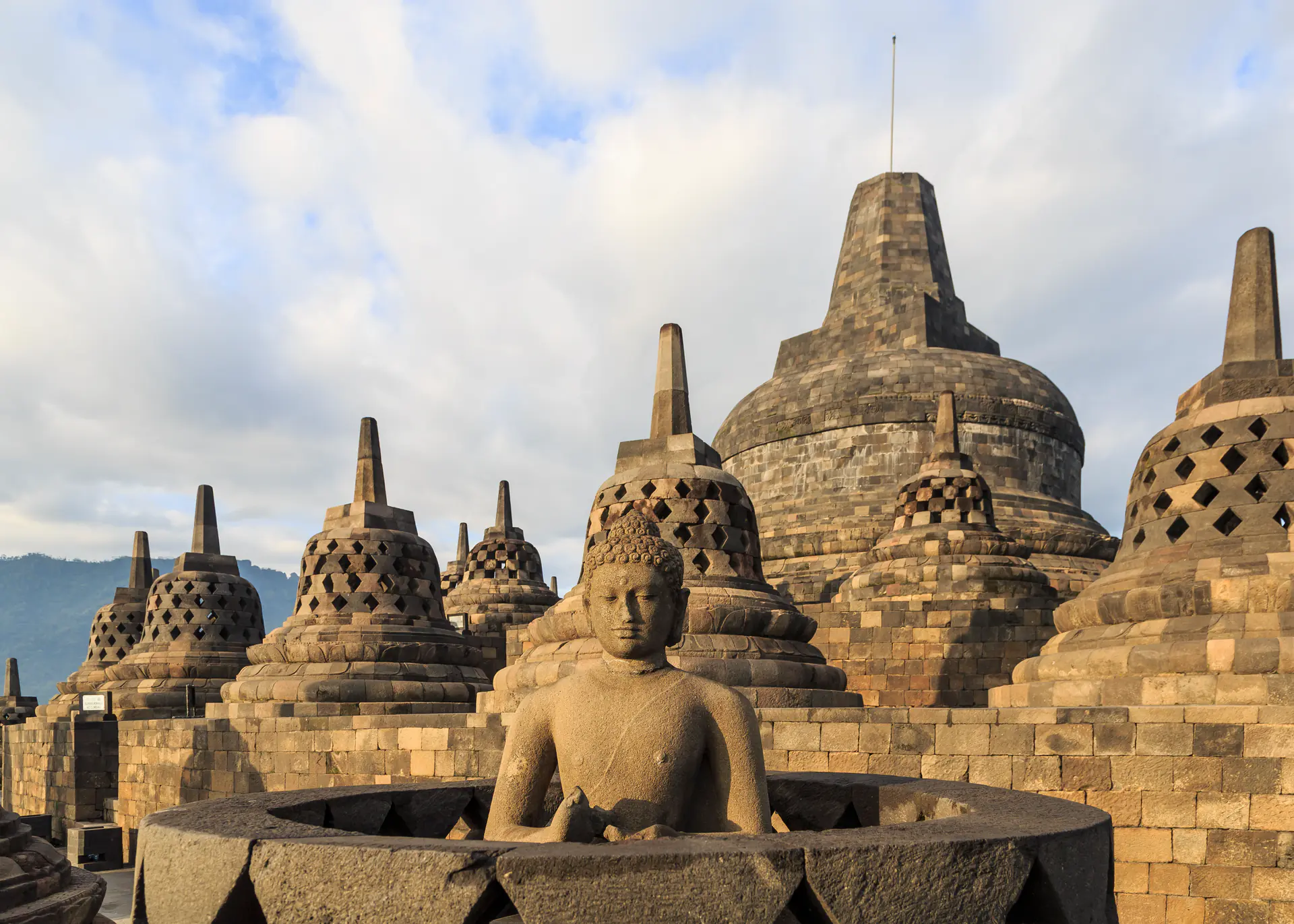
Ascend to Borobudur's three uppermost circular terraces where 72 bell-shaped perforated stupas create extraordinary architectural poetry against Java's volcanic landscape. Each stupa contains a Buddha statue in meditation pose visible through diamond-shaped openings representing the transition from material to spiritual realms in Buddhist cosmology. The latticed stone construction demonstrates remarkable ninth-century engineering precision while creating dramatic interplay between light, shadow, and sacred sculpture. Walking among these stupas during dawn hours when mist drifts across terraces creates profoundly spiritual atmosphere connecting visitors to centuries of Buddhist pilgrimage tradition. The central dome crowning the monument represents ultimate enlightenment.
Pro tip: Look, but don't reach inside: the old custom of touching the Buddha statues through the stupa openings is now prohibited to protect the stone. Instead, compare the hand gestures (mudras) of the Buddhas facing each direction--each one carries a different meaning your guide can explain.
Must-See
Narrative Relief Panels and Buddhist Stories
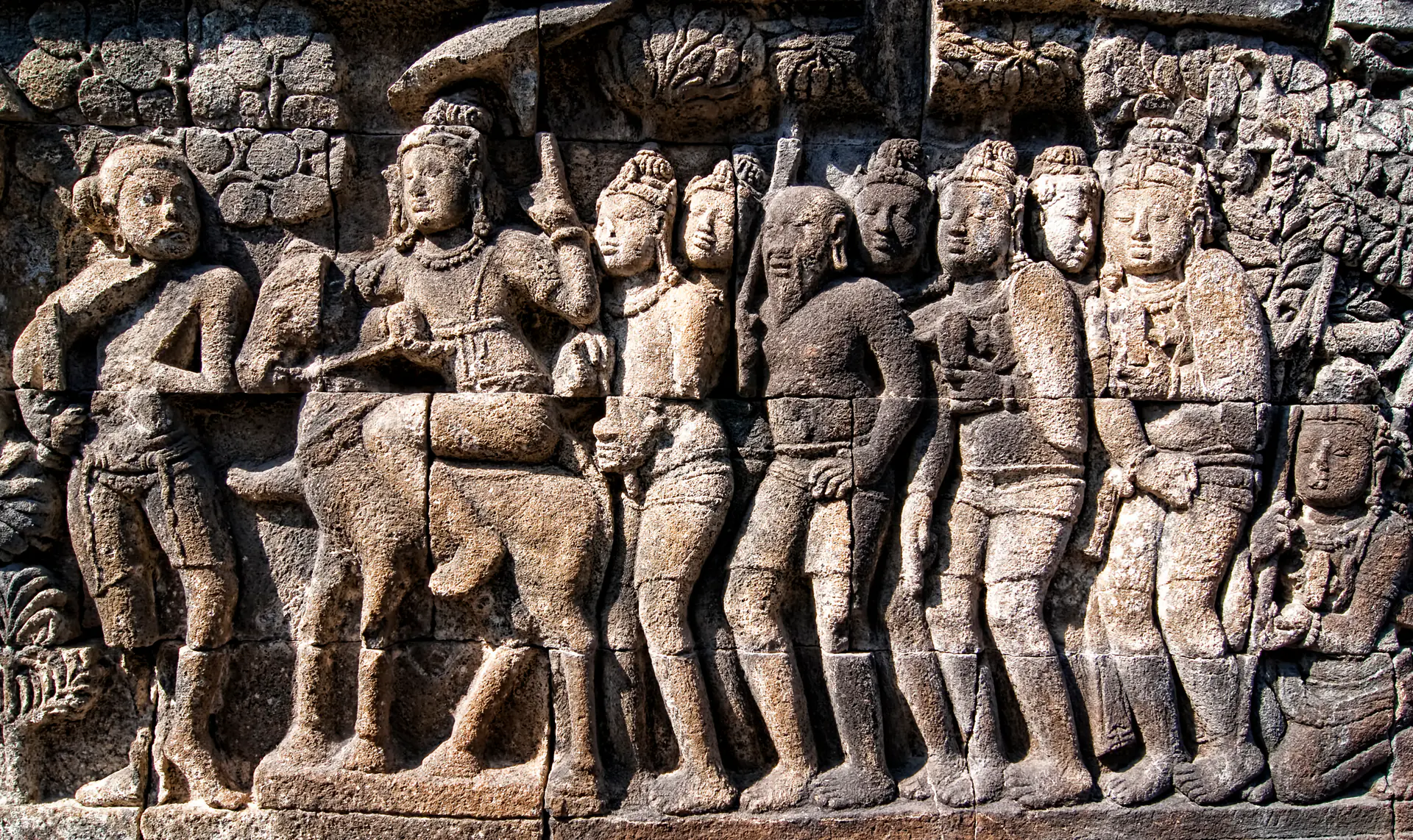
Explore 2,672 masterfully carved relief panels forming one of the world's most extensive Buddhist narrative stone art collection along three kilometers of gallery corridors. These ninth-century bas-reliefs illustrate Jataka tales recounting Buddha's previous lives, Lalitavistara depicting Buddha's earthly life, Gandavyuha describing the spiritual journey toward enlightenment, and practical guidance for virtuous living through richly detailed scenes. The sophisticated stone carving captures remarkable detail including facial expressions, elaborate costumes, architectural elements, and daily life scenes providing invaluable historical documentation of ninth-century Javanese civilization. Reading the panels clockwise following Buddhist pradaksina tradition reveals progressive spiritual teachings ascending through temple levels.
Pro tip: Ask the licensed local guide included with your temple-structure ticket to explain the complex Buddhist narratives and identify specific Jataka tales--the relief panels tell intricate stories requiring cultural context to fully appreciate their spiritual significance and artistic mastery.
Recommended
Sunrise Experience Over Volcanic Landscape
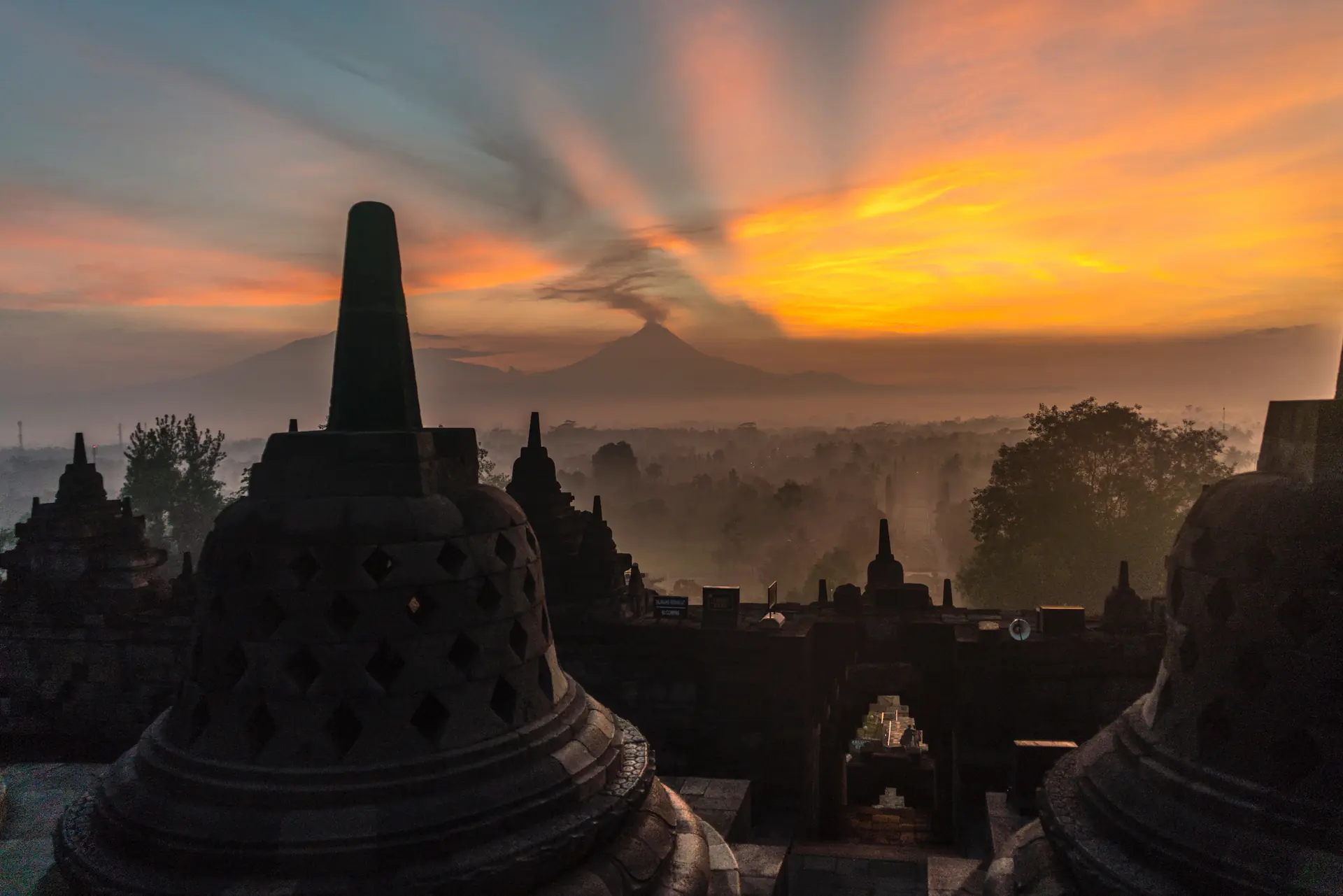
Experience Borobudur's most magical moment during dawn visits when sunrise illuminates the monument against dramatic volcanic peaks including Mount Merapi, Mount Merbabu, and Mount Sindoro. Mist rising from surrounding tropical vegetation creates ethereal atmosphere as first light gradually reveals temple terraces, perforated stupas, and Buddha statues emerging from darkness. This experience provides profound understanding of Buddhist symbolism representing enlightenment illuminating darkness while connecting visitors to pilgrimage traditions spanning over a millennium. Photography opportunities during golden hour create spectacular compositions balancing ancient architecture with natural landscape. Temple authorities limit sunrise access maintaining peaceful contemplative environment.
Pro tip: Special sunrise tickets on the monument are limited, cost considerably more, and must be booked well ahead through the official ticket website when offered--otherwise watch sunrise from nearby Punthuk Setumbu hill, which looks across the mist to Borobudur and Mount Merapi.
Recommended
Mendut and Pawon Temple Complex
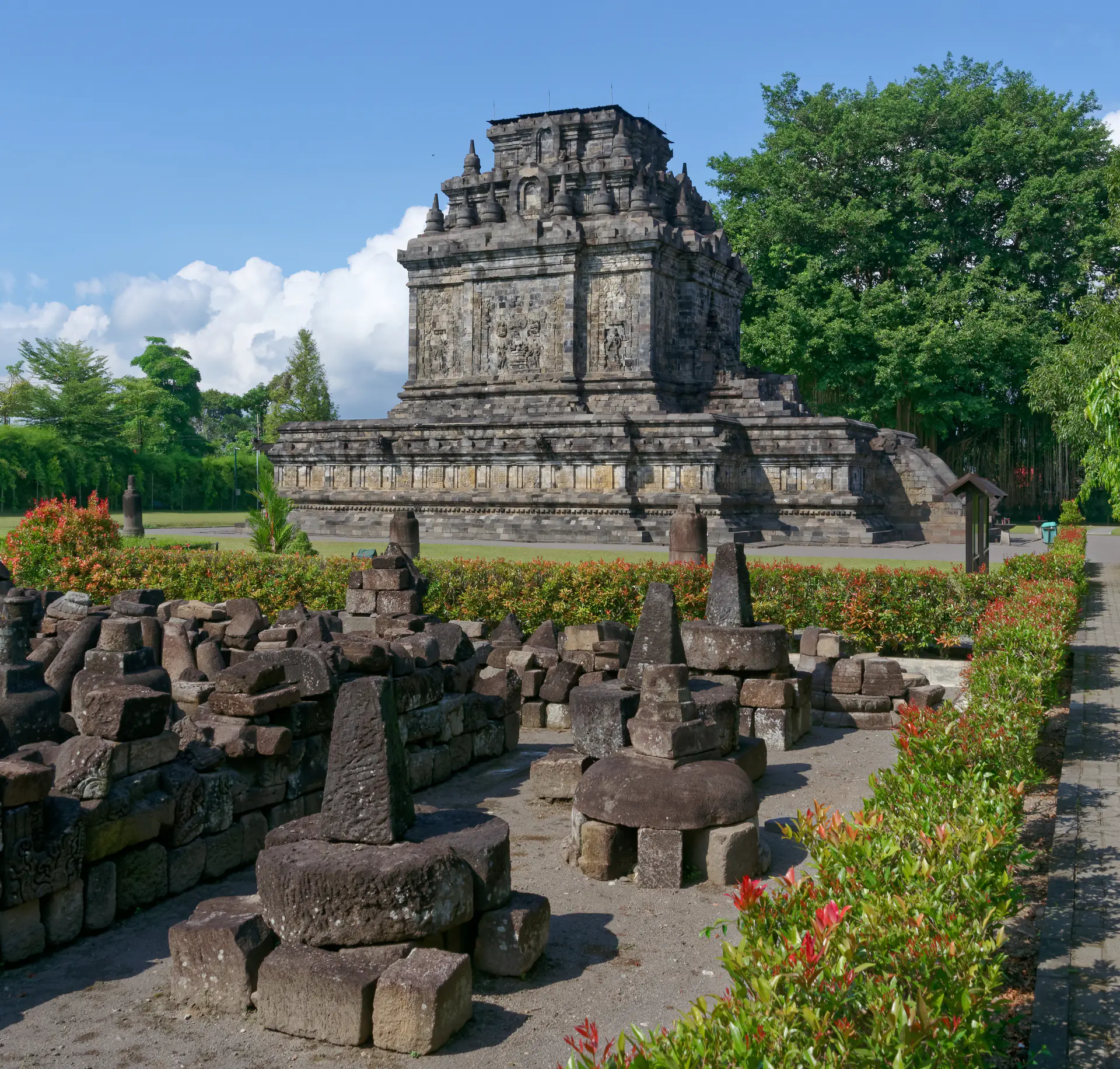
Extend your visit to explore Mendut and Pawon temples forming the sacred Buddhist compound connected to Borobudur through ancient processional route spanning three kilometers. Mendut Temple houses three magnificent stone Buddha statues inside its main chamber representing Buddhism's most accomplished sculptural achievement in Indonesia, with the central seated Buddha demonstrating exceptional artistic mastery and spiritual presence. Pawon Temple's exquisite architectural proportions and intricate relief carvings demonstrate Sailendra dynasty craftsmanship despite its modest scale. Walking the ancient pilgrimage path connecting these three temples provides comprehensive understanding of the religious complex's spiritual significance and architectural evolution during ninth-century Buddhist flourishing.
Pro tip: Visit Mendut Temple first in early morning when soft light enters through doorways illuminating the magnificent Buddha statues inside--the temple opens early, before tour groups arrive, and photography inside the chamber is permitted without flash, creating intimate spiritual experience before proceeding to crowded Borobudur.
Historical Context
Sailendra Dynasty Construction (780-825 AD)
The Buddhist Sailendra dynasty initiated Borobudur construction around 780 AD, mobilizing thousands of workers and master craftsmen over four decades. The monument's massive scale required sophisticated engineering, advanced stone-cutting techniques, and complex logistics coordinating material transport and skilled labor across Central Java's landscape.
Buddhist Pilgrimage Flourishing (9th-10th centuries)
Borobudur served as major Buddhist pilgrimage destination during its golden age, with devotees walking the three-kilometer processional route connecting Mendut, Pawon, and Borobudur temples. The monument functioned as three-dimensional mandala enabling spiritual progression through Buddhist realms toward enlightenment following pradaksina circumambulation ritual tradition.
Abandonment and Volcanic Burial (10th-19th centuries)
Following volcanic eruptions and the mysterious collapse of Central Java's Buddhist civilization, Borobudur was gradually abandoned and buried under volcanic ash and jungle growth. The temple remained hidden for centuries, transformed into local legend, with only vague references in Javanese manuscripts hinting at the buried monument's existence.
International Attention (1814)
British Lieutenant Governor Thomas Stamford Raffles learned of ruins during Java's brief British occupation, dispatching Dutch engineer H.C. Cornelius to investigate. The monument's clearing revealed remarkable preservation under protective volcanic ash and vegetation, though many statues suffered damage and theft during subsequent decades lacking proper archaeological oversight.
Major UNESCO Restoration (1975-1983)
The Indonesian government collaborated with UNESCO launching comprehensive restoration addressing structural deterioration, drainage problems, and foundation instability threatening the monument's survival. The $25 million eight-year project dismantled and reassembled over one million stone blocks, installed modern drainage systems, and stabilized foundations using contemporary engineering techniques.
World Heritage Recognition (1991-present)
UNESCO inscribed Borobudur as World Heritage Site in 1991 recognizing exceptional universal value and ongoing conservation commitment. Modern preservation programs address tourism pressure from 3-5 million annual visitors, volcanic ash exposure, and climate change impacts while maintaining accessibility for contemporary pilgrims and cultural tourism sustaining local communities.
Conservation
Current Status
Borobudur undergoes continuous conservation addressing stone weathering, volcanic ash exposure, and tourism pressure through Indonesian government and UNESCO collaboration ensuring long-term preservation.
Challenges
- Volcanic ash from nearby Mount Merapi eruptions covering monument surfaces requiring periodic cleaning while acidic deposits accelerate stone degradation
- Tourism pressure from 3-5 million annual visitors demanding sophisticated crowd management infrastructure and protective barriers reducing stone wear
- Stone weathering from tropical climate with intense sun, high humidity, and heavy rainfall causing chemical deterioration and biological growth
- Foundation settlement in soft volcanic soil beneath massive stone structure requiring ongoing monitoring and engineering stabilization interventions
- Seismic vulnerability in active volcanic region with earthquake risks threatening ancient architecture lacking modern engineering reinforcement techniques
Conservation Efforts
- Regular cleaning programs removing volcanic ash, biological growth, and pollutants using gentle methods protecting ancient stone surfaces
- Visitor management protocols including capacity limits, designated pathways, and timed entry systems reducing physical wear on vulnerable areas
- Monitoring systems utilizing sensors and satellite imagery tracking structural movements, foundation settlement, and environmental conditions
- UNESCO technical support providing international conservation expertise, funding coordination, and best practice guidance for heritage preservation
- Community engagement programs involving local residents in preservation activities while supporting sustainable tourism benefiting Central Java economy
Frequently Asked Questions
Absolutely. Borobudur offers an extraordinary Buddhist architectural experience. The world's largest Buddhist temple features magnificent relief panels, 72 stupas with Buddha statues, and sunrise views over volcanic landscapes. Combined visits with Prambanan and Yogyakarta create exceptional Central Java cultural immersion.
Climbing the temple structure needs a separate ticket that includes a licensed guide and upanat sandals; check current prices for international visitors on the official ticket site. A courtyard (grounds-only) ticket does not include the climb. Indonesian citizens pay less. Special sunrise tickets cost more, and Prambanan needs a separate ticket.
Yes, if you want to climb the monument: daily numbers are capped, with timed guided sessions booked online through the official ticket website. April-October dry season and December-January holidays see highest visitor numbers requiring advance planning.
April-October dry season offers best weather with minimal rainfall and clear volcanic mountain views. Sunrise visits provide magical experience with misty atmosphere and golden light illuminating stupas. Early morning visits before 09:00 avoid intense midday heat and large tour groups. Avoid November-March wet season's afternoon thunderstorms.
Plan 2-3 hours minimum for Borobudur temple exploration including ascending nine levels, viewing relief panels, and appreciating architectural details. Full day recommended combining Mendut and Pawon temples plus sunrise experience. Most visitors dedicate 5-6 hours for complete temple compound exploration with photography and contemplation.
Borobudur lies 40 kilometers northwest of Yogyakarta requiring 90-minute drive through rural Central Java. Private drivers and organized tours provide convenient direct transport. Public buses available though require transfers and extended journey times. Most visitors base in Yogyakarta for accommodation and day trip to Borobudur.
Borobudur is the world's largest Buddhist temple built in ninth century during Sailendra dynasty. Famous for mandala architectural design with nine stacked platforms, 2,672 relief panels illustrating Buddhist teachings, 72 perforated stupas containing Buddha statues, and exceptional preservation representing Southeast Asian Buddhist civilization's pinnacle architectural achievement.
Borobudur functions as exterior monument without interior chambers--visitors walk gallery corridors ascending nine levels clockwise following Buddhist pradaksina tradition. The experience involves viewing relief panels, climbing steep staircases, and reaching upper circular terraces with perforated stupas. Mendut Temple nearby contains magnificent Buddha statues inside its chamber.
Wear modest clothing covering shoulders and knees respecting Buddhist sacred site. Comfortable walking shoes with good grip essential for steep stone staircases. Bring sun protection including hat and sunscreen for exposed terraces. Light breathable fabrics recommended for tropical heat and humidity. Avoid flip-flops due to uneven stone surfaces.
Borobudur was abandoned around tenth century following volcanic eruptions and mysterious collapse of Central Java's Buddhist civilization. Theories include population migration due to volcanic disasters, power shift to East Java, or religious conversion to Hinduism. Volcanic ash and jungle growth gradually buried the temple until 1814 British rediscovery.
UNESCO World Heritage Criteria
Inscribed in 1991, this site meets 3 of UNESCO's 10 criteria for Outstanding Universal Value
I
Criterion (i): Masterpiece of human creative genius
Borobudur represents an absolute masterpiece of Buddhist architectural genius through revolutionary mandala design translating complex spiritual cosmology into monumental stone architecture, sophisticated relief panel narratives demonstrating exceptional artistic achievement across 2,672 carved scenes, and engineering innovations creating the world's largest Buddhist temple that profoundly influenced Southeast Asian religious architecture for centuries.
II
Criterion (ii): Interchange of human values
The Sailendra dynasty facilitated exceptional interchange of Buddhist cultural values throughout Southeast Asia, spreading Mahayana Buddhist teachings, architectural principles, artistic techniques, and philosophical concepts from India through Java, establishing Borobudur as pivotal monument representing cross-cultural synthesis that shaped regional civilization during formative medieval period.
VI
Criterion (vi): Associated with events/traditions/ideas/beliefs/artistic works
Borobudur remains directly associated with living Buddhist pilgrimage traditions, meditation practices following mandala pathways toward enlightenment, and sacred circumambulation rituals that continue resonating in contemporary Southeast Asian Buddhist culture while representing fundamental concepts about spiritual awakening journey, karmic progression through existence realms, and ultimate liberation from suffering cycle central to Mahayana Buddhist philosophy and practice.
Image & Content Attribution
Research & Content Sources
Photography & Visual Media
Photo by CEphoto, Uwe Aranas, CC BY-SA 3.0
Philip Nalangan, CC BY 4.0
Christopher Michel, CC BY-SA 4.0
Jakub Hałun, CC BY-SA 4.0
Last updated: 1 October 2026