
Croatia • UNESCO World Heritage Site
Old City of Dubrovnik: Medieval Walls & Adriatic Pearl
The Republic of Ragusa's Fortified Maritime Jewel
Inscribed: 1979
Category: Cultural
ID: #95
What Is Old City of Dubrovnik and Why Visit?
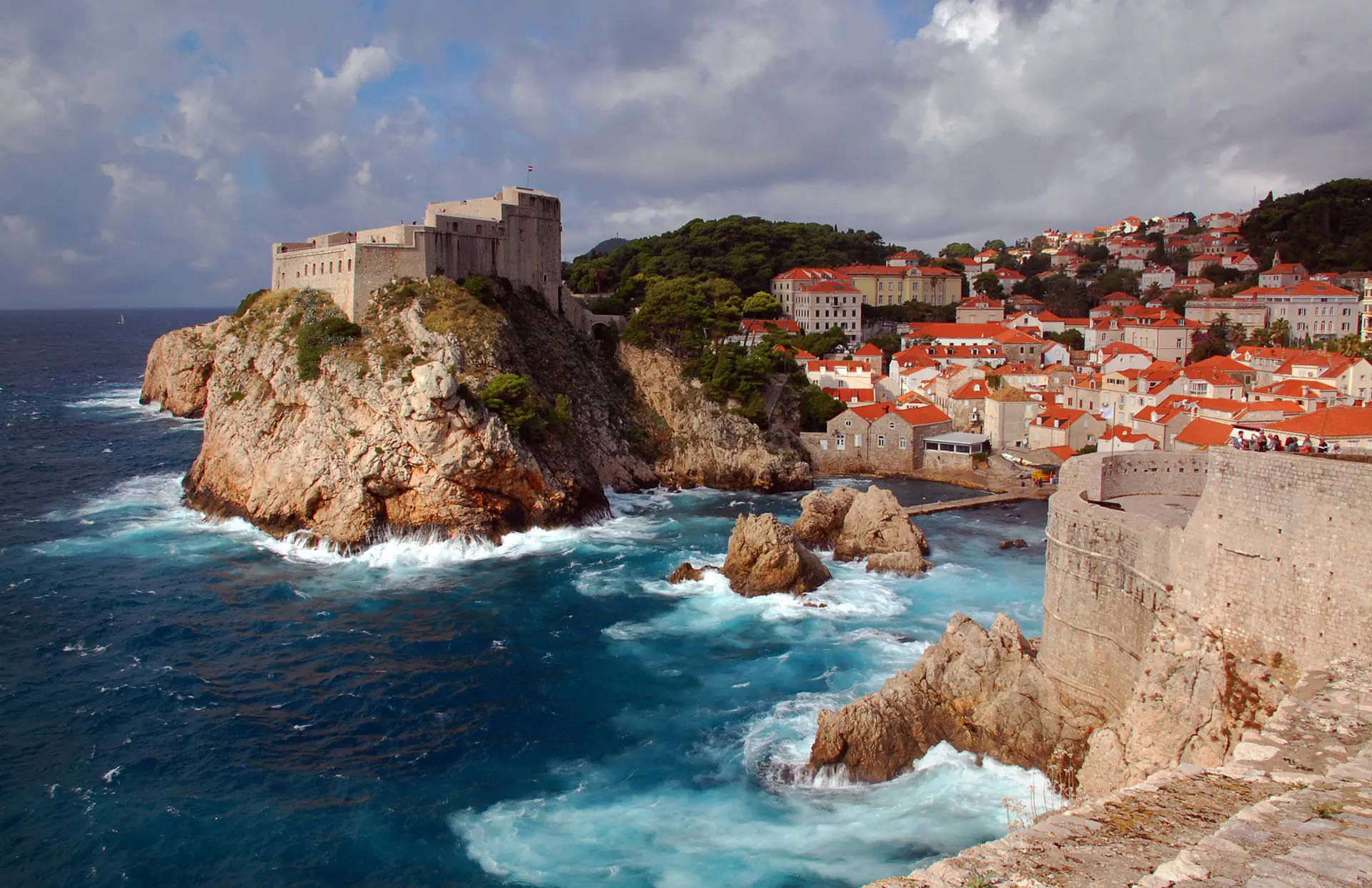
The Republic of Ragusa established Dubrovnik as a powerful Mediterranean maritime state from the 13th century, constructing imposing defensive walls and elegant Gothic, Renaissance, and baroque architecture that transformed this rocky peninsula into one of Europe's most beautiful cities. Despite the catastrophic 1667 earthquake that killed thousands and destroyed over three-quarters of public buildings, Dubrovnik's resilient citizens rebuilt while preserving the city's architectural harmony and unique character. The 1,940-meter city walls rising up to 25 meters high protected the republic's independence for centuries, with ingenious defensive features including the Minceta Tower, Fort Bokar, and the legendary Fort Lovrijenac commanding the harbor approaches. The limestone-paved Stradun connects the Pile and Ploce gates through a harmonious streetscape of churches, palaces, and merchant houses that survived both earthquake and 1990s conflict to showcase Dubrovnik's exceptional preservation.
Why It Matters
This magnificent medieval city demonstrates outstanding universal value through its remarkably preserved fortification system representing the height of medieval defensive architecture, its harmonious Gothic, Renaissance, and baroque urban ensemble, and its testimony to the cultural and political achievements of the Republic of Ragusa as an independent maritime power.
How to Visit Old City of Dubrovnik
Essential information for visiting this destination
How to Get to Old City of Dubrovnik
Dubrovnik Airport lies 20 kilometers from the Old City with regular shuttle buses (€8, $9 USD) reaching the Pile Gate area in 30 minutes. Local buses connect airport and outlying hotels to the Old City perimeter where vehicles cannot enter the pedestrian-only historic center. Ferry services link Dubrovnik to nearby islands including Lokrum (15 minutes), Elafiti Islands, and connections to Italy and Greece during summer season. Within the Old City, walking remains the only option through narrow limestone streets. The cable car provides spectacular viewpoints ascending Srd Hill overlooking the old town and coastline.
Best Hotels Near Old City of Dubrovnik
Hotels within the Old City walls offer unparalleled atmosphere in converted historic buildings, though premium pricing reflects the privileged location and limited availability. Properties range from boutique hotels in medieval palazzos to private apartments in restored townhouses, providing immediate access to monuments while avoiding the crowds after day-trippers depart.
The Ploce district east of the Old City provides walking-distance accommodation with slightly lower prices and sea views, while the Lapad peninsula offers resort-style hotels with beaches and pools connected by regular buses to the historic center.
Budget travelers find hostels and guesthouses in Gruz near the cruise port and ferry terminal, though the 20-30 minute commute requires planning around cruise ship schedules to avoid peak overcrowding in the Old City.
Where to Eat Near Old City of Dubrovnik
Dalmatian cuisine emphasizes fresh seafood, olive oil, and Mediterranean vegetables reflecting Dubrovnik's maritime heritage. Grilled fish (riba na žaru), black risotto with cuttlefish ink, and octopus salad showcase Adriatic flavors, while lamb from the surrounding hills and local vegetables complete seasonal menus. Traditional konoba restaurants in the Old City's narrow streets serve authentic dishes, though prices reflect the tourist-focused location. The Gruz market area offers local dining at more reasonable prices. Dubrovnik's maritime tradition includes Pelješac Peninsula wines, particularly robust red wines from the Plavac Mali grape. Sweet treats include rozata custard and arancini candied orange peel. Restaurant reservations essential during summer peak season.
Old City of Dubrovnik Entry Fees & Tour Prices
City walls tickets cost €40 ($44 USD) for adults during peak season (March-November), €20 ($22 USD) off-season, with reduced rates for students and children. Tickets include Fort Lovrijenac and remain valid for 72 hours. The Dubrovnik Card offers combined access to walls, museums, and public transport for €35-55 depending on duration.
Game of Thrones filming locations draw fans to sites including Fort Lovrijenac (Red Keep exteriors), the Jesuit Stairs (Cersei's Walk of Shame), and Trsteno Arboretum (King's Landing gardens). Guided tours cost €25-40 ($28-44 USD) for 2-3 hour explorations of filming locations.
Sea kayaking around the city walls costs €30-50 ($33-55 USD) for 3-hour tours offering unique perspectives on the fortifications. Day trips to nearby islands including Lokrum (nature reserve), Korcula, and Mljet National Park provide escape from summer crowds. The Dubrovnik Summer Festival (July-August) presents theater, music, and dance performances in historic venues including Fort Lovrijenac.
What to Bring to Old City of Dubrovnik
Comprehensive travel insurance covering medical emergencies recommended for Croatia. Croatia uses the Euro (€) following January 2023 adoption, with ATMs widely available throughout Dubrovnik. International eSIM cards provide connectivity for navigation and bookings. Croatian Type C and F outlets operate on 230V.
Summer temperatures reach 30-35°C requiring sun protection, hydration, and early morning activity timing. Cruise ship schedules dramatically affect Old City crowding--check arrivals at portdubrovnik.hr to plan visits during lower-traffic periods. Modest dress required for church visits. Swimming possible at designated beach areas including Banje Beach east of Ploce Gate.
Peak season (July-August) brings overwhelming crowds and highest prices. Shoulder seasons offer better value and more pleasant exploration conditions while maintaining good weather.
Loading map...
Visitor Information
Everything you need to know for your visit
What to Bring
Comfortable walking shoes with excellent grip essential for stone surfaces and steep staircases along the walls. Bring sun protection including wide-brimmed hat, high-SPF sunscreen, and sunglasses as wall circuit offers limited shade. Carry 1-2 liters water per person, especially during summer months. Camera recommended for exceptional panoramic views and architectural details.
Accessibility
The medieval Old City presents significant challenges with steep stairs, cobblestone surfaces, and narrow passages lacking modern accessibility features. City walls involve continuous stair climbing with no elevator alternatives. Some ground-level attractions including Stradun and churches offer limited accessibility. Wheelchair users should contact Dubrovnik Tourist Board for specific guidance and alternative viewing options.
Safety Tips
Summer temperatures regularly exceed 35°C requiring sun protection and hydration. City wall circuit lacks shade and involves steep, sometimes uneven steps. Cruise ship arrivals between 9:00-11:00 create intense crowding at Pile Gate and major attractions. Avoid peak July-August when overcrowding diminishes experience quality. Stone surfaces become slippery when wet. Swimming possible at designated rocky beaches outside walls.
Medieval Fortifications and Maritime Heritage
Must-See
City Walls Complete Circuit
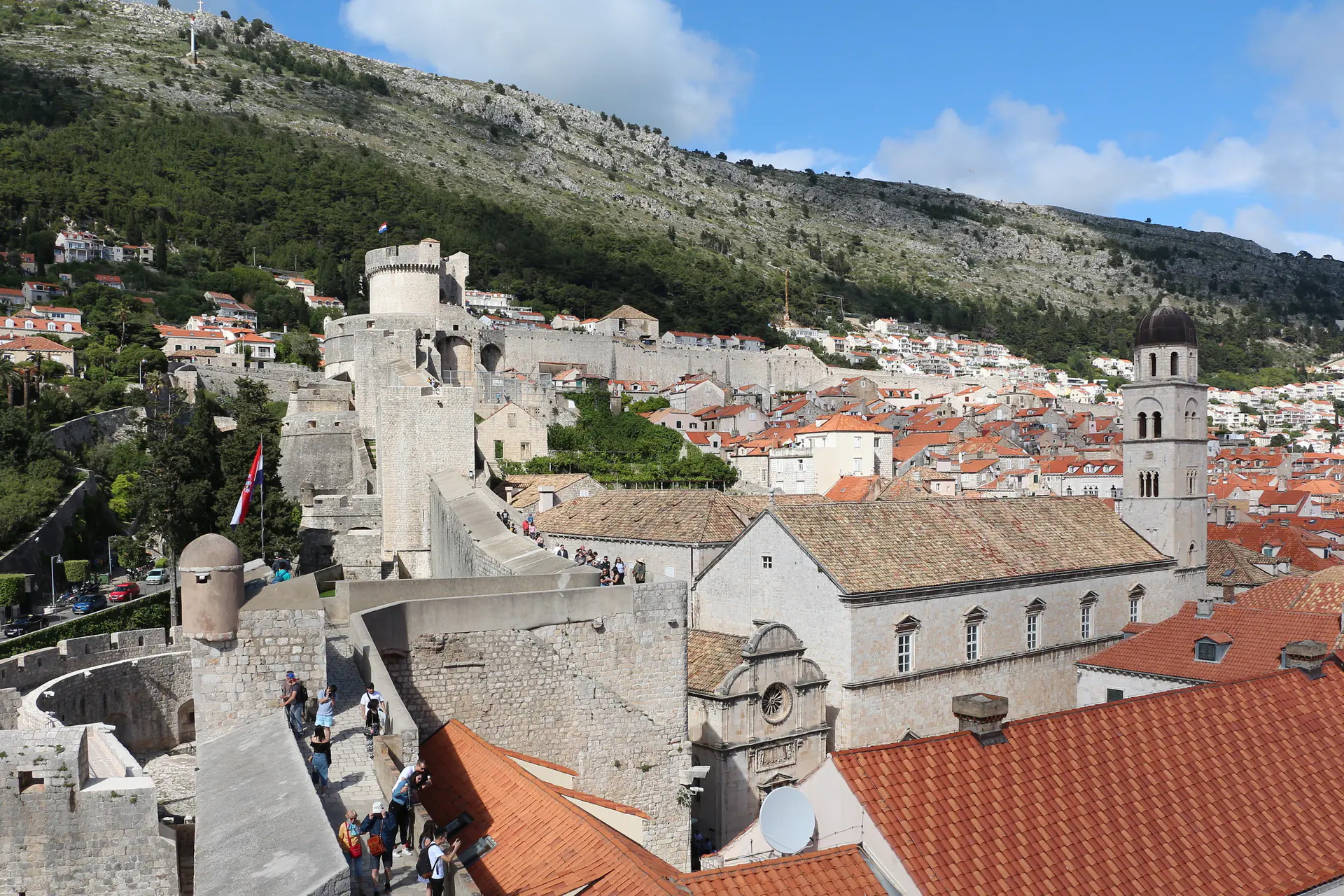
Walk the remarkable 1,940-meter defensive walls encircling Dubrovnik's Old City for breathtaking panoramas across terracotta rooftops, the sparkling Adriatic, and the island of Lokrum. These formidable fortifications reaching 25 meters high and 6 meters thick protected the Republic of Ragusa's independence for centuries through sophisticated defensive engineering. The circuit passes iconic towers including Minceta Tower at the highest point, Fort Bokar projecting into the sea, and numerous watchtowers offering exceptional photography opportunities. Construction spanning the 11th through 17th centuries demonstrates evolving military architecture from medieval battlements to Renaissance artillery positions. The 1-2 hour walk provides unparalleled perspectives on Dubrovnik's remarkable preservation and architectural harmony.
Pro tip: Enter the walls at Ploce Gate rather than crowded Pile Gate, walking counter-clockwise to enjoy morning light on western walls--most visitors walk clockwise creating congestion, and the Maritime Museum entrance provides least-crowded access.
Must-See
Fort Lovrijenac Dramatic Fortress
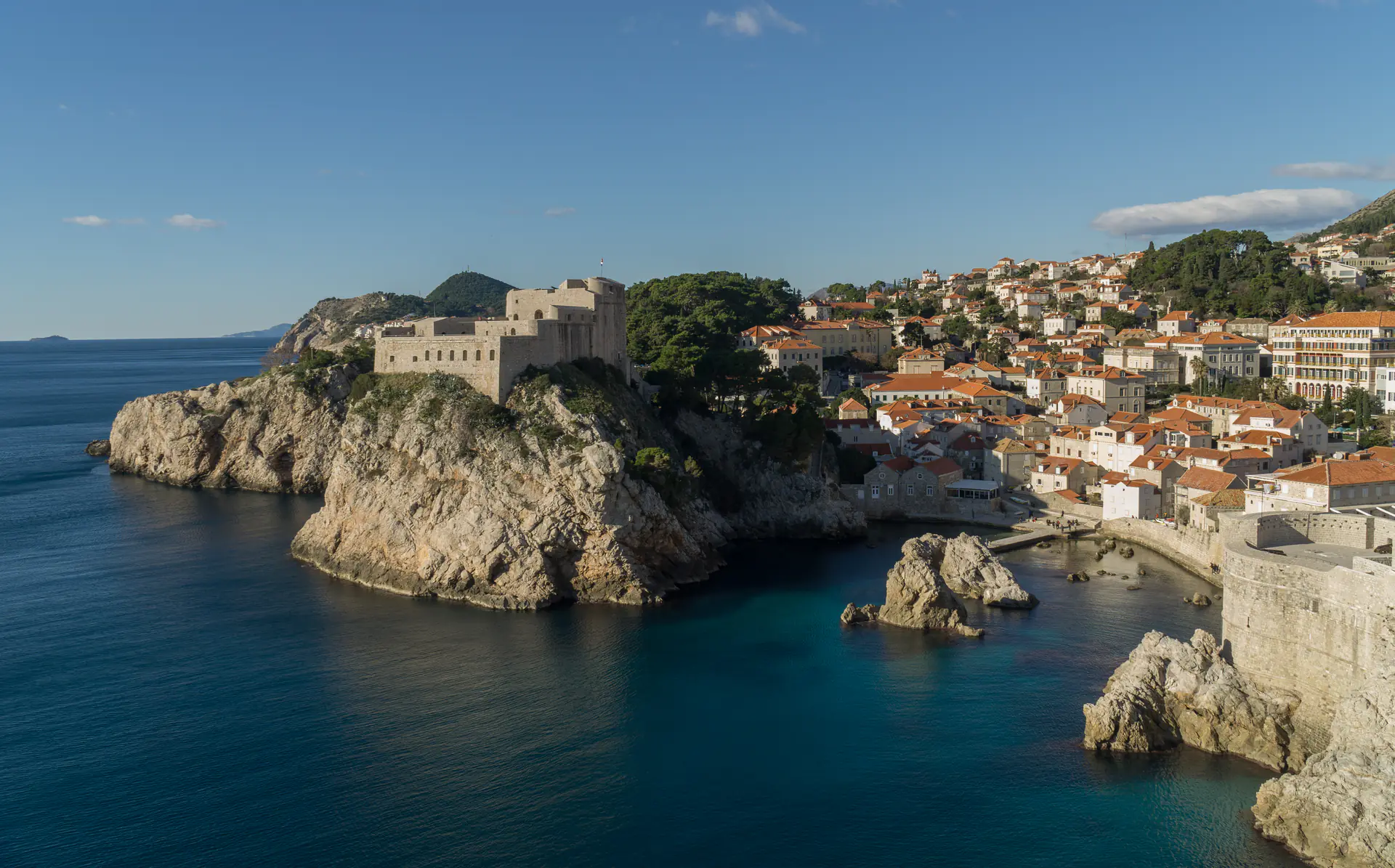
Visit the legendary fortress known as "Dubrovnik's Gibraltar" perched on a 37-meter cliff commanding the western harbor approach. According to local legend, citizens rushed to complete this fortress in three months before Venetian builders could arrive, inscribing the powerful motto "Non bene pro toto libertas venditur auro" (Freedom is not sold for all the gold in the world) above the entrance. The triangular fortress features walls up to 12 meters thick facing the sea and remarkably thin walls facing the city--ensuring the fortress could never threaten Dubrovnik's independence. Today Fort Lovrijenac hosts spectacular performances during the Dubrovnik Summer Festival and offers unmatched views of the Old City walls and western coastline.
Pro tip: Combined city walls tickets include Fort Lovrijenac entry--visit the fortress first thing in the morning when soft light illuminates the Old City for photography, then complete the wall circuit as crowds build.
Recommended
Stradun and Historic Squares
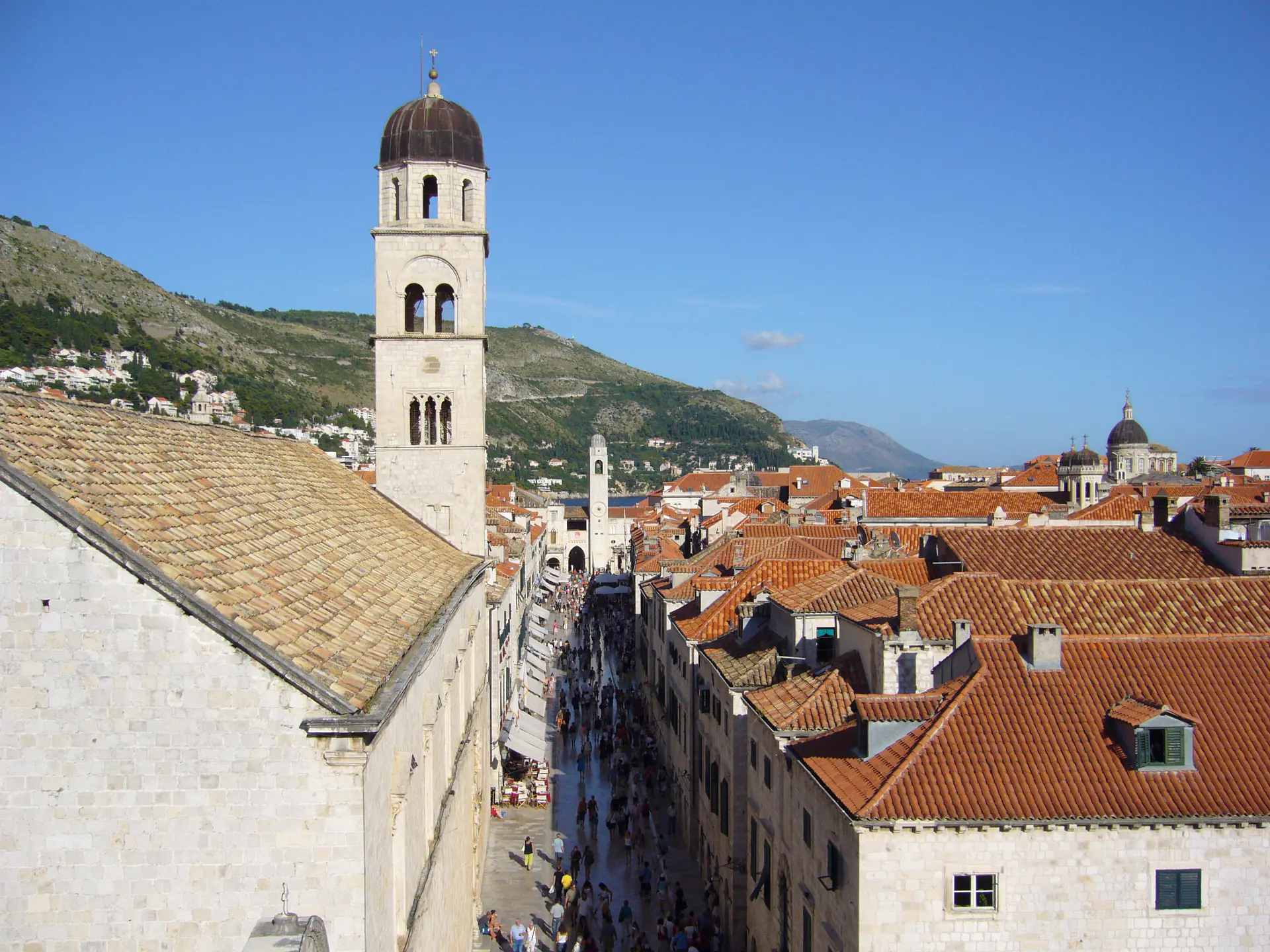
Stroll the Stradun (Placa), Dubrovnik's magnificent 300-meter limestone-paved main thoroughfare connecting Pile and Ploce gates through the heart of the Old City. Following the 1667 earthquake, uniform baroque facades replaced earlier structures, creating the harmonious streetscape visible today. This elegant promenade passes historic landmarks including Onofrio's Large Fountain at the Pile Gate entrance and the Small Fountain near the Bell Tower at the Ploce end. Branching streets lead to intimate squares featuring the Rector's Palace with its Gothic-Renaissance architecture, the Sponza Palace that survived the earthquake intact housing the city archives, and the Cathedral of the Assumption of the Virgin Mary. Evening brings locals and visitors to outdoor cafes for people-watching.
Pro tip: Visit Sponza Palace to see original 16th-century architecture unchanged since construction--the palace alone survived the 1667 earthquake intact, preserving Dubrovnik's Renaissance heritage and now housing the Memorial Room honoring defenders from the 1991-1995 war.
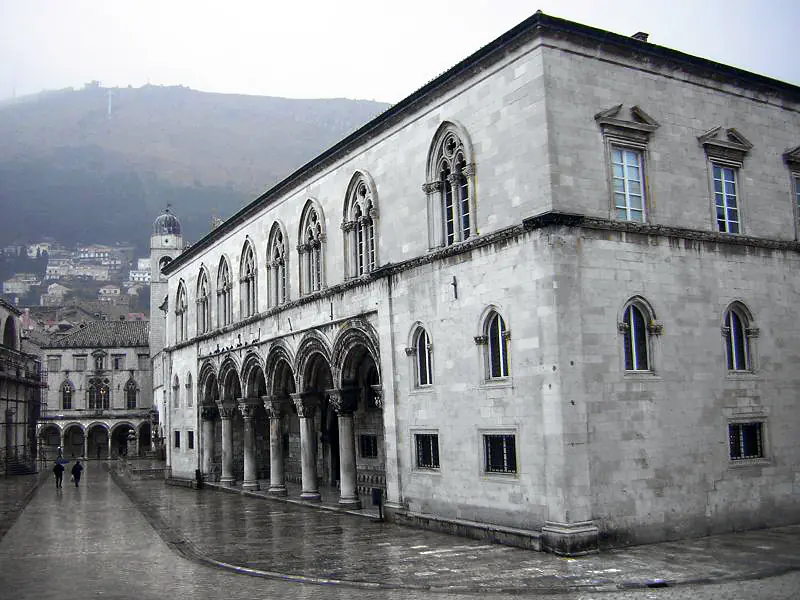
Recommended
Rector's Palace and Museums
Explore the Rector's Palace, seat of government for the Republic of Ragusa where elected rectors served single-month terms to prevent concentration of power. This Gothic-Renaissance masterpiece features an elegant loggia, ornate interior chambers, and the Cultural History Museum showcasing Dubrovnik's maritime and civic heritage. Damaged repeatedly by gunpowder explosions and earthquakes, the palace's reconstruction layers Gothic, Renaissance, and baroque elements demonstrating centuries of architectural evolution. Adjacent buildings house the Maritime Museum in Fort St. John documenting Ragusa's commercial shipping prowess, and the Dominican Monastery with its remarkable art collection. The stone-carved motto "Obliti privatorum publica curate" (Forget private affairs, look after public matters) reflects the republic's civic philosophy.
Pro tip: Purchase the Dubrovnik Card for access to museums, walls, and public transport--the card saves money and avoids multiple ticket queues while supporting city heritage conservation programs.
Historical Context
Byzantine Origins (7th century)
Greek-speaking refugees from nearby Epidaurum fled Slavic invasions to establish Ragusa on a rocky island separated from the mainland by a narrow channel. The settlement developed under Byzantine protection, gradually expanding its maritime trading capabilities and establishing the character that would define its future prosperity.
Republic of Ragusa Flourishing (13th-16th centuries)
Ragusa emerged as an independent city-state and significant Mediterranean maritime power, rivaling Venice in commercial shipping while maintaining diplomatic skill that preserved independence through alliances and tribute. The republic constructed its famous walls, established sophisticated governance systems, and developed extensive trading networks reaching throughout the Mediterranean and beyond.
The Great Earthquake (April 6, 1667)
A catastrophic earthquake struck at 8:00 AM lasting 8-15 seconds, killing an estimated 3,000-5,000 people including Rector Simone Ghetaldi and destroying over three-quarters of public buildings. Despite this devastating blow, Dubrovnik's citizens rebuilt the city in harmonious baroque style while preserving the medieval street plan and defensive walls, demonstrating remarkable resilience.
Napoleonic End and Austrian Rule (1808-1918)
Napoleon's forces occupied Dubrovnik in 1806, abolishing the Republic of Ragusa in 1808 after over four centuries of independence. The city subsequently passed to Austrian Habsburg rule, losing its political importance while preserving its architectural heritage through reduced development pressure.
Yugoslav Period and War of Independence (1918-1995)
Dubrovnik joined the newly formed Yugoslavia after World War I, later developing as a significant tourist destination. During the Croatian War of Independence (1991-1995), the city suffered shelling causing significant damage to historic buildings. UNESCO listed Dubrovnik on the List of World Heritage in Danger from 1991-1998 while coordinating an $80 million restoration effort.
UNESCO Recognition and Tourism Challenges (1979-present)
UNESCO inscribed Dubrovnik among the first World Heritage Sites in 1979, recognizing its outstanding universal value. Successful post-war restoration returned the city to its former glory, though explosive tourism growth creates contemporary challenges. Game of Thrones filming from 2011-2019 increased visitor numbers dramatically, prompting cruise ship limits and visitor management strategies to protect the site's integrity.
Conservation
Current Status
Dubrovnik faces significant conservation challenges from overtourism pressure that once threatened its World Heritage status. Croatian authorities have implemented visitor management measures including cruise ship limits and short-term rental restrictions to preserve the Old City's architectural integrity and resident community.
Challenges
- Overtourism creating peak crowding with 28 tourists per resident in summer, overwhelming infrastructure, diminishing visitor experience quality, and threatening UNESCO status through excessive commercialization
- Cruise ship concentrations disgorging thousands of passengers simultaneously, creating intense crowding at major attractions during limited port call hours and straining city services
- Residential displacement as traditional inhabitants leave the Old City due to rising costs, noise, and short-term rental conversion, transforming living neighborhoods into tourist-only zones
- Stone deterioration from sea salt exposure, air pollution, and climate change requiring ongoing conservation of medieval walls, baroque facades, and historic infrastructure
- Earthquake vulnerability in seismically active region where future tremors could threaten ancient structures, requiring monitoring systems and emergency preparedness planning
Conservation Efforts
- Cruise ship visitor caps limiting daily arrivals to 4,000 passengers with maximum two ships simultaneously, implementing staggered schedules to distribute crowds throughout the day
- Short-term rental restrictions in the Old City reducing apartment conversions to holiday lets and incentivizing permanent residential use through regulatory and tax measures
- Skilled stonemason programs training craftspeople in traditional techniques for ongoing restoration of war-damaged and weather-worn limestone facades and fortifications
- UNESCO monitoring and coordination providing technical expertise, international attention, and conservation standards to guide sustainable tourism development
- Heritage interpretation improvements enhancing visitor understanding of conservation challenges while promoting responsible tourism behavior and extended shoulder-season visits
Frequently Asked Questions
Absolutely. Dubrovnik offers one of Europe's most spectacular medieval walled cities with exceptional preservation, stunning Adriatic views, and rich maritime heritage. The complete city walls circuit, baroque architecture, and Game of Thrones filming locations create unforgettable experiences. Visit during shoulder season for optimal conditions.
City walls tickets cost €40 ($44 USD) for adults during peak season (March-November), €20 off-season. Students pay €15, children 7-18 pay €15/€5. Tickets include Fort Lovrijenac and remain valid for 72 hours. Entry points at Pile Gate, Ploce Gate, and Maritime Museum.
Advance booking recommended during peak season (July-August) to avoid ticket queues, though walk-up access usually available. Purchase online through citywallsdubrovnik.hr for confirmed entry. Early morning visits (8:00-9:00) experience shortest queues and best conditions before cruise ships arrive.
April-May and September-October offer ideal weather (20-25°C) with manageable crowds and lower prices. Avoid July-August when temperatures exceed 35°C and cruise ships bring overwhelming tourist numbers. Morning visits essential to avoid midday heat and peak crowding.
Plan minimum 1-2 full days for comprehensive Old City exploration including complete wall circuit (2 hours), Fort Lovrijenac, major monuments, and museums. Three days enable day trips to Lokrum Island and Elafiti Islands while experiencing Old City atmosphere after day-trippers depart.
Dubrovnik served as King's Landing filming location for seasons 2-8 (2012-2019). Key sites include Fort Lovrijenac (Red Keep exterior), Pile Gate (city gates), Jesuit Stairs (Walk of Shame), and Trsteno Arboretum 20 kilometers away. Guided tours cost €25-40 for 2-3 hours.
Yes, the complete 1,940-meter wall circuit is fully walkable with ticket purchase. The walk takes 1.5-2 hours passing towers, fortresses, and offering panoramic views. Circuit involves steep stairs without elevator alternatives. Best completed in morning before heat builds.
Yes, particularly July-August when cruise ships bring thousands daily. Dubrovnik implemented 4,000-visitor daily cruise limits due to overcrowding concerns. Visit during shoulder season, stay overnight to enjoy evenings after day-trippers depart, and arrive at attractions early morning.
The Republic of Ragusa was an independent maritime city-state based in Dubrovnik from 1358-1808. At its height, Ragusa rivaled Venice in commercial shipping while maintaining independence through skilled diplomacy. The republic built Dubrovnik's famous walls and established the civic traditions visible in today's Old City.
Dubrovnik Airport is 20 kilometers away with shuttle buses to Pile Gate (€8, 30 minutes). Local buses connect surrounding areas to Old City perimeter. The historic center is entirely pedestrian--no vehicles enter the walls. Cable car ascends Srd Hill for panoramic views.
UNESCO World Heritage Criteria
Inscribed in 1979, this site meets 3 of UNESCO's 10 criteria for Outstanding Universal Value
I
Criterion (i): Masterpiece of human creative genius
Dubrovnik represents a masterpiece of human creative genius through its harmonious integration of Gothic, Renaissance, and baroque architecture within preserved medieval defensive walls. The unified urban ensemble demonstrates exceptional architectural achievement, with the post-1667 earthquake reconstruction creating remarkable aesthetic coherence while respecting the original urban plan.
III
Criterion (iii): Testimony to cultural tradition
The Old City bears exceptional testimony to the cultural tradition of the Republic of Ragusa as an independent maritime power rivaling Venice. The preserved fortifications, civic buildings, churches, and urban fabric document sophisticated governance, commercial success, and diplomatic skill that maintained independence for over four centuries.
IV
Criterion (iv): Outstanding architectural/technological ensemble
Dubrovnik's fortification system represents an outstanding example of medieval and Renaissance defensive architecture. The 1,940-meter walls with towers, bastions, and detached fortresses demonstrate the evolution of military engineering from medieval battlements through artillery age adaptations, remaining among Europe's most complete preserved urban fortifications.
Image & Content Attribution
Research & Content Sources
Photography & Visual Media
Last updated: 20 December 2025