
Morocco • UNESCO World Heritage Site
Medina of Fez: World's Oldest University & Medieval Islamic City
Timeless Labyrinth of Craft Traditions and Scholarship
Inscribed: 1981
Category: Cultural
ID: #170
What Is Medina of Fez and Why Visit?
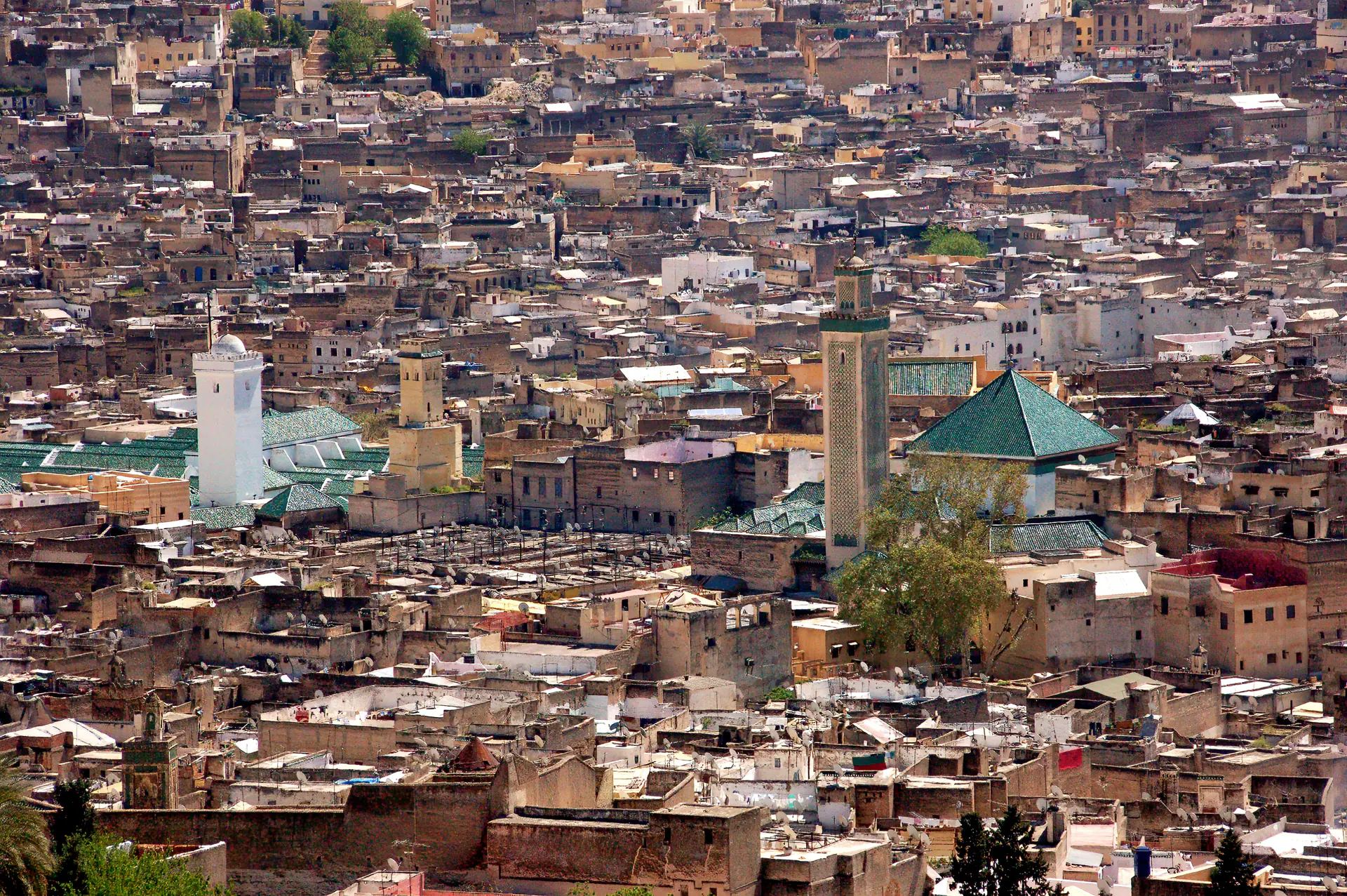
Idris I founded Fez in 789 AD to establish a new capital demonstrating Idrisid dynasty legitimacy, with the medina rapidly becoming North Africa's preeminent center of Islamic learning, commerce, and craftsmanship over subsequent centuries. This extraordinary medieval city preserves 9,400 narrow alleyways forming the world's largest car-free urban area where artisans maintain centuries-old traditions including leather tanning, metalwork, ceramic production, and textile weaving in workshops unchanged since medieval times. The medina houses Al-Qarawiyyin, founded in 859 AD as the world's oldest continually operating university where scholars developed groundbreaking advances in mathematics, astronomy, and medicine. Fez el-Bali represents an outstanding example of human settlement demonstrating sophisticated urban planning, architectural harmony, and cultural continuity spanning twelve centuries of continuous habitation.
Why It Matters
This exceptional medieval Islamic city demonstrates outstanding universal value through its role facilitating interchange of human values across Muslim, Jewish, and Christian cultures while exemplifying traditional human settlement vulnerable to irreversible change, preserving authentic craftsmanship traditions and urban fabric representing twelve centuries of continuous civilization.
How to Visit Medina of Fez
Essential information for visiting this destination
How to Get to Medina of Fez
Fes-Saïss Airport lies 15 kilometers south of city center with taxis charging MAD 120-150 ($12-15 USD) for 20-minute transfers or airport shuttles offering economical alternatives at MAD 20 ($2 USD) per person. Morocco's excellent rail network connects Fez to Casablanca in 4 hours, Marrakech in 7 hours, and Tangier in 4.5 hours with comfortable ONCF trains offering air-conditioned first and second-class carriages at reasonable prices. Within Fez, blue petit taxis serve modern Ville Nouvelle districts with metered fares while the medieval medina remains entirely car-free requiring exploration on foot. Bus services connect major districts though most visitors rely on walking and taxis for transportation.
Best Hotels Near Medina of Fez
Traditional riads within medina walls provide authentic Moroccan accommodation experiences in restored merchant houses featuring central courtyards with fountains, rooftop terraces offering medina views, and ornate Islamic decoration. Many riads occupy centuries-old buildings preserving historical architecture while providing modern amenities including WiFi and en-suite bathrooms. Porters assist guests carrying luggage through narrow alleyways to car-free locations.
Ville Nouvelle modern district offers international hotel chains providing familiar Western comfort with easier vehicle access, restaurants, and shopping proximity while maintaining 10-15 minute taxi rides to medina entrances. Mid-range hotels balance comfort with value for travelers prioritizing accessibility over historical atmosphere.
Budget travelers find numerous guesthouses and hostels throughout both medina and new city providing dormitory and private room options with shared facilities at economical rates under MAD 200 ($20 USD) nightly, though thorough research ensures quality and cleanliness standards.
Where to Eat Near Medina of Fez
Fassi cuisine represents Morocco's most refined culinary tradition featuring signature dishes including pastilla (savory-sweet pigeon pie with almonds and cinnamon), rfissa (shredded msemen pancakes with lentils and chicken), and slow-cooked tagines prepared in traditional earthenware vessels over charcoal. Traditional restaurants in medina serve authentic Moroccan meals in atmospheric settings with elaborate multi-course menus showcasing local specialties. Ville Nouvelle offers diverse international dining alongside modern Moroccan restaurants with contemporary interpretations. Medina food stalls provide economical street food including harira soup, msemen pancakes, and fresh khobz bread baked in communal ovens. Traditional mint tea accompanies every meal representing fundamental Moroccan hospitality ritual. Local markets overflow with dates, olives, spices, preserved lemons, and fresh produce forming foundations of Moroccan cooking.
Medina of Fez Entry Fees & Tour Prices
Medina entry costs nothing allowing unlimited exploration of alleyways, souks, and public spaces. Official guided tours through authorized tourism offices cost MAD 250-400 ($25-40 USD) for half-day walks providing historical context and navigation assistance through labyrinthine streets. Artisan workshop visits observing traditional crafts are typically free or involve small MAD 20-50 ($2-5 USD) tips.
Bou Inania Madrasa entry costs MAD 20 ($2 USD) while most other accessible historic buildings charge similar modest fees. Photography permits at certain locations cost additional MAD 10-20 ($1-2 USD). Cooking classes teaching traditional Moroccan cuisine cost MAD 400-600 ($40-60 USD) including market tours and multi-course meal preparation.
Day trips to nearby Meknes (UNESCO site) and Volubilis Roman ruins cost MAD 350-500 ($35-50 USD) including transport and guided tours. Ifrane mountain town and cedar forests featuring Barbary macaques make popular excursions at MAD 300-450 ($30-45 USD). Hammam traditional bathhouse experiences cost MAD 50-150 ($5-15 USD) for authentic cultural immersion.
What to Bring to Medina of Fez
Comprehensive travel insurance covering medical emergencies essential for Morocco travel given unfamiliar food potentially causing digestive issues and healthcare system differences. Morocco uses Type C and E electrical outlets (220V). International eSIM cards provide convenient data connectivity enabling navigation apps crucial for medina exploration, translation tools, and communication without expensive roaming charges.
Moroccan dirham (MAD) remains official currency with ATMs widely available in Ville Nouvelle though limited within medina requiring cash preparation before entering. Many traditional shops and artisans operate cash-only with bargaining expected--initial asking prices often represent 3-4 times fair market value requiring persistent negotiation.
Spring and autumn temperatures range 15-25°C ideal for extensive walking, while summer exceeds 35°C creating challenging exploration conditions. Winter brings occasional rain requiring waterproof footwear for slippery cobblestones. Pack modest clothing respecting Islamic culture, comfortable walking shoes for steep uneven surfaces, sunscreen, and refillable water bottle staying hydrated during day-long medina explorations.
Loading map...
Visitor Information
Everything you need to know for your visit
What to Bring
Comfortable walking shoes with excellent grip essential for steep cobblestone alleyways and uneven surfaces. Bring modest clothing covering shoulders and knees respecting Islamic culture. Pack daypack with water, sunscreen, and cash as many shops don't accept cards. Camera recommended for architectural details and vibrant souks.
Accessibility
The medieval medina presents significant accessibility challenges with steep narrow alleyways, uneven cobblestones, stairs, and no vehicle access. Major sites including Bab Boujloud offer limited accessibility. Local guides can help navigate easier paths. Most riads and hotels outside medina walls provide better modern accessibility.
Safety Tips
Getting lost is inevitable--hire reputable guides through official tourism offices avoiding aggressive unofficial guides. Watch footing on uneven cobblestones, particularly after rain. Respect mosques during prayer times and seek permission before photographing people. Pickpockets target crowded souks requiring vigilant security. Bargaining expected with initial prices often 3-4 times fair value.
Medieval Treasures of Islamic Craftsmanship
Must-See
Chouara Tannery Traditional Leather Production
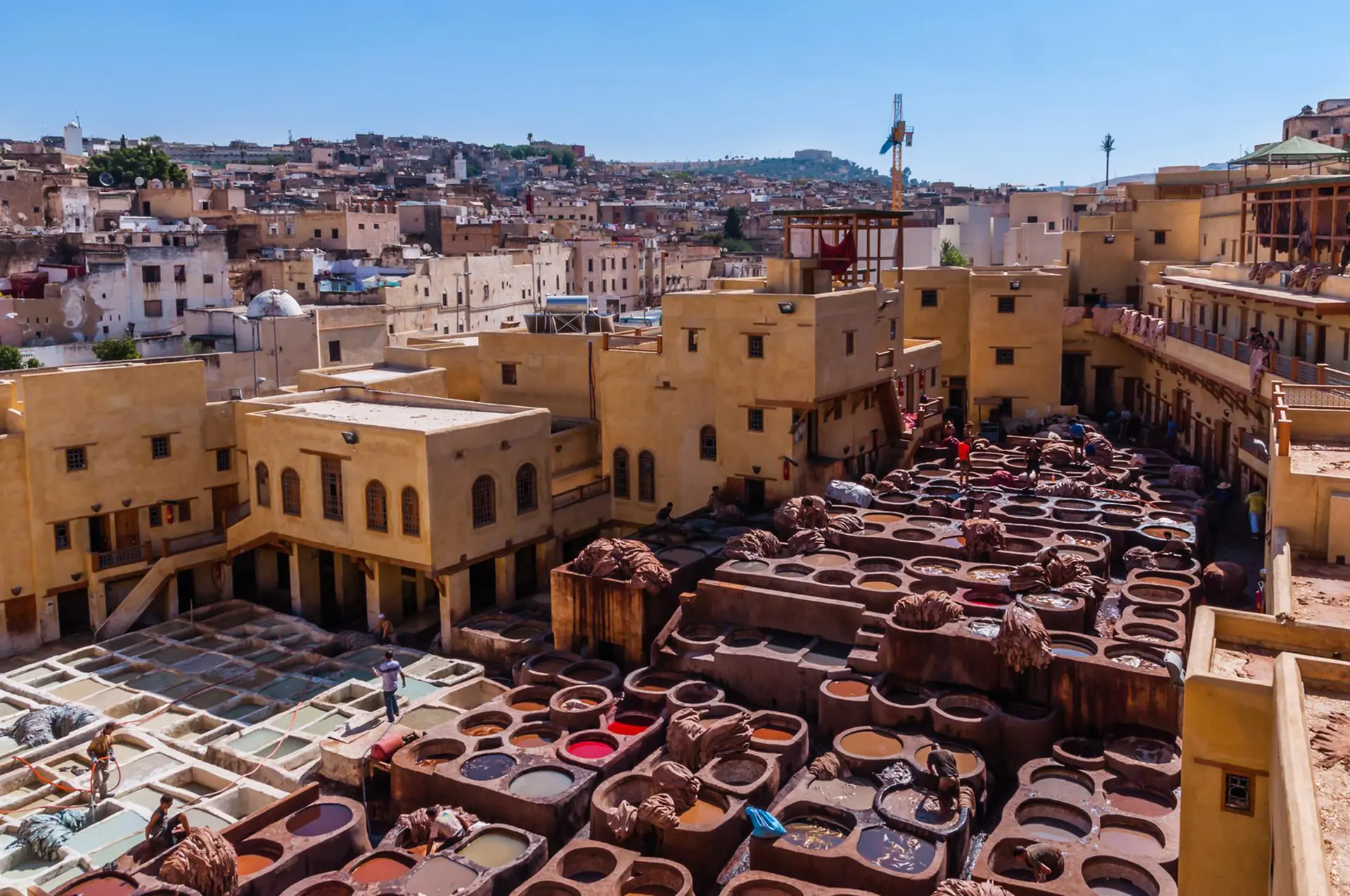
Witness North Africa's most iconic leather tannery where workers maintain 11th-century techniques using natural dyes extracted from saffron, indigo, henna, and poppy. The dramatic honeycomb pattern of stone vessels filled with vibrant pigments creates unforgettable visual spectacle visible from surrounding leather shops' terraces. Craftsmen spend weeks treating raw hides through multiple stages including soaking in pigeon excrement and cow urine for softening, then hand-dying skins destined for traditional Moroccan slippers, bags, and jackets. The pungent organic aromas from natural processing methods provide authentic sensory experience contrasting with sanitized modern industrial tanning. This centuries-old tradition faces modernization pressures yet continues demonstrating extraordinary craftsmanship passed through generations.
Pro tip: Visit tanneries during morning hours (8:00-11:00) when workers actively dye leather and optimal lighting conditions create spectacular photography--shops provide complimentary mint sprigs to mask intense odors while you observe from rooftop terraces offering best panoramic views.
Must-See
Bou Inania Madrasa Islamic Architecture
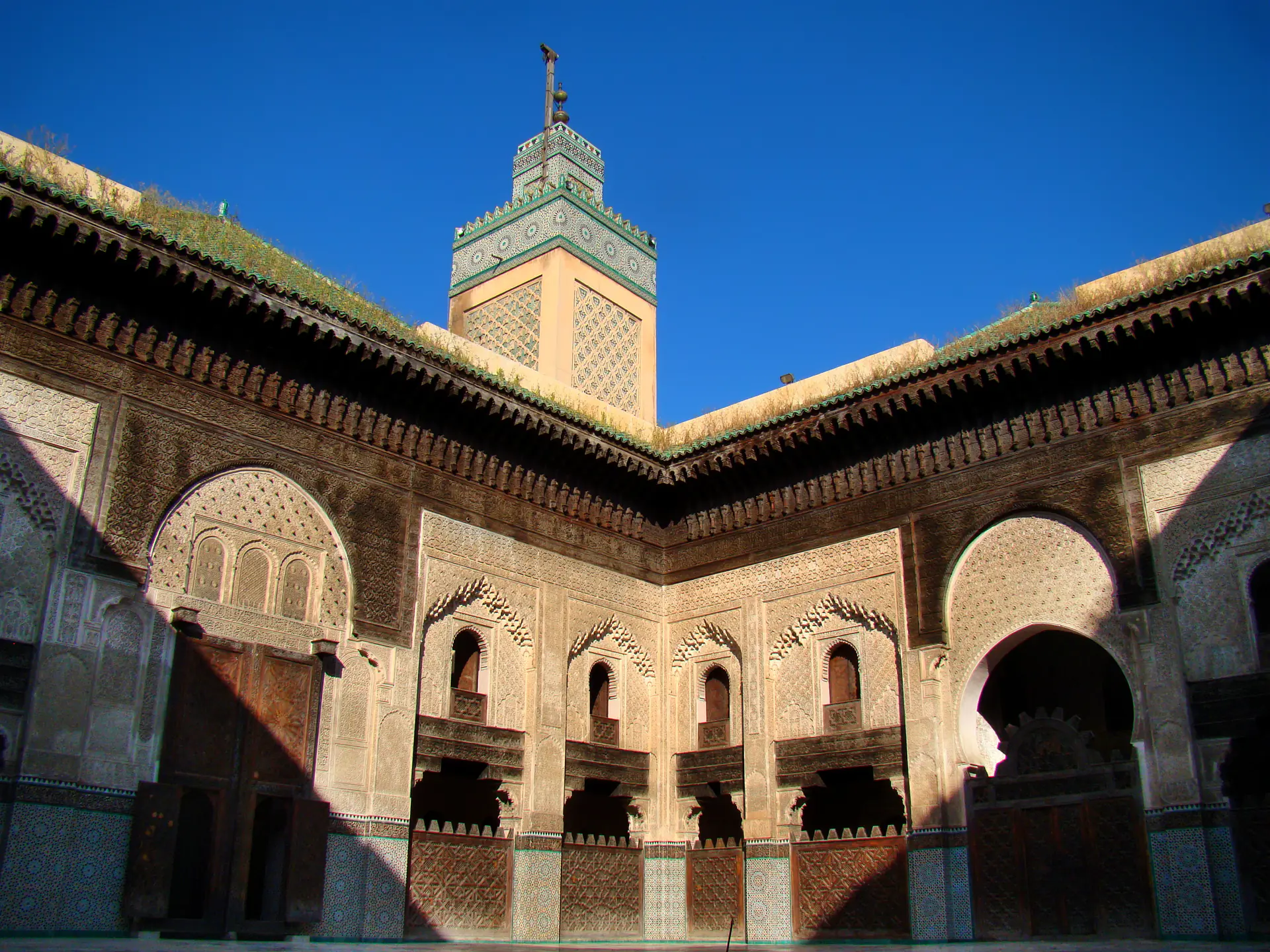
Enter Morocco's most elaborate theological college showcasing Marinid architectural mastery through breathtaking geometric zellige tilework, intricate carved stucco arabesque patterns, and ornate cedar woodwork demonstrating extraordinary medieval craftsmanship. Built in 1350-55, this functioning madrasa uniquely features both educational and religious purposes with stunning prayer hall, student dormitory cells surrounding tranquil courtyard, and rare minaret making it Morocco's only madrasa authorized for Friday prayers. The elaborate bronze entrance doors, marble columns, and onyx water basin exemplify sophisticated material use. Detailed calligraphic inscriptions from Quran cover walls creating contemplative atmosphere. The adjacent complex housed innovative water clock mechanism demonstrating medieval Islamic scientific advancement in timekeeping technology.
Pro tip: Arrive right at 9:00 opening time to photograph the stunning courtyard in peaceful isolation before tour groups arrive--the morning light streaming through carved cedar screens creates magical shadows across zellige tilework ideal for architectural photography.
Recommended
Al-Qarawiyyin University and Mosque Complex
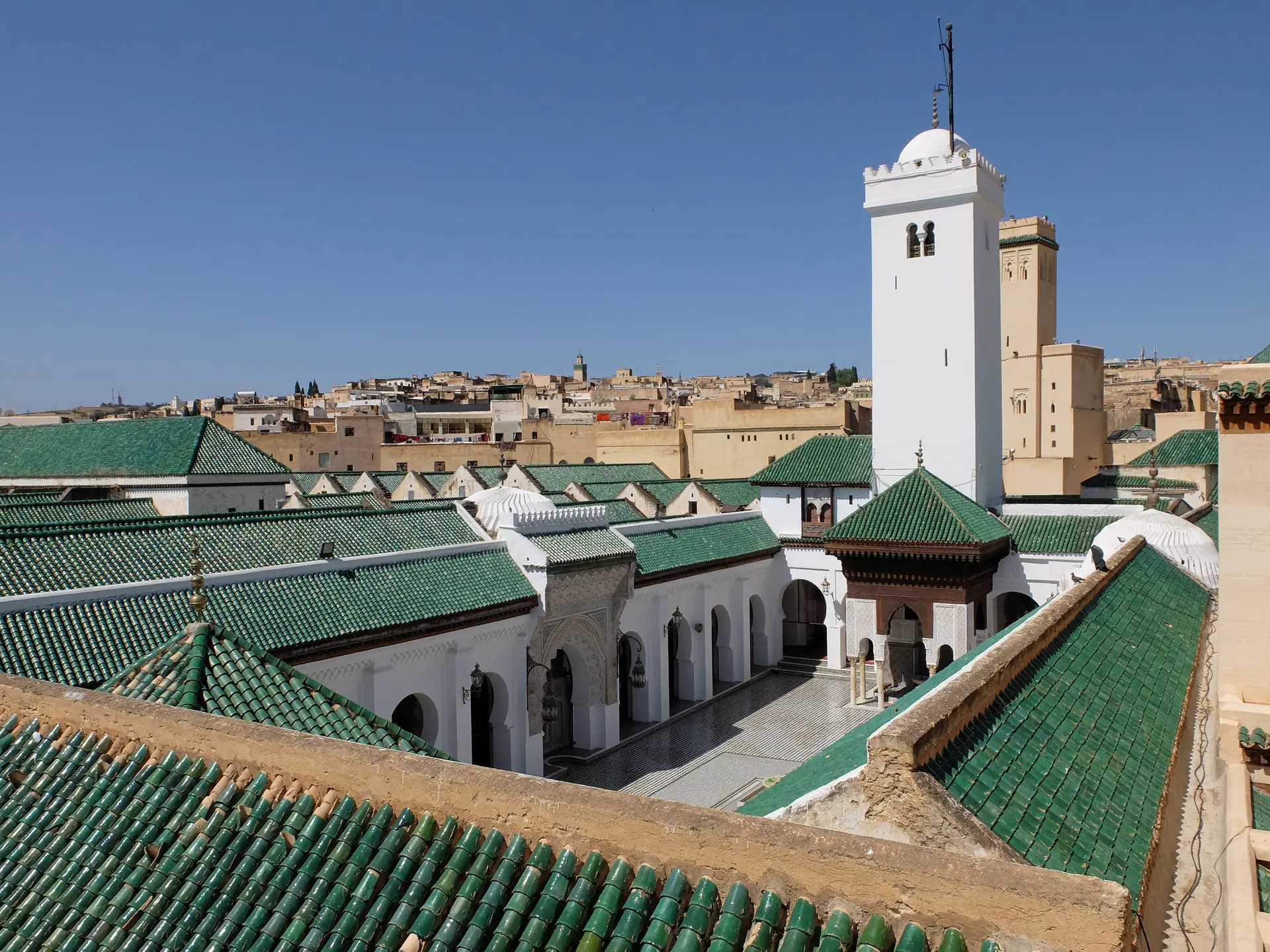
Explore the world's oldest continually operating university, founded in 859 AD by Fatima al-Fihri who dedicated her inheritance to building this transformative educational institution. This remarkable complex shaped Islamic intellectual tradition for over 1,100 years, hosting scholars including Ibn Khaldun and Al-Idrisi who advanced mathematics, astronomy, philosophy, and medicine. The magnificent mosque accommodates 20,000 worshippers under elaborate prayer halls featuring stunning Marinid-era renovations with intricate carved cedar ceilings, marble columns, and spectacular tilework. While non-Muslims cannot enter the mosque, viewing courtyards and surrounding medersas provides insight into extraordinary architectural achievement. The adjacent library houses priceless manuscripts including 9th-century Qurans representing irreplaceable Islamic scholarly heritage.
Pro tip: Book specialized heritage tours through official tourism offices enabling access to restricted library sections containing rare manuscripts and architectural spaces normally closed to tourists--these exclusive small-group tours require advance reservation but offer extraordinary insights into Islamic scholarly traditions.
Recommended
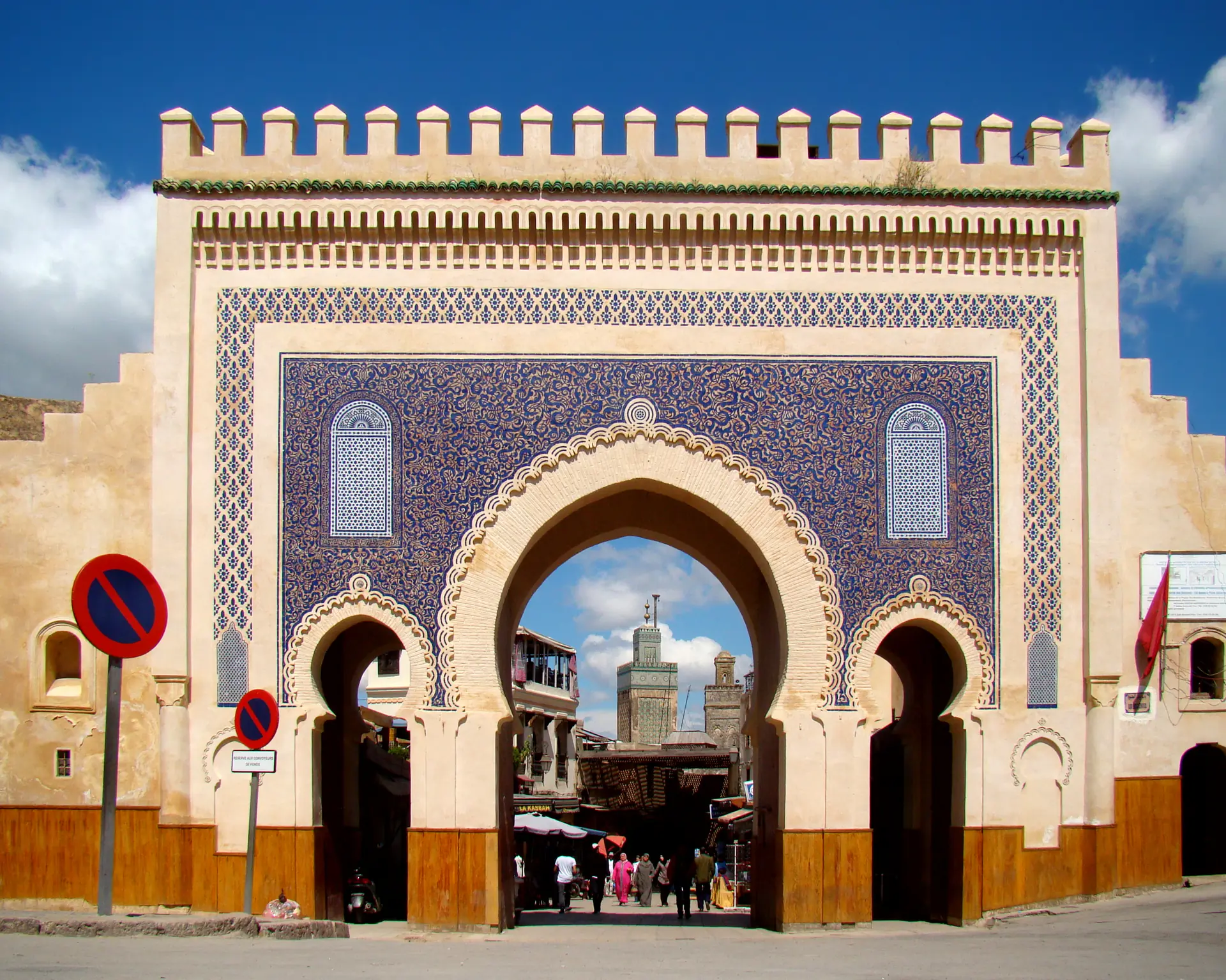
Bab Boujloud (Blue Gate) and Medina Entrance
Pass through Fez's most photographed landmark, the spectacular Blue Gate built in 1913 showcasing traditional Moroccan ceramic tilework with blue exterior facing the new city and green interior facing the medina representing Islamic paradise. This monumental horseshoe archway serves as the principal entrance to Fes el-Bali, where stepping through transports visitors into medieval times with immediate immersion into bustling alleyways filled with donkey caravans, artisan workshops, and traditional souks. The gate's vibrant zellige patterns demonstrate extraordinary craftsmanship with geometric precision. Surrounding cafes and restaurants provide excellent vantage points for people-watching while observing constant flow between modern and ancient worlds. The adjacent Bou Jeloud Gardens offer peaceful respite from medina intensity.
Pro tip: Visit the Blue Gate during late afternoon golden hour (16:00-18:00) when warm sunlight illuminates the intricate tilework creating stunning photography conditions, then linger nearby for evening call to prayer echoing across the medina--an unforgettable sonic experience.
Historical Context
Idrisid Foundation (789-808 AD)
Idris I founded Fez in 789 AD establishing a new capital for the Idrisid dynasty. His son Idris II expanded the settlement in 808 AD, creating two distinct quarters that would form Fes el-Bali. The city attracted Muslim refugees from Córdoba and Kairouan, bringing sophisticated urban planning knowledge and artisan skills.
Islamic Golden Age (9th-13th centuries)
Fatima al-Fihri founded Al-Qarawiyyin University in 859 AD, establishing Fez as a preeminent center of Islamic learning. The city became a major intellectual hub where scholars advanced mathematics, astronomy, medicine, and philosophy. Jewish quarters developed alongside Muslim districts, creating unique multicultural urban fabric fostering cultural interchange.
Marinid Flourishing (13th-15th centuries)
The Marinid dynasty transformed Fez into North Africa's most splendid city, constructing magnificent madrasas including Bou Inania and Al-Attarine showcasing extraordinary architectural achievement. Artisan guilds established organized craft traditions including metalwork, leather production, ceramics, and textile weaving that continue today. The medina reached its maximum extent with sophisticated infrastructure.
Saadian and Alaouite Era (16th-19th centuries)
Though Marrakech became the new capital under Saadian rule, Fez maintained its religious and intellectual prestige. The Alaouite dynasty recognized Fez's cultural importance, preserving its institutions while political power shifted. The medina's urban fabric remained largely intact, with continuous craft production maintaining economic vitality throughout political changes.
French Protectorate (1912-1956)
French authorities preserved the historic medina while constructing modern Ville Nouvelle adjacent to old city, implementing influential urban planning separating traditional and colonial districts. This protection prevented destructive modernization affecting other historic cities. General Lyautey's conservation policies established frameworks protecting medina's architectural heritage while introducing modern infrastructure outside historic zones.
UNESCO Recognition (1981-present)
UNESCO World Heritage inscription in 1981 recognized Fez el-Bali's outstanding universal value, catalyzing international conservation efforts addressing deteriorating infrastructure and building fabric. Ongoing restoration projects balance heritage preservation with resident quality-of-life improvements. The medina faces pressures from tourism, urban migration, and modernization while maintaining authentic craftsmanship traditions and continuous habitation spanning twelve centuries.
Conservation
Current Status
The Medina of Fez undergoes extensive conservation addressing deteriorating infrastructure, building collapse risks, and sustainable tourism development through UNESCO partnership and international funding while balancing heritage preservation with modern living standards for 150,000 resident population.
Challenges
- Building deterioration from inadequate maintenance, water infiltration, and structural aging threatening collapse of historic houses requiring urgent stabilization interventions across thousands of properties
- Infrastructure deficiencies including outdated sewage systems, inadequate water supply, electrical hazards, and limited waste collection creating public health risks and accelerating building deterioration
- Population decline as younger residents migrate to modern districts seeking better living conditions, leaving aging population unable to maintain traditional houses and crafts
- Tourism pressure from mass visitor influx creating congestion in narrow alleyways, commercialization altering authentic character, and unsustainable development threatening urban fabric integrity
- Craftsmanship decline as traditional artisans face economic pressures from cheap imports and younger generations pursuing modern careers rather than learning historic production techniques
Conservation Efforts
- UNESCO-supported rehabilitation programs restoring significant monuments while training local craftsmen in traditional building techniques ensuring authentic conservation methods and skills transmission
- Infrastructure modernization projects upgrading sewage systems, water supply, and electrical networks using minimally invasive techniques preserving historic fabric while improving resident quality of life
- Community development initiatives providing microfinance for artisan cooperatives, housing rehabilitation grants for residents, and educational programs promoting traditional craft apprenticeships
- Sustainable tourism strategies implementing visitor management protocols, promoting dispersed exploration patterns, and developing interpretation programs educating tourists about conservation challenges and cultural sensitivity
- International partnerships bringing technical expertise, funding, and training programs from global conservation organizations while engaging local communities in participatory planning processes
Frequently Asked Questions
Absolutely. Fez offers Morocco's most authentic medieval Islamic city experience with 9,400 alleyways, world-renowned traditional crafts, and Al-Qarawiyyin University. The car-free medina preserves centuries-old urban fabric unlike any other city globally. Plan 2-3 days minimum for meaningful exploration.
Highly recommended for first visits. The labyrinthine 9,400 alleyways make navigation extremely challenging. Official guides (MAD 250-400/$25-40 USD through tourism offices) provide historical context, craftsman workshop access, and efficient routing. Independent exploration remains possible but expect to get lost frequently.
March-May and September-November offer ideal weather (15-25°C) for extensive walking. Avoid July-August when temperatures exceed 35°C creating uncomfortable conditions in narrow alleyways with limited shade. Winter brings occasional rain making cobblestones slippery.
Plan minimum 2 full days exploring the medina's major sites, traditional souks, and artisan workshops. Three days enable thorough exploration including day trips to nearby Meknes and Volubilis Roman ruins, plus time appreciating slower medina rhythms.
Modest clothing respecting Islamic culture essential--cover shoulders and knees. Women should bring lightweight scarves for mosque visits. Comfortable walking shoes with excellent grip crucial for steep cobblestone alleyways. Avoid expensive jewelry attracting unwanted attention.
Generally very safe. Moroccan hospitality extends throughout medina with locals helping lost tourists. Pickpockets target crowded souks requiring vigilant bag security. Aggressive unofficial guides can be pushy--politely decline and use official tourism office services. Solo female travelers should exercise standard precautions.
The university mosque restricts entry to Muslims only. Non-Muslims can view the exterior, surrounding courtyard areas, and adjacent library from certain vantage points. Specialized heritage tours arranged through official tourism offices sometimes provide limited access to restricted areas.
Chouara Tannery is the largest and most photographed, operating since the 11th century using traditional natural dyes. Workers hand-process leather in hundreds of stone vessels creating iconic honeycomb pattern. Leather shops surrounding tanneries provide rooftop terrace viewpoints.
The entire medina is car-free--walking is the only option. Donkeys and mules transport goods through alleyways. Major entrances include Bab Boujloud (Blue Gate), Bab Rcif, and Bab Ftouh. Taxis serve medina perimeter but cannot enter historic core.
Traditional leather goods from ancient tanneries, intricate zellige ceramic tilework, handwoven textiles and carpets, ornate metalwork including brass and copper items, carved cedar woodwork, and embroidered fabrics. Artisan workshops throughout medina welcome visitors observing production techniques.
UNESCO World Heritage Criteria
Inscribed in 1981, this site meets 2 of UNESCO's 10 criteria for Outstanding Universal Value
II
Criterion (ii): Interchange of human values
Fez facilitated exceptional interchange where Islamic, Jewish, and Christian cultures intersected through commerce and scholarship. Al-Qarawiyyin University attracted scholars who advanced mathematics, astronomy, and philosophy, influencing European Renaissance thought. Artisan traditions exemplify knowledge transmission across generations, with techniques spreading throughout North Africa and Mediterranean regions.
V
Criterion (v): Outstanding traditional human settlement
Fez represents outstanding traditional settlement demonstrating sophisticated urban planning vulnerable to irreversible modernization. The car-free medieval city preserves authentic fabric spanning twelve centuries, with 9,400 alleyways maintaining original spatial organization. Traditional craftsmanship continues through living heritage, with artisans practicing unchanged medieval techniques representing fragile traditions threatened by economic transformations.
Image & Content Attribution
Research & Content Sources
Photography & Visual Media
MVmath20, CC BY-SA 4.0
AyoubPazolini, CC BY-SA 4.0
Bjørn Christian Tørrissen, CC BY-SA 3.0
R Prazeres, CC BY-SA 4.0
Bjørn Christian Tørrissen, CC BY-SA 3.0
Last updated: 12 December 2025