
Vietnam • UNESCO World Heritage Site
Ha Long Bay: Vietnam's Emerald Limestone Karst Seascape
Emerald Waters Among Towering Stone Pinnacles
Inscribed: 1994
Category: Natural
ID: #672bis
What Is Ha Long Bay and Why Visit?
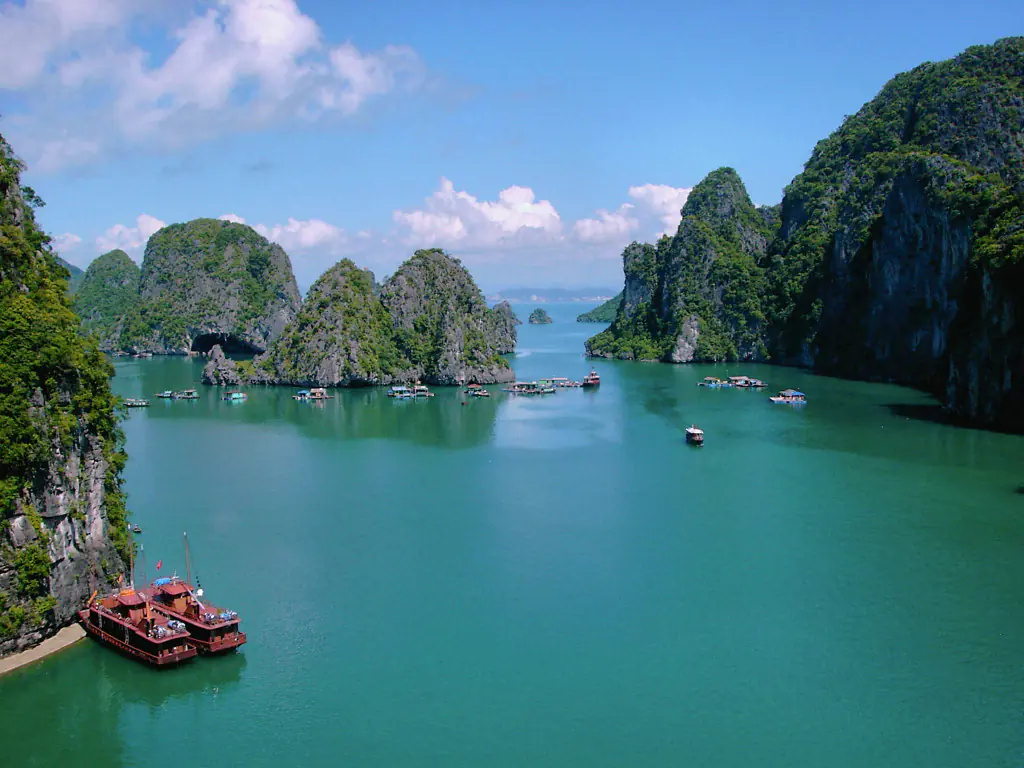
Ha Long Bay emerged through 500 million years as tectonic forces uplifted ancient limestone seabeds, with erosion sculpting over 1,600 dramatic karst islands rising from emerald waters in northeastern Vietnam's Gulf of Tonkin. The name translates to "Descending Dragon," referencing Vietnamese legend where a celestial dragon defended the land against invaders, creating the stone island labyrinth with thrashing tail movements. This spectacular seascape demonstrates exceptional geological processes through tower karst formations, caves adorned with stalactites and stalagmites, and secluded lagoons accessible only by kayak. Traditional Vietnamese junk boats with distinctive red sails navigate narrow passages between limestone pinnacles, while fishing communities inhabit floating villages existing for generations.
Why It Matters
This remarkable karst landscape demonstrates outstanding universal value as an exceptional representation of geological processes spanning 500 million years, while showcasing superlative natural phenomena through tower karst formations, caves, and islands that create one of the world's most spectacular seascapes.
How to Visit Ha Long Bay
Essential information for visiting this destination
How to Get to Ha Long Bay
Hanoi serves as the primary gateway to Ha Long Bay, located 165 kilometers from Vietnam's capital with journey times varying from 3-4 hours depending on transportation method and traffic conditions. Luxury cruise operators provide direct shuttle bus transfers from Hanoi hotels offering comfortable air-conditioned coaches, though budget travelers choose public buses departing from My Dinh or Luong Yen stations costing VND 100,000-150,000 ($4-6 USD). Private car services enable flexible departure times and stops at ceramic villages along Highway 5B. Seaplane services from Hanoi offer spectacular aerial views during the 45-minute flight, though premium pricing restricts this option to luxury travelers. Within Ha Long Bay, all exploration occurs via boat with cruise vessels serving as floating accommodation and transportation combined.
Best Hotels Near Ha Long Bay
Overnight cruise packages provide the authentic Ha Long Bay experience, with vessels ranging from budget-friendly wooden boats offering basic cabins and shared facilities to ultra-luxury cruise ships featuring spacious suites with private balconies, fine dining restaurants, and spa facilities. Mid-range cruises represent optimal value combining comfortable en-suite cabins with quality seafood meals, guided activities including kayaking and cave exploration, and professional service from English-speaking crews.
Ha Long City adjacent to the bay offers land-based hotels for travelers preferring stationary accommodation, though this approach requires booking separate day cruises missing sunrise and sunset magic experienced during overnight stays. Budget guesthouses near Bai Chay Bridge provide economical options, while international resort hotels along the waterfront deliver luxury amenities.
Cat Ba Island features beachfront resorts, eco-lodges within the national park, and budget hostels catering to backpackers exploring the island's hiking trails and rock climbing opportunities while using it as a base for exploring Ha Long Bay's southern areas.
Where to Eat Near Ha Long Bay
Northern Vietnamese cuisine emphasizes fresh seafood harvested daily from Gulf of Tonkin waters, with Ha Long Bay cruises featuring spectacular seafood feasts. Grilled prawns, steamed crab, squid, and fish cooked in clay pots represent typical offerings alongside rice, vegetables, and aromatic herbs. Traditional cooking demonstrations teach guests Vietnamese spring rolls wrapping rice paper around prawns, pork, and vegetables. Hanoi's Old Quarter provides excellent dining before or after bay visits, with legendary bun cha, pho, and banh mi from street vendors. Fresh tropical fruits including dragon fruit and mangosteen feature in Vietnamese desserts. Vietnamese coffee with condensed milk provides morning fuel, while bia hoi costs VND 5,000-10,000 ($0.20-0.40 USD).
Ha Long Bay Entry Fees & Tour Prices
Ha Long Bay cruise packages range from budget day trips costing VND 500,000-800,000 ($20-32 USD) covering basic island visits and one cave stop, to luxury 3-day/2-night expeditions priced VND 8,000,000-15,000,000 ($320-600 USD) per person including gourmet dining, private balcony cabins, spa treatments, and extensive activities. Standard 2-day/1-night cruises representing the most popular option cost VND 3,000,000-6,000,000 ($120-240 USD) depending on vessel quality and route coverage.
Kayaking, cave exploration, beach swimming, and fishing village visits typically include in cruise packages, while activities like seaplane flights (VND 4,000,000/$160 USD), rock climbing on Cat Ba Island (VND 800,000/$32 USD), and scuba diving (VND 2,500,000/$100 USD) require separate arrangements. Tai chi classes on boat decks at sunrise, cooking demonstrations, and squid fishing sessions provide cultural immersion.
Combining Ha Long Bay with nearby Ninh Binh's limestone landscapes costs VND 1,200,000 ($48 USD) for day trips. Cat Ba Island trekking through national park costs VND 600,000 ($24 USD) with guides. Traditional water puppet shows in Hanoi cost VND 100,000-200,000 ($4-8 USD).
What to Bring to Ha Long Bay
Comprehensive travel insurance covering medical evacuation essential given remote marine location where serious medical facilities require boat transfers to mainland then transport to Hanoi. International eSIM cards enable weather monitoring apps crucial for tracking typhoons during monsoon season, though signal weakens among limestone karsts requiring offline maps. Vietnam requires visas for most nationalities through e-visa system costing $25 USD for 30-day entry. Vietnamese dong (VND) is official currency, with ATMs in Ha Long City and Hanoi but nonexistent on boats requiring sufficient cash. Vaccinations for Hepatitis A, Typhoid recommended. Pack seasickness medication. Bring Vietnamese power adapters (Type A, C, D outlets, 220V).
Loading map...
Visitor Information
Everything you need to know for your visit
What to Bring
Lightweight clothing for tropical climate with layers for air-conditioned cabins. Pack water-resistant footwear for cave exploration. Bring reef-safe sunscreen, hat, sunglasses, and waterproof bag for kayaking. Camera with extra batteries essential. Motion sickness medication recommended for overnight cruises.
Accessibility
Cruises present challenges with steep gangways, narrow corridors, and stairs between decks. Cave exploration involves uneven surfaces unsuitable for wheelchairs. Premium operators offer accessible cabins though common area access remains limited. Contact operators directly regarding specific accessibility requirements before booking.
Safety Tips
Intense sun requires high-SPF sunscreen and protective clothing. Cave surfaces extremely slippery when wet; wear sturdy footwear with excellent grip. Life jackets mandatory during kayaking. Monsoon season brings rough seas and cancellations. Verify operator licensing as unregulated operators present risks. Keep valuables secured against petty theft.
Natural Wonders of the Dragon Bay
Must-See
Traditional Junk Boat Cruise
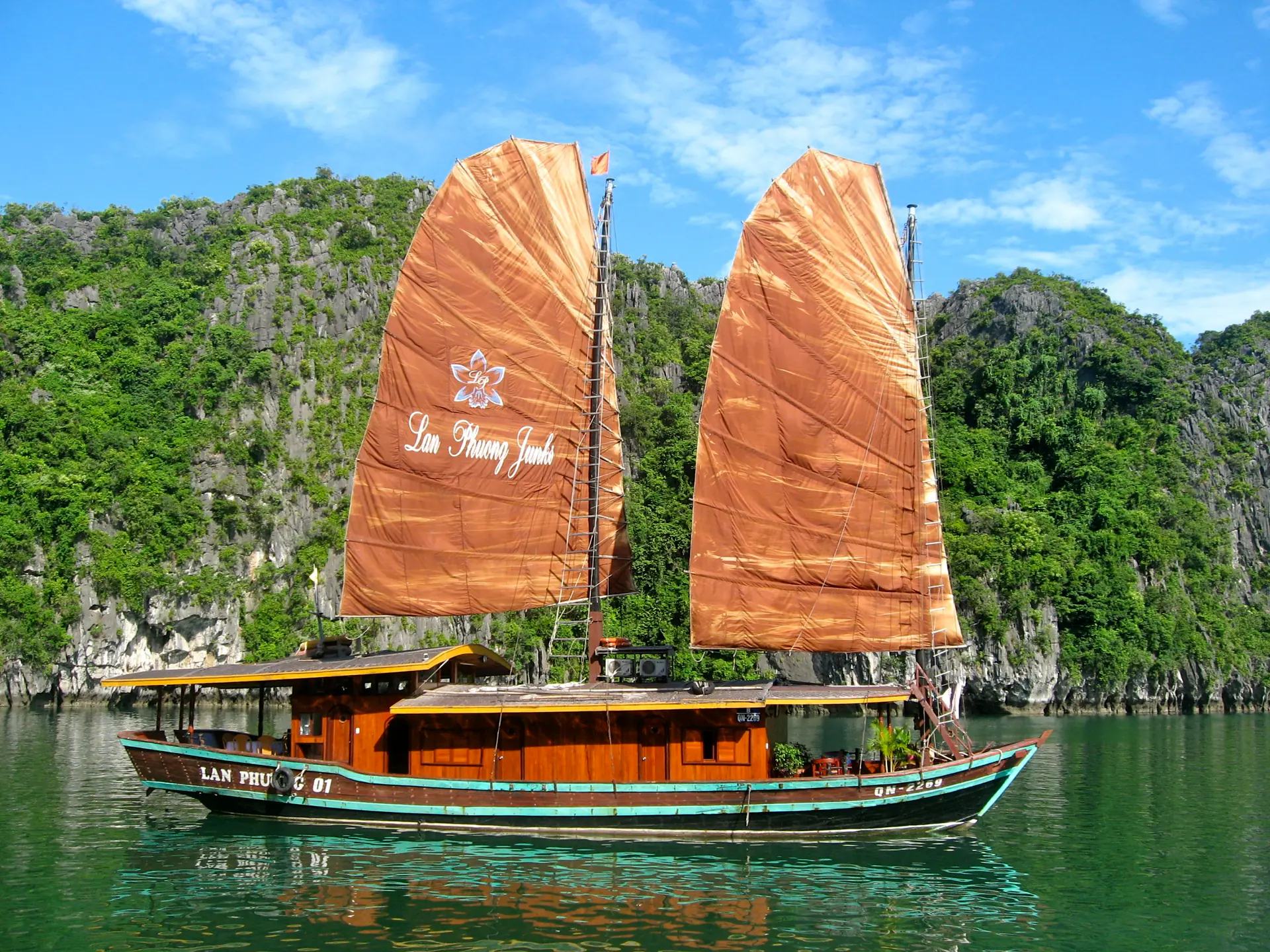
Embark on overnight cruises aboard traditional Vietnamese junk boats featuring distinctive red sails and wooden construction inspired by centuries-old fishing designs. Modern vessels combine authentic aesthetics with comfortable cabins, open-air decks, and fresh seafood dining showcasing Gulf of Tonkin specialties. Cruises navigate narrow passages between towering limestone pinnacles, passing floating fishing villages maintaining traditional livelihoods. Evening activities include sunset viewing, squid fishing demonstrations, and stargazing far from urban light pollution. Multi-day cruises explore remote areas rarely visited by day-trippers, accessing secluded lagoons and pristine beaches.
Pro tip: Book 3-day/2-night cruises exploring Lan Ha Bay extension for fewer crowds and pristine areas standard 2-day cruises don't reach--longer itineraries include additional cave visits, beach time, and wildlife spotting opportunities for golden-headed langurs on Cat Ba Island.
Must-See
Sung Sot Cave Exploration
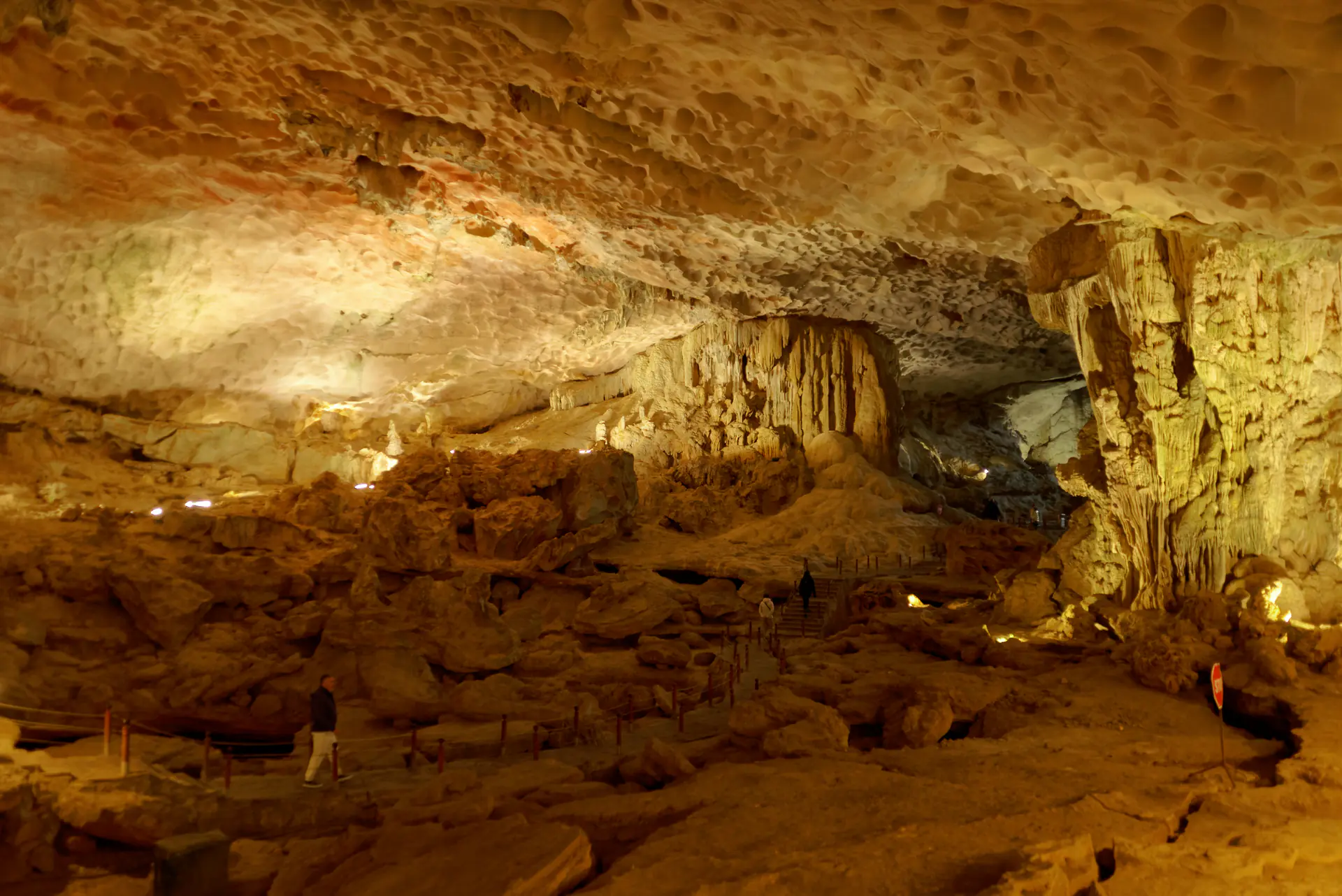
Descend into Sung Sot Cave, Ha Long Bay's largest cavern stretching 10,000 square meters across two magnificent chambers reaching 25 meters high. The Vietnamese name translates to "Surprise Cave," referencing astonishment upon entering the vast chamber adorned with extraordinary stalactites and stalagmites formed over millions of years. Strategic lighting illuminates formations resembling frozen waterfalls and mythical creatures. The second chamber features a natural skylight where sunlight penetrates the limestone ceiling, creating ethereal effects. Walking paths with railings enable close examination while protecting fragile ecosystems. The entrance sits 25 meters above sea level, requiring moderate climbing rewarded by cool temperatures.
Pro tip: Visit during early morning stops (8:00-9:00) before tour groups arrive--chambers remain peacefully quiet for photography without crowds, and morning light through the skylight creates spectacular effects impossible during midday visits.
Recommended
Kayaking Among Karsts
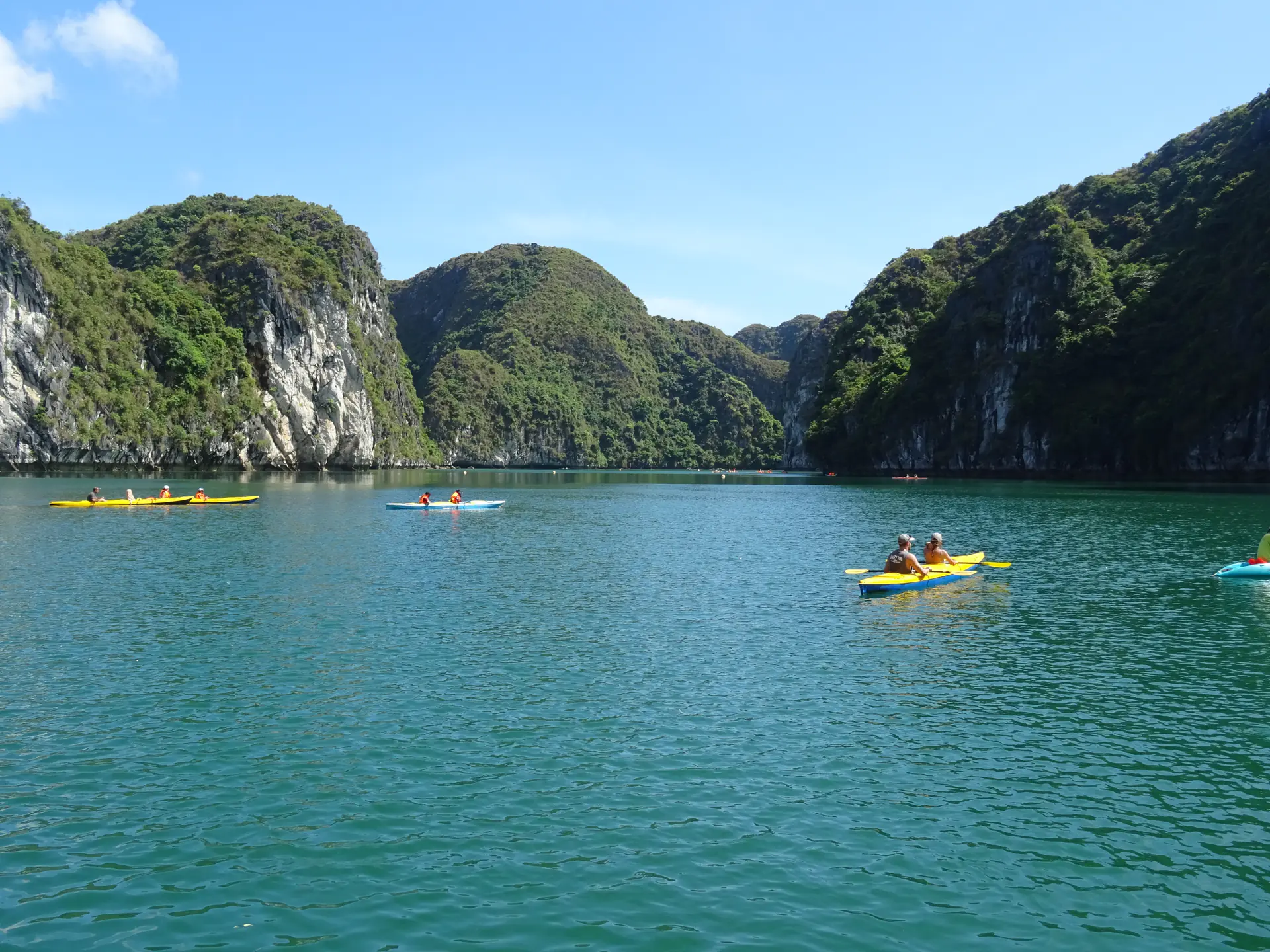
Paddle through narrow waterways inaccessible to larger vessels, navigating between towering limestone cliffs rising 100 meters above emerald waters. Kayaking excursions explore hidden lagoons called "hang"--secluded water bodies surrounded entirely by limestone walls, accessible only through low-clearance cave tunnels requiring kayakers to lie flat during high tide. These protected lagoons harbor unique ecosystems with endemic plants clinging to sheer cliffs. Floating through absolute silence broken only by paddle strokes provides intimate connection with geological wonders. Morning sessions offer glassy water conditions ideal for photography and wildlife observation. Expert guides lead routes through maze-like karst formations, sharing geological knowledge and legends while ensuring safety.
Pro tip: Request early morning sessions before 8:00 when water surfaces remain mirror-calm and morning mist creates mystical atmosphere--afternoon sessions face choppy waters from boat wakes and harsh overhead lighting that flattens dramatic landscapes in photographs.
Recommended
Ti Top Island Panoramic Viewpoint
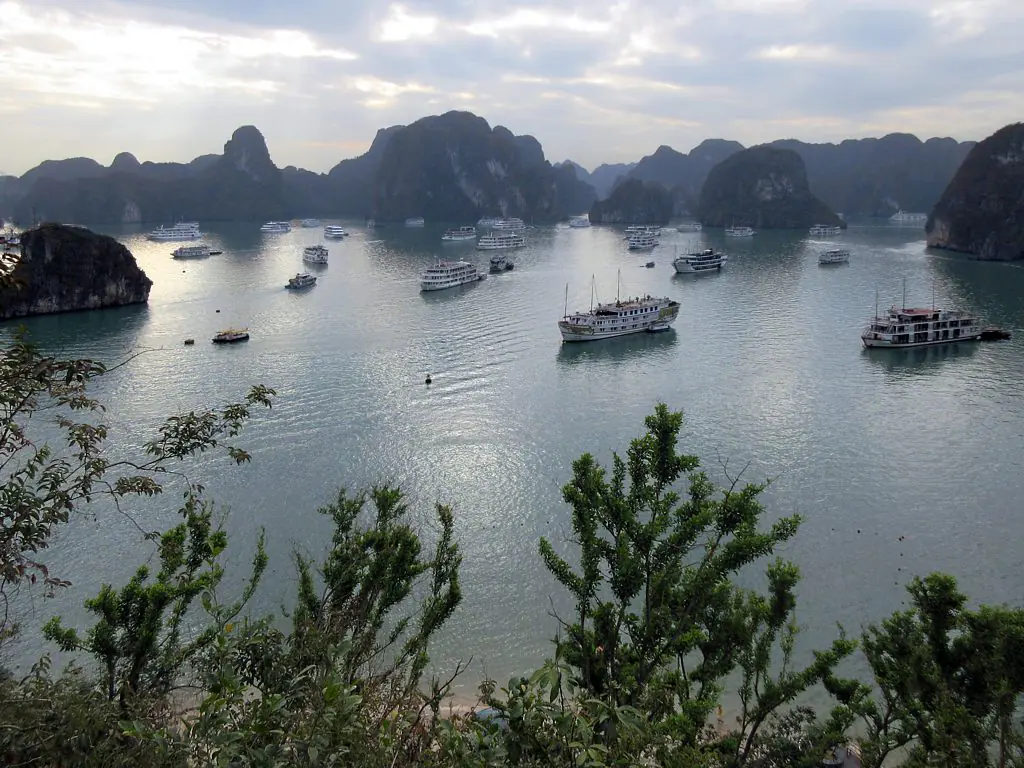
Climb 400 steps through tropical vegetation to Ti Top Island's summit offering breathtaking 360-degree panoramas across Ha Long Bay's limestone seascape. Named after Soviet cosmonaut Gherman Titov who visited in 1962, this island features a perfect crescent beach with white sand contrasting emerald waters. The panoramic platform reveals Ha Long Bay's geological magnificence--hundreds of limestone pinnacles extending to the horizon create patterns resembling a dragon's spine. Early morning ascents reward climbers with sunrise illuminating karst formations in golden light while mist swirls through valleys. The beach below offers swimming opportunities in clear waters. Photography enthusiasts consider this Ha Long Bay's premier location for landscape captures.
Pro tip: Ascend during sunset (17:30-18:00 depending on season) when tour groups have departed and golden hour light transforms karsts into silhouettes--bring a tripod for long-exposure shots capturing last light reflecting off calm evening waters, creating magical images impossible during crowded midday stops.
Historical Context
Geological Formation (500-280 million years ago)
Ancient marine sediments accumulated in tropical shallow seas during the Cambrian and Ordovician periods, forming limestone deposits hundreds of meters thick. Tectonic forces gradually uplifted these seabeds above water level, creating the foundation for Ha Long Bay's distinctive karst landscape through subsequent millions of years of erosion.
Karst Development (280-2 million years ago)
Tropical rainfall and acidic groundwater dissolved limestone formations through chemical weathering, creating caves, sinkholes, and underground drainage systems. Continued erosion sculpted tower karst formations--isolated limestone pinnacles rising vertically from surrounding terrain. Sea level fluctuations during ice ages alternately exposed and submerged the landscape multiple times.
Sea Level Rise (10,000 years ago-present)
Holocene sea level rise following the last ice age flooded the karst landscape, transforming limestone towers into islands scattered across Gulf of Tonkin waters. This marine transgression created Ha Long Bay's characteristic seascape where hundreds of limestone pinnacles emerge from shallow waters, continuing geological processes that gradually modify island shapes.
Early Human Settlement (5,000-2,000 years ago)
Archaeological evidence reveals prehistoric communities inhabited Ha Long Bay's caves and coastal areas, with discoveries of stone tools, pottery, and shell middens. The Soi Nhu culture dating to 18,000 years ago represents the earliest confirmed human presence, followed by Ha Long culture (5,000 years ago) demonstrating maritime adaptations.
Historic Maritime Gateway (13th-19th centuries)
Ha Long Bay served as strategic naval base protecting northern Vietnam from invasions, with General Tran Hung Dao defeating Mongol fleets in 1288 by luring warships into the maze of limestone islands where their large vessels became trapped. The bay's complex geography provided natural defense while supporting fishing communities in floating villages.
UNESCO Recognition (1994-present)
UNESCO inscribed Ha Long Bay as World Heritage Site in 1994 recognizing exceptional geological significance, with 2000 extension expanding protected area to 1,553 square kilometers. International tourism growth since designation brought economic development to Quang Ninh Province while creating conservation challenges requiring sophisticated management strategies balancing environmental protection with sustainable visitor access.
Conservation
Current Status
Ha Long Bay faces significant conservation challenges from overtourism, pollution, and unsustainable development, with Vietnamese authorities implementing strict regulations including cruise vessel limits, waste management requirements, and protected zone restrictions to preserve geological and ecological integrity.
Challenges
- Overtourism with 5 million annual visitors creating waste management difficulties, water pollution from cruise vessels, and erosion damage to cave formations from excessive foot traffic requiring visitor limits
- Marine pollution from plastic waste, sewage discharge from floating villages, and oil leaks from boats degrading water quality and threatening aquatic ecosystems including endangered species
- Climate change bringing sea level rise threatening coastal communities, increased storm intensity damaging limestone formations, and ocean acidification accelerating karst erosion processes
- Uncontrolled development including illegal construction on islands, unauthorized quarrying operations damaging geological features, and port expansion projects encroaching on protected areas
- Decline of traditional fishing communities as tourism displaces traditional livelihoods, threatening cultural heritage and indigenous knowledge of bay ecology
Conservation Efforts
- Cruise vessel regulations limiting daily boat numbers to 500, mandating waste treatment systems, requiring licensed operators, and establishing no-anchoring zones protecting sensitive marine areas
- Marine debris collection programs employing local fishermen to remove plastic waste, installing floating barriers capturing garbage before reaching sensitive areas, and beach cleanup initiatives
- Alternative livelihood programs supporting fishing communities' transition to sustainable tourism services including homestays, kayaking guides, and traditional craft demonstrations preserving cultural heritage
- Protected zone management establishing core conservation areas prohibiting tourist access, regulating fishing activities, and monitoring water quality with scientific research stations
- Green cruise initiatives promoting solar-powered vessels, eliminating single-use plastics, implementing energy-efficient technologies, and requiring environmental certification for operators
Frequently Asked Questions
Absolutely. Ha Long Bay offers extraordinary natural beauty with limestone karst formations creating spectacular seascapes. Overnight cruises through emerald waters, cave exploration, and kayaking among pinnacles create unforgettable experiences. This UNESCO site represents Vietnam's most iconic natural landscape.
Ha Long Bay cruises cost VND 3,000,000-6,000,000 ($120-240 USD) for standard 2-day/1-night packages including meals and activities. Budget day trips cost VND 500,000-800,000 ($20-32 USD). Luxury 3-day cruises cost VND 8,000,000-15,000,000 ($320-600 USD) with premium amenities.
Yes, advance booking strongly recommended, especially October-April peak season. Book 2-4 weeks ahead through reputable operators to secure preferred vessels and itineraries. Last-minute bookings risk limited availability or being assigned lower-quality vessels. Always verify operator licensing and safety standards.
October-April offers optimal conditions with calm seas, clear skies, and comfortable temperatures (15-25°C). November-February provides coolest weather and best visibility for photography. Avoid May-September monsoon season bringing rough seas, rain, frequent cancellations, and reduced visibility.
Minimum 2-day/1-night cruise recommended to experience sunrise, sunset, and visit main attractions including caves, beaches, and kayaking areas. 3-day/2-night cruises explore remote areas with fewer crowds. Day trips provide basic overview but miss magical sunrise/sunset experiences.
Ha Long Bay lies 165 kilometers east of Hanoi requiring 3-4 hours by road depending on traffic. Luxury cruise operators provide direct shuttle transfers. Public buses cost VND 100,000-150,000 ($4-6 USD). Seaplanes offer 45-minute flights with aerial views.
Ha Long Bay is a spectacular seascape with over 1,600 limestone karst islands rising from emerald waters in northeastern Vietnam. Famous for tower karst formations created through 500 million years of geological evolution, it represents one of Earth's most stunning natural landscapes.
Ha Long translates to "Descending Dragon" in Vietnamese, referencing the legend where a celestial dragon descended from heaven to defend Vietnam against invaders. The dragon's thrashing tail created the bay's maze of limestone islands and deep valleys flooded by seas.
Yes, swimming is possible at designated beaches on islands including Ti Top Island and Ba Trai Dao. Water remains calm within the bay's protected areas, though swimming from cruise boats is restricted to specific stops. Water visibility varies depending on season and location.
Bring lightweight clothing for tropical climate, sturdy water-resistant shoes for cave exploration, reef-safe sunscreen, hat, sunglasses, waterproof bag for kayaking, camera with extra batteries, and motion sickness medication. Cash needed for onboard purchases and tipping as ATMs unavailable.
UNESCO World Heritage Criteria
Inscribed in 1994, this site meets 2 of UNESCO's 10 criteria for Outstanding Universal Value
VII
Criterion (vii): Contains superlative natural phenomena
Ha Long Bay represents superlative natural beauty through spectacular limestone tower karsts rising from emerald waters. Over 1,600 islands create dramatic compositions enhanced by caves, lagoons, and beaches. The interplay of limestone pinnacles, tropical vegetation, and changing light produces ever-shifting panoramas recognized as one of Earth's most beautiful landscapes.
VIII
Criterion (viii): Outstanding geological processes
Ha Long Bay exemplifies outstanding geological processes through limestone karst development spanning 500 million years. The bay showcases tower karst formations at evolutionary stages from cone karst through tower karst to spectacular drowned karst landscape. Examples of marine erosion, tidal processes, and cave formation demonstrate active geological evolution, providing exceptional scientific value.
Image & Content Attribution
Research & Content Sources
Photography & Visual Media
Romain Pontida, CC BY-SA 2.0
Jakub Hałun, CC BY-SA 4.0
Christophe95, CC BY-SA 4.0
David Stanley, CC BY 4.0
Last updated: 12 December 2025