
Laos • UNESCO World Heritage Site
Luang Prabang: Buddhist Temples & Alms Giving Ceremony
Sacred Royal Capital with French Colonial Fusion
Inscribed: 1995
Category: Cultural
ID: #479
What Is Town of Luang Prabang and Why Visit?
Buddhist monks established Luang Prabang as a religious center in the 14th century when King Fa Ngum founded the Lane Xang Kingdom to unify Lao principalities and promote Theravada Buddhism throughout the region. The town preserves 33 Buddhist temples (wats) showcasing distinctive low-sweeping roofs with intricate gold leaf decorations and exceptional wood carvings representing centuries of Lao architectural tradition. French colonizers developed the administrative quarter from 1893-1954 alongside traditional Lao neighborhoods, creating a unique fusion evident in elegant shophouses combining European facades with tropical wooden shutters. The sacred daily ritual of Tak Bat continues each dawn as hundreds of saffron-robed monks silently process through ancient streets collecting alms from kneeling devotees, perpetuating Buddhist traditions unchanged for six centuries.
Why It Matters
This exceptional cultural landscape demonstrates outstanding universal value through its remarkable fusion of traditional Lao urban architecture with French colonial structures, representing an exceptional example of Southeast Asian town planning that has preserved living Buddhist traditions and demonstrates important cultural interchange between European and indigenous building techniques.
How to Visit Town of Luang Prabang
Essential information for visiting this destination
How to Get to Town of Luang Prabang
Luang Prabang International Airport receives direct flights from Bangkok, Chiang Mai, Siem Reap, Hanoi, and Vientiane with airlines including Lao Airlines, Bangkok Airways, and Vietnam Airlines serving Southeast Asian routes. Airport taxis charge fixed LAK 50,000 ($2.50 USD) for 10-minute transfers to town center. Overland travel from Vientiane takes 9-11 hours via winding mountain roads on improved Route 13, with VIP buses departing daily costing LAK 220,000 ($11 USD) offering reclining seats and rest stops. Slow boat journeys from Thailand border town Huay Xai provide scenic two-day Mekong River passages through dramatic limestone gorges, stopping overnight in Pak Beng village, representing a classic Southeast Asian adventure route. Within town, walking suits the compact UNESCO heritage zone, while bicycle rentals cost LAK 20,000-30,000 ($1-1.50 USD) daily for temple circuits.
Best Hotels Near Town of Luang Prabang
Budget guesthouses along quieter lanes offer fan-cooled rooms from LAK 120,000 ($6 USD) nightly providing basic amenities, shared bathrooms, and opportunities to interact with independent travelers seeking authentic local experiences in family-run establishments.
Mid-range boutique hotels occupying restored French colonial shophouses feature air-conditioning, hot water, swimming pools, and breakfast from LAK 600,000-1,200,000 ($30-60 USD), combining atmospheric historic architecture with modern comfort standards and central locations near major temples and night market.
Luxury heritage properties like Amantaka and Satri House occupy meticulously restored colonial mansions and royal residences offering exceptional service, fine dining, spa facilities, and private tour arrangements from LAK 4,000,000-10,000,000 ($200-500 USD), providing intimate boutique experiences preserving architectural authenticity while delivering world-class hospitality.
Where to Eat Near Town of Luang Prabang
Traditional Lao cuisine emphasizes fresh herbs, sticky rice, and subtle flavors distinguishing it from neighboring Thai and Vietnamese styles through gentler spicing and unique preparations. Signature dishes include laap minced meat salad with roasted rice powder and mint, tam mak hoong green papaya salad with fermented fish sauce, and mok pa steamed fish in banana leaves with lemongrass and galangal. Luang Prabang's night food market offers grilled meats, vegetable skewers, sticky rice, and tropical fruits from LAK 20,000-40,000 ($1-2 USD) per meal in atmospheric communal seating. Riverside restaurants serve Mekong river fish, or lam herbal stew, and French-Lao fusion reflecting colonial heritage. Tamarind Restaurant operates cooking classes demonstrating traditional techniques with market visits. Joma Bakery provides Western breakfasts, excellent coffee, and air-conditioned refuge from tropical heat.
Town of Luang Prabang Entry Fees & Tour Prices
Entrance fees for major temples range LAK 20,000-40,000 ($1-2 USD) each, with Royal Palace Museum costing LAK 30,000 ($1.50 USD) and Mount Phousi LAK 20,000 ($1 USD) for sunset views. Multi-temple passes are not available, requiring individual purchases at each site.
Kuang Si Waterfalls day trips cost LAK 60,000-100,000 ($3-5 USD) for shared transport plus LAK 20,000 ($1 USD) entrance fee, departing 8:30am and returning 4pm with swimming time included. Private tuk-tuk hire costs LAK 300,000 ($15 USD) for flexible scheduling and stopping at roadside villages.
Mekong River sunset cruises cost LAK 100,000-200,000 ($5-10 USD) for two-hour trips past sandbanks and village life. Pak Ou Caves excursions combining boat transport and cave entrance cost LAK 400,000-600,000 ($20-30 USD). Traditional Lao massage and herbal sauna costs LAK 80,000-120,000 ($4-6 USD) per hour. Baci ceremonies and Lao cooking classes cost LAK 500,000-800,000 ($25-40 USD) providing cultural immersion.
What to Bring to Town of Luang Prabang
Comprehensive travel insurance covering medical emergencies essential for Laos where healthcare facilities remain limited requiring potential medical evacuation to Thailand for serious conditions. International eSIM cards provide data connectivity throughout Luang Prabang enabling navigation apps and communication without expensive roaming charges.
Laos operates visa-on-arrival for most nationalities costing $30-42 USD depending on nationality, requiring two passport photos and payment in US dollars cash. E-visa available online at evisa.gov.la for $50 USD. Passport validity of six months beyond entry date mandatory.
Lao Kip is official currency though US dollars and Thai Baht widely accepted. ATMs dispense Lao Kip with LAK 2,000,000 ($100 USD) typical withdrawal limits. Cash essential for markets and street food. Laos uses Type C, A, and F electrical outlets (230V). November-February offers coolest temperatures 15-25°C.
Loading map...
Visitor Information
Everything you need to know for your visit
What to Bring
Modest clothing covering shoulders and knees for temple visits (mandatory requirement), comfortable walking shoes for cobblestone streets, sunscreen and wide-brimmed hat for daytime heat, lightweight layers for cool mornings and air-conditioned spaces, camera for architecture and ceremonies, small torch for dim temple interiors, cash in small denominations for alms giving and market purchases, reusable water bottle.
Accessibility
Limited wheelchair accessibility throughout the UNESCO heritage zone due to cobblestone streets, uneven sidewalks, and steep temple staircases. Mount Phousi requires climbing 328 steps with no alternative access. The Royal Palace Museum and several major temples provide ground-level viewing areas. Local tour operators can arrange accessible river cruises and waterfall visits with advance notice.
Safety Tips
Luang Prabang is generally safe with low crime rates. Exercise standard precautions with valuables. During Tak Bat ceremony, maintain respectful distance from monks, sit or kneel (never stand higher), dress modestly, keep silent, avoid flash photography, and only give alms if you understand Buddhist customs. Respect Buddhist customs at all temples: remove shoes, dress modestly, ask permission before photographing monks.
Sacred Treasures of the Royal Capital
Must-See
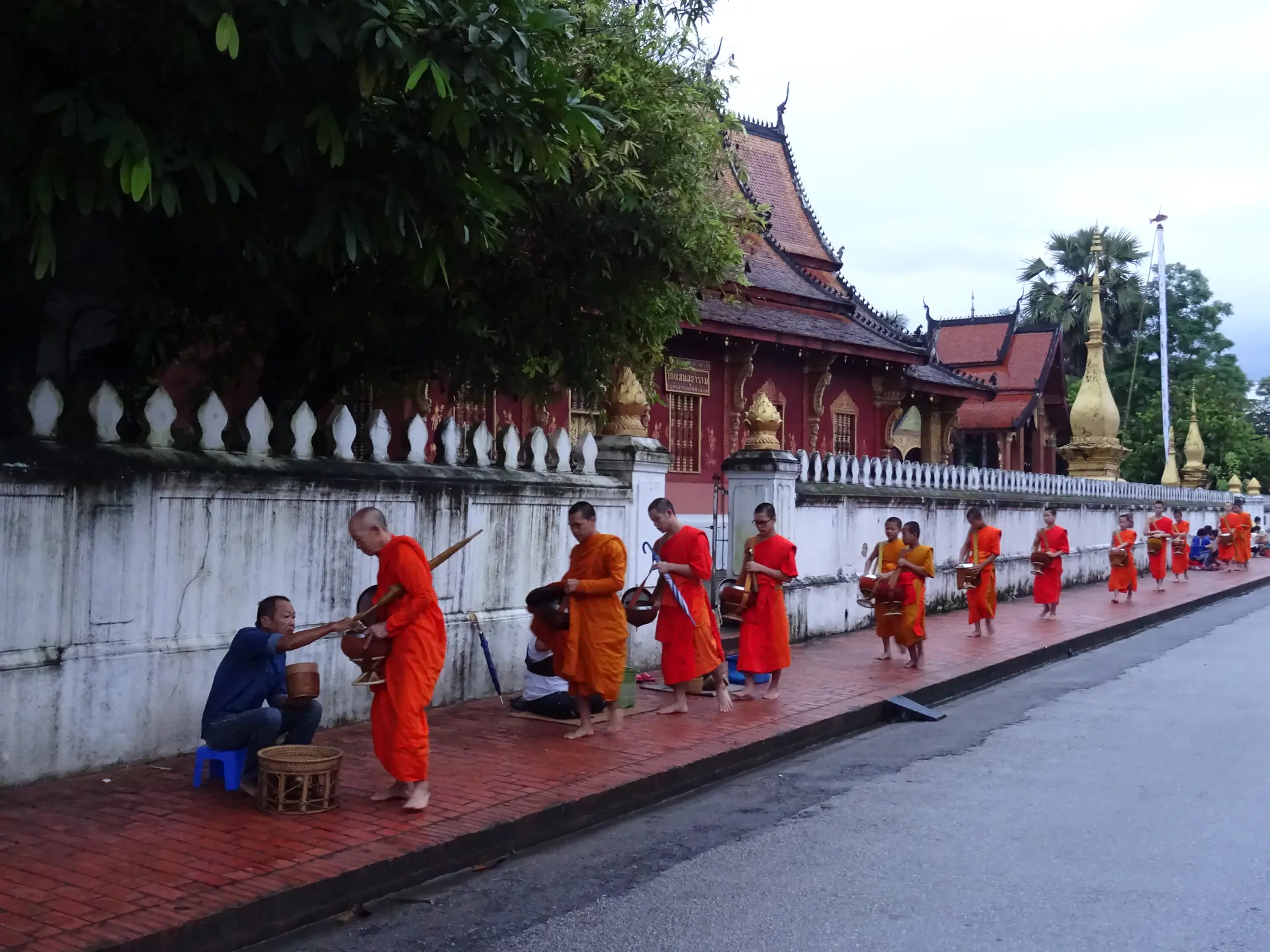
Tak Bat: Dawn Alms Giving Ceremony
Experience the profound spirituality of Tak Bat as hundreds of saffron-robed Buddhist monks silently process through Luang Prabang's streets each dawn collecting alms from kneeling devotees. This sacred 600-year tradition represents the fundamental Buddhist concept of giving (dana) while allowing monks to receive their only meal before noon. The ceremony begins around 5:30am when barefoot monks depart from 33 monasteries, walking designated routes as local families kneel offering sticky rice into the monks' alms bowls. The ritual demonstrates remarkable cultural continuity, connecting modern practitioners to centuries of unbroken Buddhist tradition in this former royal capital.
Pro tip: Observe respectfully from designated sidewalk areas rather than participating unless you understand Buddhist customs--purchase alms baskets from local vendors, sit or kneel on provided mats, maintain silence, dress modestly covering shoulders and knees, and avoid flash photography disrupting this sacred practice.

Must-See
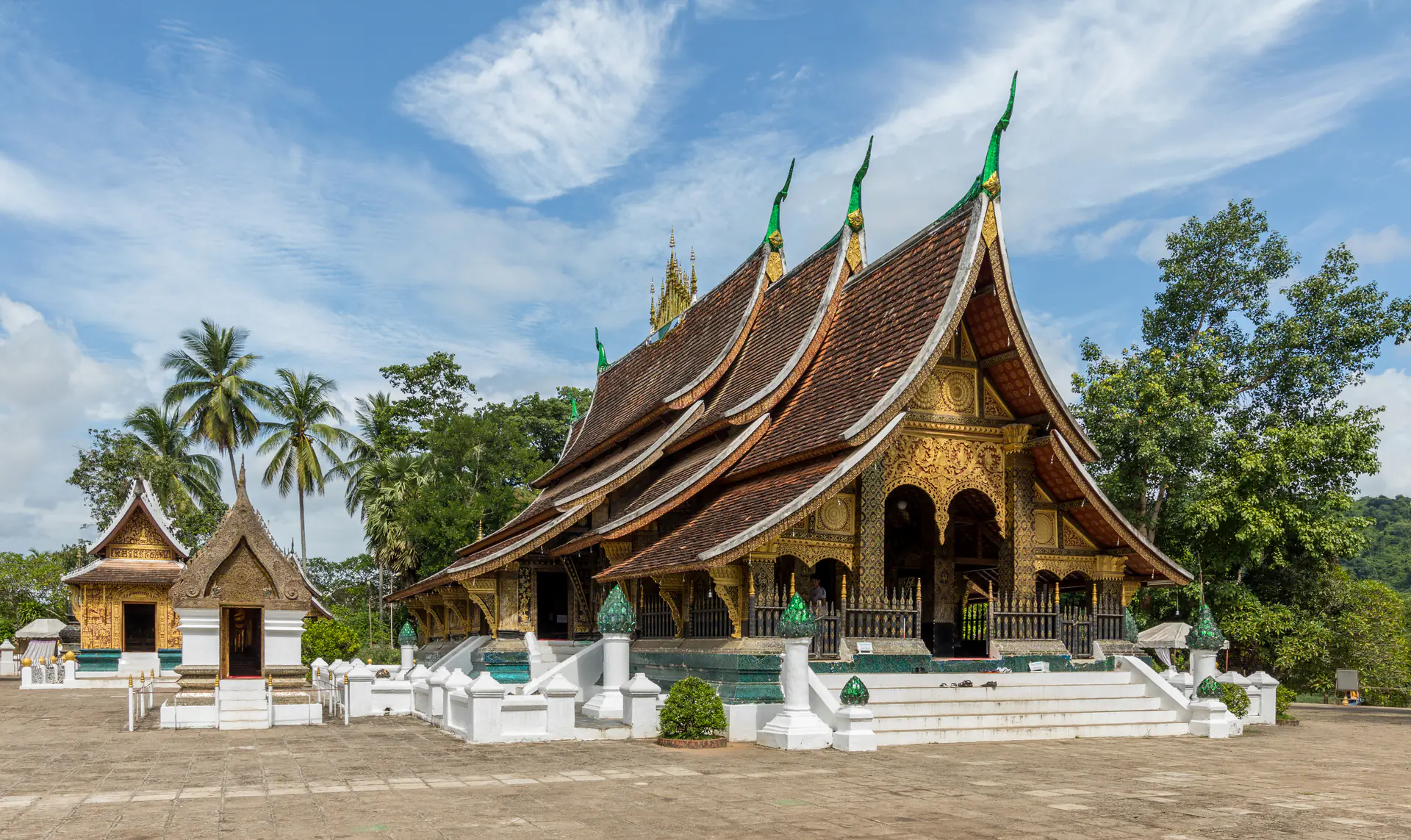
Wat Xieng Thong: Masterpiece of Lao Architecture
Visit Wat Xieng Thong, Luang Prabang's most architecturally significant temple built in 1560 by King Setthathirath, showcasing the distinctive low-sweeping roofs that define classical Lao religious architecture. The temple compound features the magnificent sim (ordination hall) with its multi-tiered roof descending nearly to ground level, creating the elegant silhouette considered the finest example of traditional Lao design. The exterior chapel displays the stunning Tree of Life mosaic created from colored glass depicting Buddhist enlightenment through nature symbolism. Inside, gold stenciled pillars support intricately carved wooden ceilings while sacred images demonstrate exceptional 16th-century craftsmanship.
Pro tip: Visit during early morning (7am-9am) when soft light illuminates the golden roofs before tour groups arrive--hire a local guide at the entrance for LAK 50,000 ($2.50 USD) to explain detailed religious symbolism in mosaics, murals, and architectural elements invisible to independent visitors.
Must-See
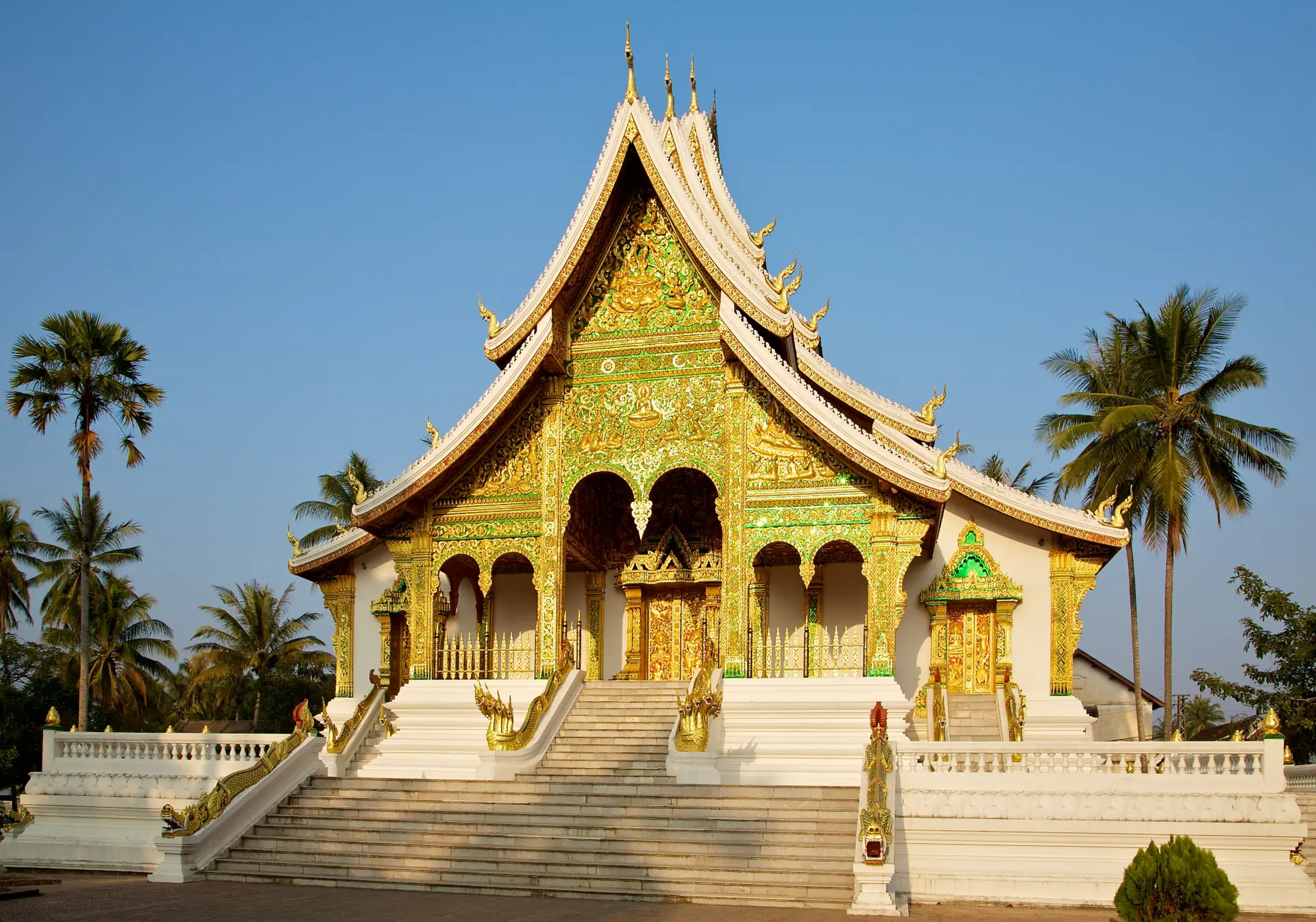
Royal Palace Museum and Haw Pha Bang
Explore the former Royal Palace built in 1904 during French colonial administration, combining traditional Lao elements with French Beaux-Arts styling to create a unique hybrid design representing Luang Prabang's cultural fusion. The palace served as residence for King Sisavang Vong until the 1975 revolution abolished the monarchy. The throne room preserves gilded furniture, royal regalia, and reception halls exactly as used during official ceremonies, while personal apartments display family photographs humanizing Lao royal history. The adjacent Haw Pha Bang chapel houses the sacred Phra Bang golden Buddha image that gave Luang Prabang its name, representing Laos's most venerated religious object.
Pro tip: Arrive at opening time (8am) to explore palace galleries before crowds intensify--photography is strictly prohibited inside, so focus on absorbing atmospheric interiors, and combine your visit with adjacent Wat Mai temple featuring exceptional wooden facade carvings rarely photographed by rushed tourists.

Recommended
Kuang Si Waterfalls and Turquoise Pools
Discover the spectacular Kuang Si Waterfalls, a three-tier cascade system 29 kilometers south of Luang Prabang where turquoise limestone pools descend 60 meters through lush tropical forest. The mineral-rich waters flowing over calcium carbonate deposits create stunning blue-green coloration distinctive to limestone karst environments. Multiple swimming pools with rope swings offer refreshing escapes from Laos's tropical heat, while wooden walkways provide access to viewing platforms at different elevations. The main waterfall plunges dramatically from the upper tier creating mist and thunderous sound. The surrounding forest hosts a bear rescue center rehabilitating Asiatic black bears from illegal wildlife trade.
Pro tip: Depart Luang Prabang by 7:30am to arrive at opening time (8am) before tour bus crowds overwhelm the popular lower pools--hike the steep trail to the waterfall's top tier where a secret upper pool remains blissfully empty all day, offering private swimming in crystalline turquoise water surrounded by pristine forest.
Recommended
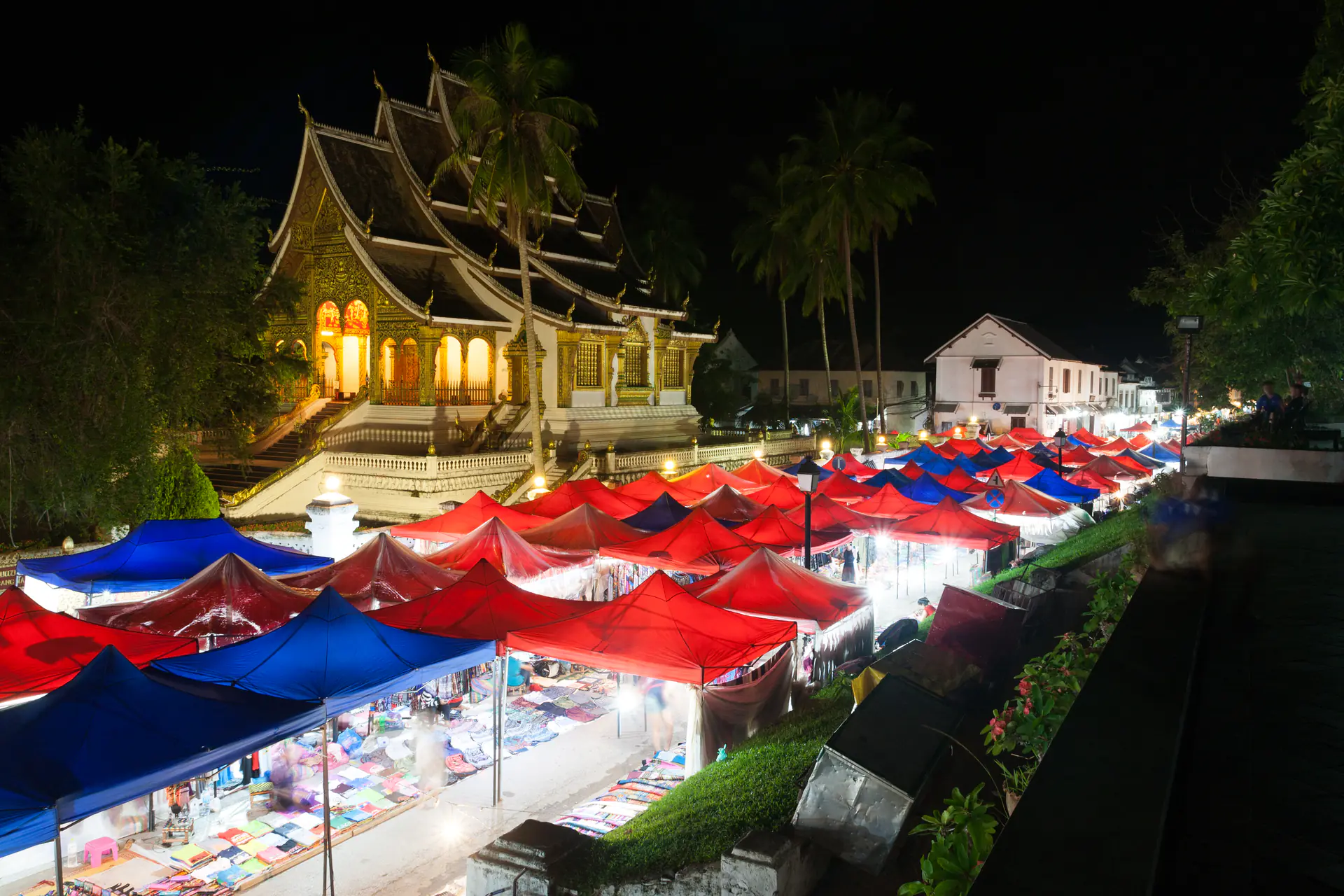
Night Market and Traditional Handicrafts
Browse Luang Prabang's renowned night market stretching along Sisavangvong Road each evening as hundreds of vendors display traditional Lao handicrafts on low tables creating a vibrant cultural marketplace. Local artisans sell handwoven textiles featuring intricate geometric patterns, embroidered wall hangings, hand-painted paper lanterns, silver jewelry using ancient metalworking techniques, and bamboo crafts demonstrating sustainable material use. The market emphasizes authentic local production rather than mass-produced imports, with many vendors being the actual craftspeople from surrounding villages. Prices remain remarkably reasonable with gentle bargaining expected, and the atmosphere stays peaceful without aggressive selling.
Pro tip: Visit around 6pm when the market just opens for best selection and unhurried browsing before peak crowds--vendors are more willing to demonstrate weaving techniques and explain pattern meanings early in the evening, and you can watch them set up displays revealing the care invested in their crafts.
Historical Context
Lane Xang Kingdom Foundation (1353-1560)
King Fa Ngum established the Lane Xang Kingdom with Luang Prabang as its capital, unifying fragmented Lao principalities and promoting Theravada Buddhism throughout the region. The kingdom controlled trade routes between Vietnam and Thailand, accumulating wealth that funded temple construction and Buddhist scholarship establishing the town's religious significance.
Golden Age of Temple Building (1560-1707)
King Setthathirath built Wat Xieng Thong in 1560, initiating two centuries of temple construction that created Luang Prabang's distinctive architectural character. Successive rulers sponsored monastery foundations, Buddha image casting, and manuscript production, transforming the town into mainland Southeast Asia's preeminent Buddhist center with sophisticated artistic traditions and religious scholarship.
French Colonial Period (1893-1954)
France established the Protectorate of Laos making Luang Prabang the royal capital while Vientiane served as administrative headquarters. French colonizers built government buildings, shophouses, and villas alongside existing Lao temples, creating the unique architectural fusion of European and Southeast Asian building techniques that defines the town's character today.
Royal Capital and Revolution (1954-1975)
Following French withdrawal, Luang Prabang remained the ceremonial royal capital under King Sisavang Vatthana while political power centered in Vientiane. The 1975 communist revolution abolished the 622-year-old monarchy, converting the Royal Palace into a museum and ending the town's political role while preserving its cultural and religious significance.
UNESCO Recognition and Tourism Development (1995-present)
UNESCO World Heritage designation in 1995 recognized Luang Prabang's exceptional architectural fusion and living Buddhist traditions, catalyzing international tourism development and heritage conservation programs. The town has balanced economic growth from tourism with preservation of traditional culture, maintaining the daily Tak Bat ceremony and artisan handicraft production while adapting colonial buildings into boutique hotels.
Conservation
Current Status
Active heritage conservation programs protect Luang Prabang's architectural character through building regulations, temple restoration projects, and community-based tourism initiatives balancing preservation with economic development in partnership with UNESCO and Lao authorities.
Challenges
- Tourism pressure threatening the authenticity of Tak Bat ceremony with disrespectful photography and commercialized alms-giving disrupting sacred Buddhist traditions
- Rapid hotel development converting historic shophouses requiring strict architectural controls to preserve French colonial and Lao building character
- Climate change intensifying monsoon flooding along Mekong and Nam Khan rivers threatening low-lying temple foundations and historic structures
- Balancing economic benefits from tourism with preservation of traditional lifestyles as rising property values displace local residents from heritage zone
Conservation Efforts
- Strict building codes restrict new construction height, materials, and design within UNESCO zone to preserve visual harmony of temple roofs and colonial facades
- Temple restoration programs using traditional Lao carpentry techniques and materials maintain authentic architectural character with Japanese and French technical assistance
- Community tourism initiatives ensure local families benefit from heritage tourism while preserving traditional crafts including weaving, silver work, and paper making
- Respectful tourism guidelines educate visitors on proper Tak Bat ceremony etiquette through signage, guide training, and designated observation areas protecting sacred traditions
Frequently Asked Questions
Tak Bat is the daily Buddhist alms giving ceremony where hundreds of saffron-robed monks walk through Luang Prabang collecting food offerings from devotees. The ceremony begins around 5:30am-6:30am depending on monastery locations. Observe respectfully from sidewalks, dress modestly covering shoulders and knees, maintain silence, avoid flash photography, and only give alms if you understand Buddhist customs.
Individual temple entries cost LAK 20,000-40,000 ($1-2 USD) each. Royal Palace Museum costs LAK 30,000 ($1.50 USD). Mount Phousi costs LAK 20,000 ($1 USD). Wat Xieng Thong costs LAK 20,000 ($1 USD). No multi-temple passes available. Many smaller neighborhood temples remain free with donation boxes for voluntary contributions.
November through February offers coolest temperatures (15-25°C) and minimal rainfall during the dry season, ideal for temple exploration and outdoor activities. December-January sees highest visitor numbers but also pleasant weather. March-May becomes very hot (35°C+) while June-October brings heavy monsoon rains affecting waterfall visits and river trips.
Shared minivan tours depart 8:30am-1:30pm from town center costing LAK 60,000-100,000 ($3-5 USD) plus LAK 20,000 ($1 USD) entrance fee, returning around 4pm with 2-3 hours at the falls. Private tuk-tuk hire costs LAK 300,000 ($15 USD) allowing flexible timing. The 29-kilometer journey takes 45 minutes each way through scenic countryside and villages.
Most nationalities receive visa-on-arrival at Luang Prabang Airport costing $30-42 USD (varies by nationality) requiring two passport photos and cash payment in US dollars. E-visa available online at evisa.gov.la for $50 USD. Passport must have six months validity beyond entry date. Processing takes 5-15 minutes at airport immigration counter.
Lao Kip (LAK) is the official currency, but US dollars and Thai Baht are widely accepted at hotels, restaurants, and tour operators. ATMs dispense Lao Kip with LAK 2,000,000 ($100 USD) typical withdrawal limits. Cash essential for markets, street food, and temple donations. Approximate exchange rate: LAK 20,000 = $1 USD.
Three to four days minimum allows time for dawn alms ceremony, exploring major temples including Wat Xieng Thong and Royal Palace Museum, day trip to Kuang Si Waterfalls, Mekong River cruise, and experiencing the night market. Five days enables visiting Pak Ou Caves and enjoying the relaxed atmosphere without rushing.
Respectful observation encouraged but participation should only occur if you understand Buddhist customs and cultural significance. Purchase alms from local vendors (not tourist operators), sit or kneel on mats, maintain silence, dress modestly covering shoulders and knees, avoid flash photography, and never touch monks or their robes.
Mount Phousi offers panoramic sunset views over golden temple roofs and river confluence, reached by climbing 328 steps. Entry costs LAK 20,000 ($1 USD). Arrive 30 minutes before sunset for best positions. Riverside restaurants and Mekong River sunset cruises provide alternative viewing locations with refreshments.
UNESCO World Heritage Criteria
Inscribed in 1995, this site meets 3 of UNESCO's 10 criteria for Outstanding Universal Value
II
Criterion (ii): Interchange of human values
Luang Prabang demonstrates exceptional interchange of human values through its unique fusion of traditional Lao wooden architecture with French colonial urban planning and building techniques, representing a remarkable synthesis of Southeast Asian and European design principles that influenced regional town development throughout mainland Southeast Asia during the colonial period.
IV
Criterion (iv): Outstanding architectural/technological ensemble
The town exemplifies an outstanding example of Southeast Asian royal capital architecture where traditional Lao temple design featuring distinctive low-sweeping roofs, intricate wood carving, and Buddhist cosmological symbolism coexists harmoniously with French colonial shophouses, administrative buildings, and villas, creating an exceptionally preserved townscape demonstrating architectural adaptation to tropical climate and cultural context.
V
Criterion (v): Outstanding traditional human settlement
Luang Prabang represents an outstanding example of traditional Lao settlement demonstrating sophisticated interaction between natural environment and human settlement at the confluence of two major rivers. Centuries of Buddhist monastery construction, French colonial development, and heritage conservation have maintained cultural continuity while preserving vulnerable living traditions including daily almsgiving ceremonies and traditional handicraft production.
Image & Content Attribution
Research & Content Sources
Photography & Visual Media
Basile Morin, CC BY-SA 4.0
Christophe95, CC BY-SA 4.0
Phillip Maiwald, CC BY-SA 3.0
Chi King, CC BY 2.0
Basile Morin, CC BY-SA 4.0
HylgeriaK, CC BY-SA 4.0
Last updated: 24 December 2025