
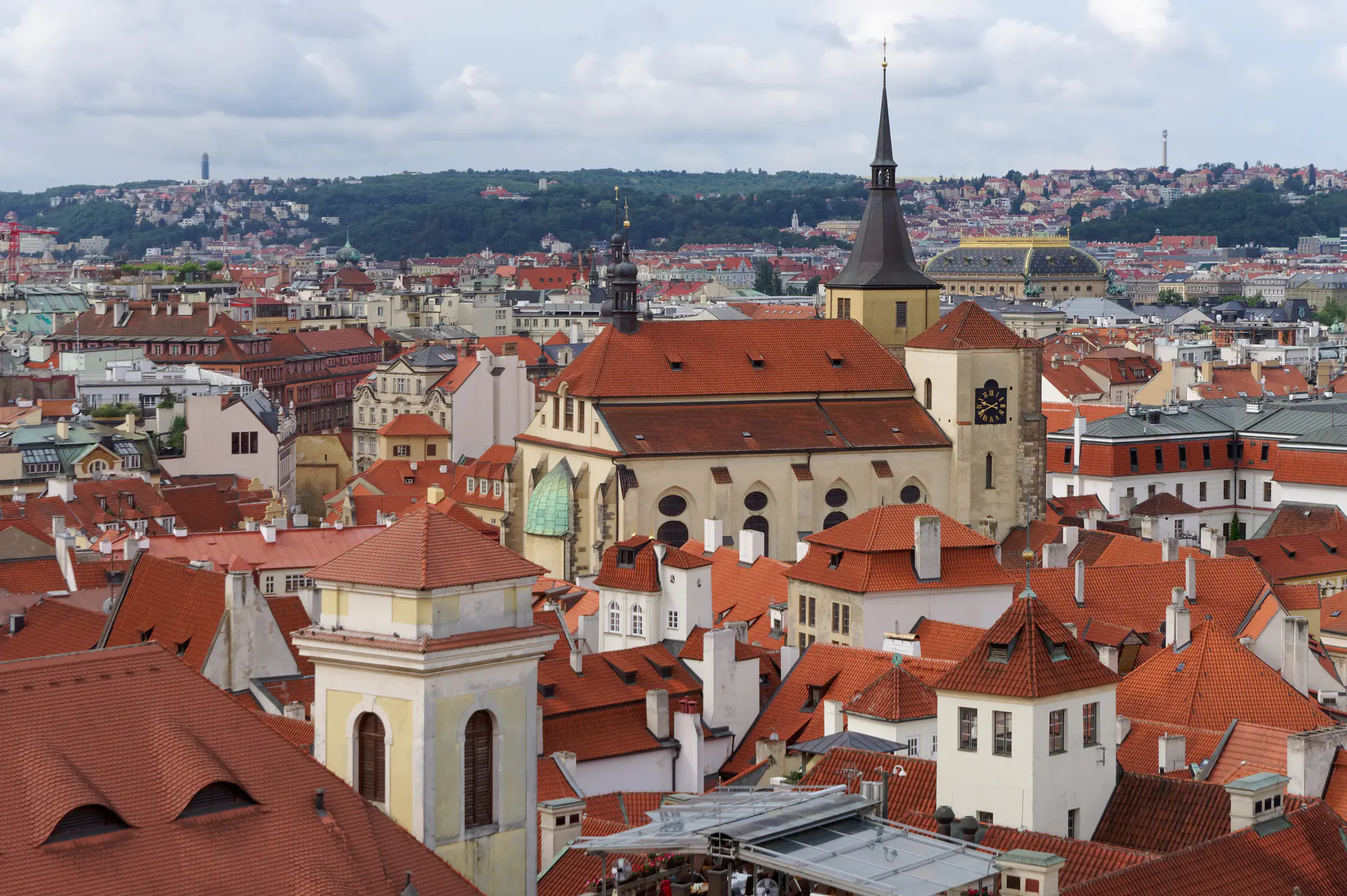
Czech Republic • UNESCO World Heritage Site
Prague's Historic Center: Castle, Charles Bridge & Medieval Architecture
City of a Hundred Spires and Gothic Beauty
Inscribed: 1992
Category: Cultural
ID: #616
What Is Historic Center of Prague and Why Visit?
Czech rulers established Prague Castle in the 9th century to control vital trade routes along the Vltava River, transforming a hilltop fortress into Central Europe's political and cultural powerhouse through continuous royal patronage spanning a millennium. Emperor Charles IV elevated Prague to its medieval zenith during the 14th century, commissioning Charles Bridge, Charles University, and St. Vitus Cathedral while establishing the city as Holy Roman Empire capital, creating unprecedented architectural splendor that attracted artists and scholars from across Europe. The historic center preserves extraordinary architectural continuity from Romanesque rotundas through Gothic masterpieces, Renaissance palaces, baroque churches, and Art Nouveau facades, demonstrating how successive generations layered their creative achievements without destroying earlier monuments. This urban ensemble influenced Central European architectural development for centuries while surviving wars, religious conflicts, and political transformations that make Prague's intact medieval core exceptionally rare among European capitals.
Why It Matters
This historic center represents an outstanding example of medieval urban growth preserving architectural and artistic traditions across eight centuries. Prague influenced Central European cultural development through exceptional architectural heritage demonstrating the interchange of human values during key periods including Gothic, Renaissance, and baroque eras that fundamentally shaped European civilization.
How to Visit Historic Center of Prague
Essential information for visiting this destination
How to Get to Historic Center of Prague
Václav Havel Airport Prague lies 17 kilometers from city center with Airport Express buses reaching main railway station in 35 minutes offering economical public transport connections. Public transport system includes three metro lines, extensive tram network, and buses operating on integrated ticketing providing excellent coverage across historic center and surrounding neighborhoods. Tram 22 delivers scenic route from castle district through Lesser Town to modern areas. Prague serves as Central European rail hub with direct high-speed connections to Vienna, Berlin, Munich, Budapest, and Bratislava from main railway station. Within historic center, walking remains ideal for experiencing cobblestone streets and discovering hidden courtyards while public transport efficiently connects outlying attractions.
Best Hotels Near Historic Center of Prague
Lesser Town (Malá Strana) beneath Prague Castle offers charming boutique hotels in converted baroque palaces within walking distance of castle complex and Charles Bridge, featuring intimate atmosphere with premium pricing reflecting historic architecture and central positioning. Narrow cobblestone streets create romantic ambiance away from Old Town tourist intensity.
Old Town (Staré Město) around Old Town Square provides maximum convenience with hotels, apartments, and hostels at varied price points placing visitors steps from major attractions, though street noise and crowds affect some properties. Central location enables walking to most sites while dining and entertainment options line surrounding streets.
Vinohrady neighborhood east of Wenceslas Square delivers authentic Prague experience with Art Nouveau apartment buildings housing mid-range hotels and vacation rentals, excellent restaurants serving locals rather than tourists, and efficient metro access to historic center. Evening ambiance surpasses tourist-focused Old Town areas.
Where to Eat Near Historic Center of Prague
Czech cuisine emphasizes hearty traditional dishes including svíčková (braised beef in cream sauce with cranberries and dumplings), goulash, roasted pork with sauerkraut, and traditional knedlíky dumplings accompanying most meals creating filling comfort food perfected over generations. Traditional pubs (hospody) throughout historic center serve Czech fare though establishments away from main squares offer superior quality and reasonable prices compared to tourist-focused restaurants charging inflated rates. Czech beer culture remains legendary with pilsner originating in nearby Plzeň and countless local breweries producing exceptional lagers served fresh in traditional beer halls. Trdelník street vendors selling cinnamon-sugar pastries represent modern tourist creation rather than authentic Czech tradition despite ubiquitous presence around Old Town Square. Traditional cafés preserve Art Nouveau and early 20th-century atmosphere offering excellent coffee culture alongside Czech pastries and cakes creating ideal afternoon respite.
Historic Center of Prague Entry Fees & Tour Prices
Prague Castle tickets cost CZK 250-350 ($11-15 USD) for adults depending on circuit covering different combinations of buildings, with full tickets including St. Vitus Cathedral, Old Royal Palace, Golden Lane, and exhibitions. Jewish Quarter combined ticket costs CZK 500 ($22 USD) for adults providing access to all synagogues, ceremonial hall, and Old Jewish Cemetery.
Old Town Hall tower admission costs CZK 250 ($11 USD) with panoramic views across historic center. Charles Bridge walks remain free though crowded during midday hours.
National Theater performances range CZK 300-1,500 ($13-66 USD) for ballet, opera, and drama. Black light theater shows cost CZK 500-900 ($22-40 USD) representing unique Prague theatrical tradition. Classical music concerts in historic churches and palaces cost CZK 400-800 ($18-35 USD) per person.
Vltava River cruises cost CZK 250-500 ($11-22 USD) for 1-hour sightseeing trips, dinner cruises CZK 1,000-1,500 ($44-66 USD). Guided walking tours cost CZK 300-500 ($13-22 USD) for 2-3 hour explorations.
Day trips to Kutná Hora (UNESCO site) cost CZK 800-1,200 ($35-53 USD) including transport and guide. Český Krumlov excursions cost CZK 1,200-1,800 ($53-79 USD) from Prague.
What to Bring to Historic Center of Prague
Travel insurance covering medical emergencies essential as Czech Republic requires proof for non-EU visitors. International eSIM cards enable navigation apps for public transport, online bookings, and restaurant reservations. Purchase transport tickets at yellow machines before boarding--plain-clothes inspectors issue fines for traveling without valid tickets.
Czech Republic uses Type C and E outlets (230V). Spring and autumn temperatures range 10-20°C. Summer reaches 25-30°C with occasional storms. Pack comfortable walking shoes for cobblestone surfaces, modest clothing for religious sites, and rain jacket. Prague accepts cards widely though smaller establishments prefer Czech koruna. Use ATMs for better exchange rates rather than tourist-area exchange offices.
Loading map...
Visitor Information
Everything you need to know for your visit
What to Bring
Comfortable walking shoes with good support essential for extensive cobblestone streets and steep castle approaches throughout historic center. Bring layers for variable Central European weather with sudden temperature changes between seasons. Carry modest clothing covering shoulders if visiting St. Vitus Cathedral and other religious sites. Pack daypack for carrying water and purchased items while exploring neighborhoods. Camera recommended for architectural photography and panoramic views from castle terraces.
Accessibility
Historic center presents challenges with cobblestone surfaces, steep castle approaches, and medieval buildings. Tram 22 provides accessible castle transport. Charles Bridge requires navigating stairs at both ends. Museums and Jewish Museum facilities offer wheelchair access. Accessible restrooms at major sites. Contact Prague City Tourism for accessibility planning.
Safety Tips
Prague is very safe though pickpockets target Charles Bridge, Old Town Square, and metro stations. Guard valuables and avoid displaying expensive items. Use reputable transport apps to avoid taxi scams. Cobblestone streets become slippery when wet especially on steep castle approaches. Avoid aggressive vendors around Wenceslas Square. Tap water is safe citywide.
Architectural Masterpieces Through Eight Centuries
Must-See
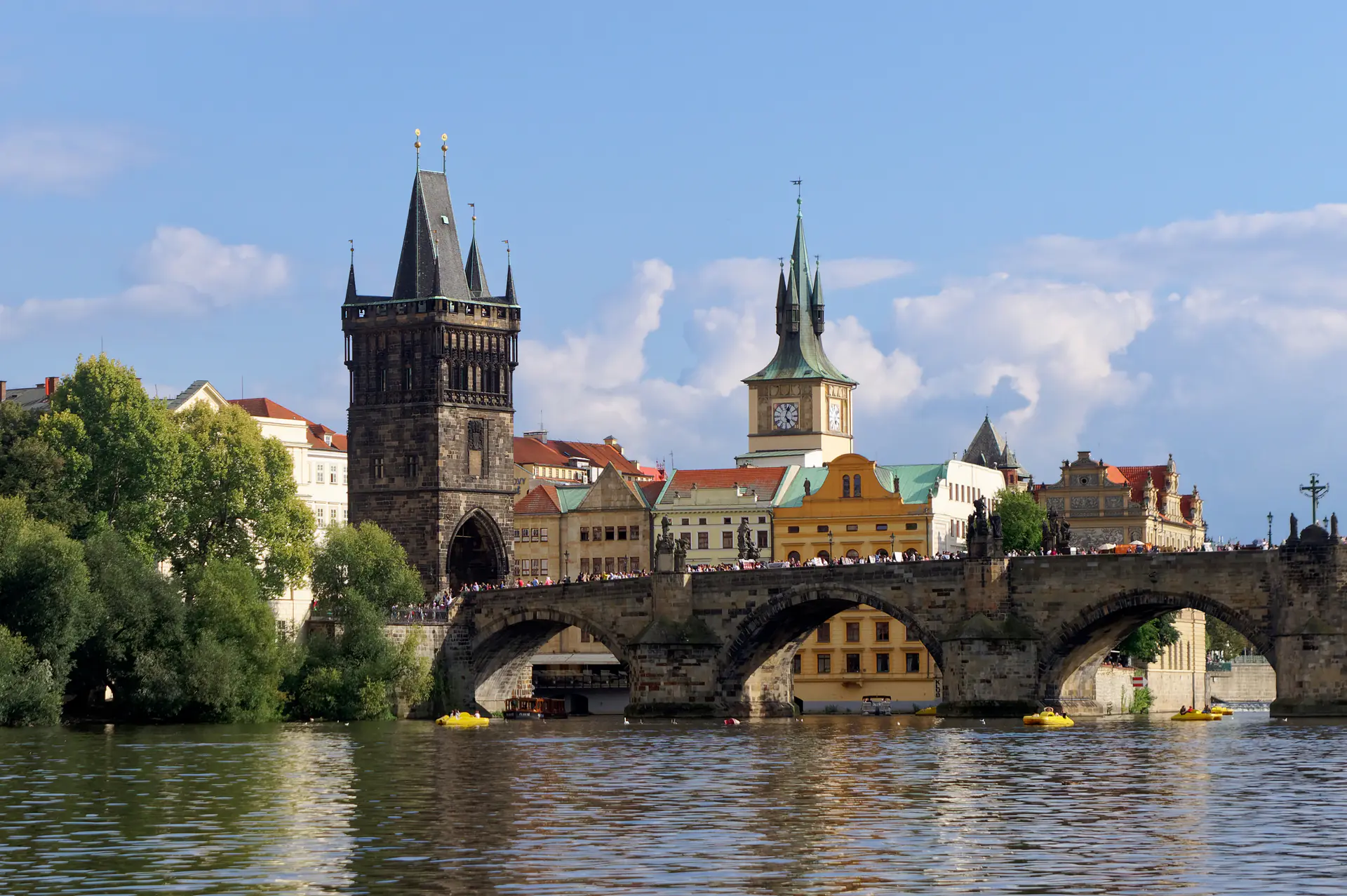
Charles Bridge and Baroque Statuary
Cross the iconic 14th-century Charles Bridge adorned with 30 baroque statues creating an open-air gallery above the Vltava River. Emperor Charles IV commissioned Peter Parler to construct this Gothic masterpiece in 1357, establishing the coronation route for Czech kings. The bridge towers represent exceptional Gothic architecture with Old Town Bridge Tower among Europe's finest medieval gateways. Thirty baroque statues added during 17th-18th centuries depict saints and religious scenes. The bridge creates magical atmosphere at dawn when golden light illuminates Prague Castle while street musicians animate the pedestrian space throughout the day.
Pro tip: Arrive before 6:00am for stunning sunrise photography without crowds--early morning light creates spectacular Vltava River reflections while revealing architectural details impossible to appreciate during packed daytime hours.
Must-See
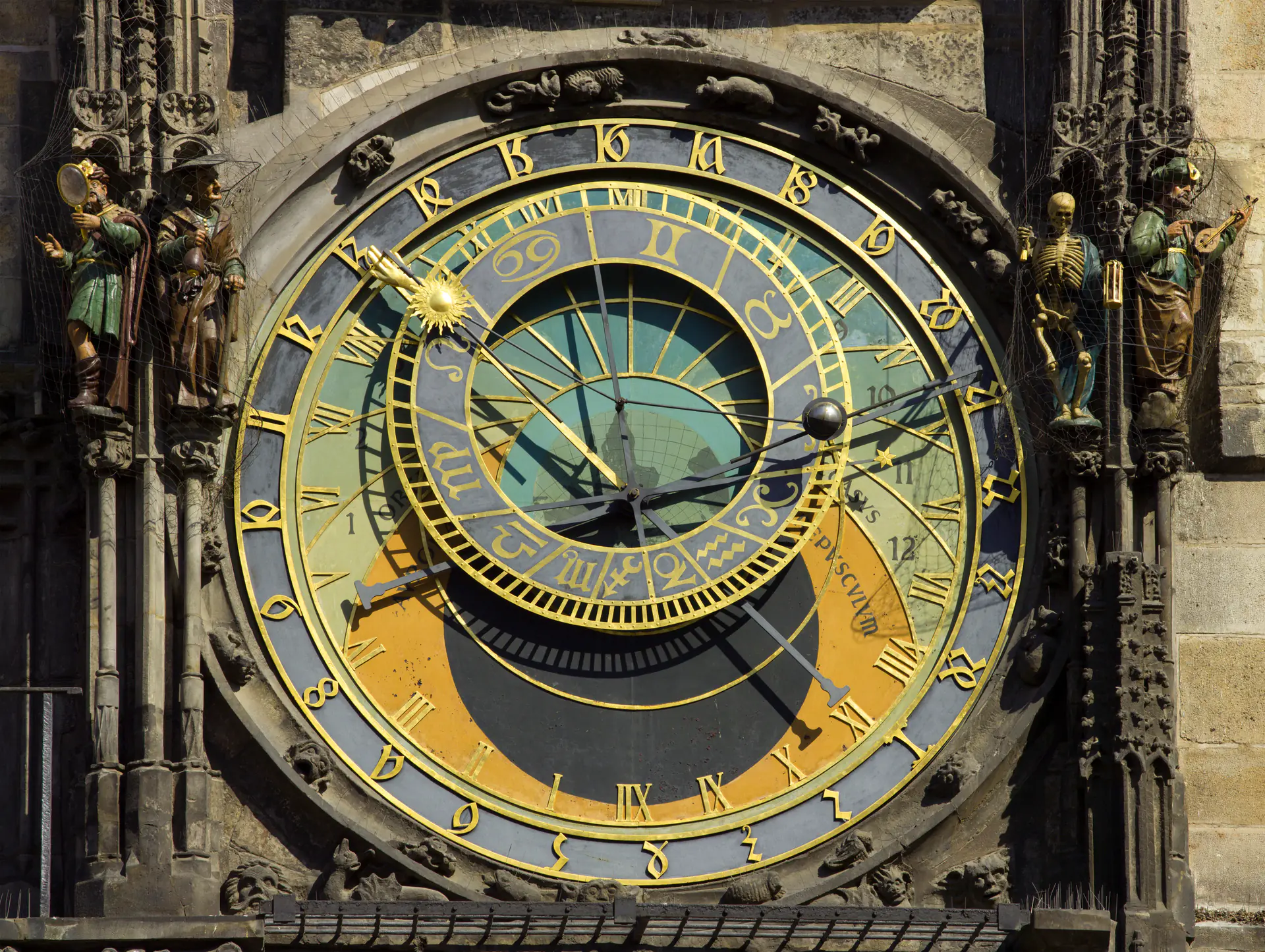
Old Town Square and Astronomical Clock
Explore Old Town Square where Gothic, baroque, and Renaissance architecture creates an exceptional ensemble documenting eight centuries of evolution. The Astronomical Clock on Old Town Hall has mesmerized viewers since 1410--the world's oldest functioning astronomical clock. Every hour, mechanical apostles parade past windows while a skeleton rings the death bell. The Gothic Church of Our Lady before Týn with twin spires dominates the skyline, while baroque St. Nicholas Church and colorful merchant houses frame the space. This plaza witnessed pivotal Czech history including Jan Hus reformation, Habsburg rule, and 1989 Velvet Revolution.
Pro tip: Visit Old Town Hall tower before 9:00am for extraordinary panoramic views across Prague's red rooftops without queues--the gallery provides perfect orientation for understanding historic center layout and the "City of a Hundred Spires" nickname.
Recommended
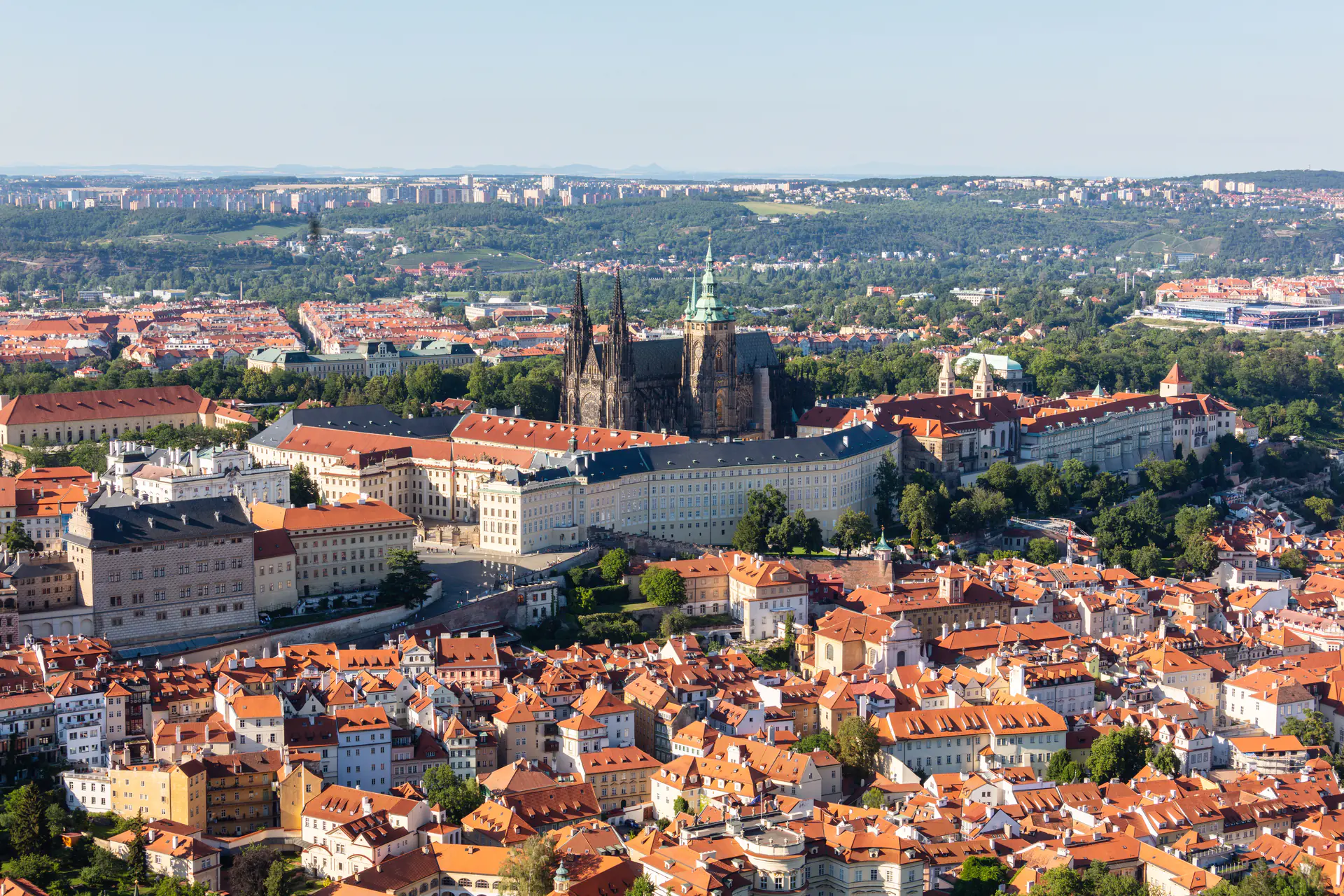
Prague Castle and St. Vitus Cathedral
Ascend to Prague Castle, one of the world's largest castle complexes, where Czech rulers governed for over a millennium. St. Vitus Cathedral dominates with soaring Gothic spires completed in 1929 after 600 years of construction, housing crown jewels, royal tombs, and spectacular stained glass including Art Nouveau masterworks by Alfons Mucha. The Old Royal Palace contains Vladislav Hall with extraordinary late-Gothic vaulted ceiling for medieval tournaments and presidential inaugurations. Golden Lane's miniature 16th-century houses once sheltered goldsmiths and later attracted writers including Franz Kafka. Castle terraces provide breathtaking panoramas across Prague's historic center.
Pro tip: Purchase Circuit B ticket (CZK 250, $11 USD) covering St. Vitus Cathedral, Old Royal Palace, Golden Lane, and St. George's Basilica--the ticket office near St. Vitus east entrance has shorter queues than the main information center.
Recommended
Jewish Quarter (Josefov) Heritage Sites
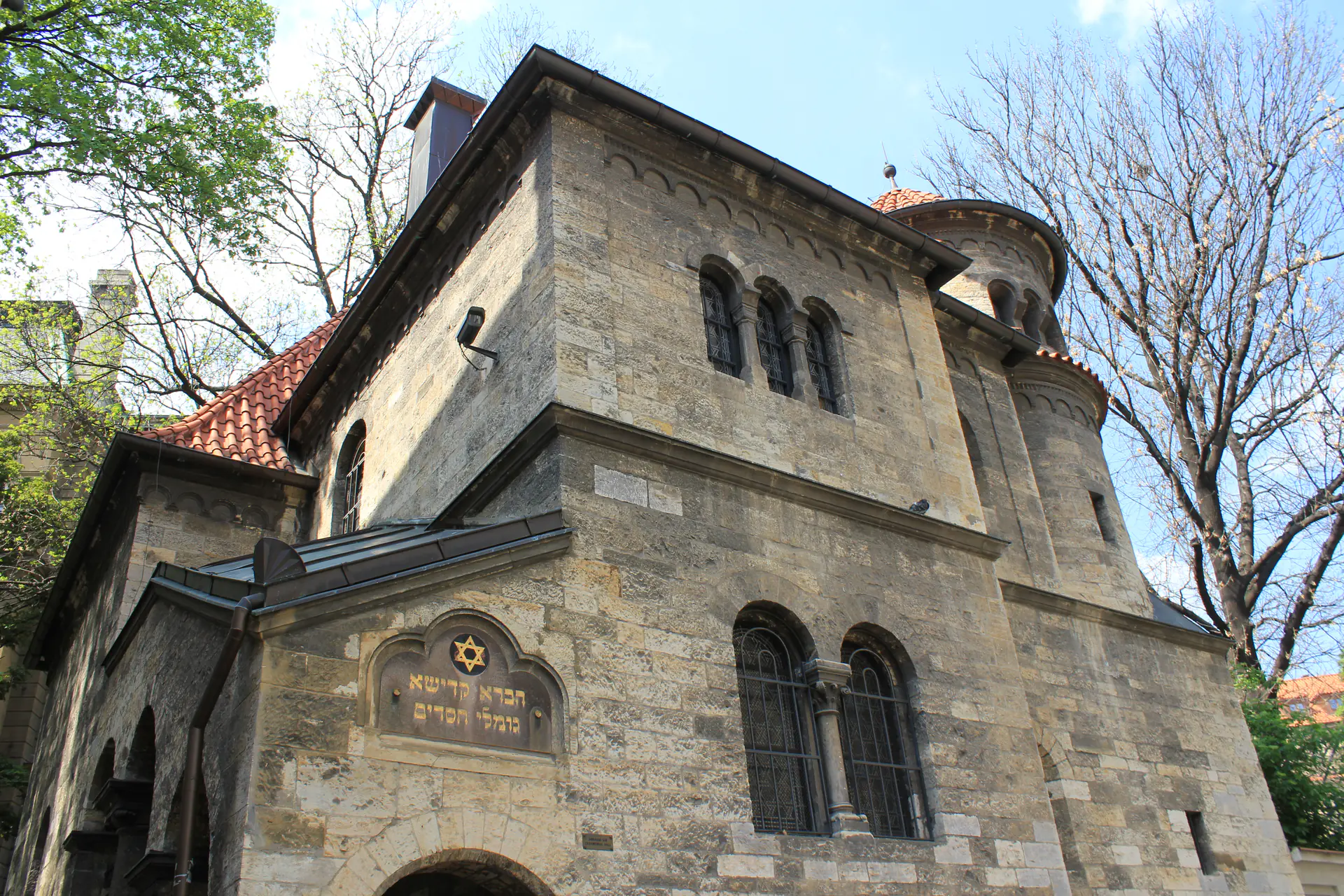
Discover the Jewish Quarter (Josefov), one of Europe's most significant Jewish historical districts with six synagogues, ceremonial hall, and evocative Old Jewish Cemetery where 12,000 gravestones layer across centuries. The Spanish Synagogue showcases breathtaking Moorish Revival architecture with geometric patterns, while the Old-New Synagogue remains Europe's oldest active synagogue since 1270. The cemetery creates moving atmosphere with Hebrew inscriptions marking graves of renowned rabbis including Rabbi Loew. The Jewish Museum documents eight centuries of Jewish life through ritual objects, manuscripts, and Holocaust memorial with Terezín children's drawings. This quarter survived Nazi occupation when the regime preserved buildings as "museum of an extinct race."
Pro tip: Book combined ticket online (CZK 500, $22 USD) to bypass queues--start at Spanish Synagogue at 9:00am opening when crowds are minimal, then work through other synagogues before afternoon tour groups arrive.
Historical Context
Early Medieval Foundation (9th-10th centuries)
Přemyslid dynasty established Prague Castle around 880 AD on strategic hilltop above Vltava River. Prince Bořivoj I built the first Church of the Virgin Mary, initiating Prague's development as political and religious center. The settlement grew rapidly as vital trade route crossroads, with Prague becoming Bohemian principality seat attracting merchants and craftsmen.
Golden Age of Charles IV (1346-1378)
Emperor Charles IV transformed Prague into Holy Roman Empire capital and cultural powerhouse during his reign. He commissioned Charles Bridge, founded Charles University (1348), initiated St. Vitus Cathedral Gothic reconstruction, and expanded city walls creating New Town. This period established Prague's architectural splendor and intellectual prominence attracting scholars, artists, and merchants from across Europe.
Hussite Wars and Reformation (1419-1434)
Religious reformer Jan Hus's execution in 1415 sparked Hussite Wars transforming Prague into Protestant reformation battleground. The defenestration of 1419 from New Town Hall initiated decades of religious conflict and social upheaval. Despite destruction, Prague maintained cultural significance while Hussite reforms influenced European Protestant movements, fundamentally challenging Catholic authority.
Habsburg Baroque Transformation (17th-18th centuries)
Habsburg rulers imposed Catholic restoration following 1620 Battle of White Mountain defeat of Czech Protestant nobles. Extensive baroque construction transformed Prague's skyline with churches, palaces, and religious monuments creating the distinctive architectural character visible today. Charles Bridge received its baroque statuary during this period, while aristocratic palaces filled Lesser Town creating opulent architectural ensemble serving Habsburg power.
Czech National Revival (19th century)
Czech national awakening movement revived Czech language, culture, and national identity under Austrian imperial rule. Construction of National Theater (1883) and National Museum symbolized Czech cultural aspirations. The period produced architectural masterworks including Art Nouveau buildings that added layers to Prague's architectural palimpsest without destroying earlier monuments, demonstrating respect for historical continuity.
Modern Transformations (20th century-present)
Prague survived both World Wars relatively intact, preserving exceptional historic fabric despite Nazi occupation and communist rule. The 1989 Velvet Revolution peacefully transformed Czechoslovakia into democracy. UNESCO recognition in 1992 acknowledged the historic center's outstanding value. Contemporary restoration programs balance heritage preservation with modern functions, maintaining architectural integrity.
Conservation
Current Status
The Historic Center of Prague undergoes continuous conservation balancing heritage preservation with modern urban functions, tourism management, and economic pressures through collaborative approaches involving government agencies, preservation specialists, and international organizations ensuring architectural integrity for future generations.
Challenges
- Tourism pressure from 8 million annual visitors overwhelming historic center infrastructure, creating crowding on Charles Bridge and Old Town Square while driving commercialization that displaces authentic community functions
- Air pollution from traffic and regional sources accelerating stone deterioration across baroque facades and Gothic monuments requiring intensive cleaning and restoration programs
- Inappropriate modern development threatening historic skyline with high-rise construction proposals in buffer zones potentially destroying protected sight lines and architectural context
- Building adaptations for modern uses including hotels and restaurants potentially compromising historic structures through invasive modifications, mechanical systems, and accessibility retrofits lacking sensitivity to architectural integrity
- Climate change bringing extreme weather patterns including intense rainfall causing flooding along Vltava River and temperature fluctuations accelerating material weathering across historic buildings
Conservation Efforts
- UNESCO World Heritage designation establishing protective framework with monitoring systems, conservation standards, and buffer zones preventing inappropriate development threatening historic character
- Restoration programs utilizing traditional materials and techniques for baroque facades, Gothic monuments, and historic cobblestone surfaces maintaining authentic architectural character
- Visitor management strategies including pedestrian zones, timed entry for popular sites, and improved wayfinding distributing tourist flows beyond overcrowded Charles Bridge and Old Town Square
- Heritage legislation requiring preservation approvals for building modifications, facade changes, and new construction ensuring interventions respect historic context while enabling necessary adaptations
- International collaboration through UNESCO, ICOMOS, and European heritage networks bringing specialized expertise, funding opportunities, and best practices from global conservation community
Frequently Asked Questions
Absolutely. Prague offers extraordinary medieval architecture, rich cultural heritage, and intact historic center unmatched in Central Europe. The castle complex, Charles Bridge, and Old Town Square create unforgettable experiences. Combined with affordable prices and excellent beer, Prague delivers exceptional value and authentic Central European charm.
Prague Castle tickets cost CZK 250-350 ($11-15 USD) depending on circuit. Jewish Quarter combined ticket costs CZK 500 ($22 USD) for all sites. Old Town Hall tower costs CZK 250 ($11 USD). Charles Bridge access is free. Budget CZK 1,000-1,500 ($44-66 USD) daily for attractions, meals, and transport.
Advance booking recommended for Prague Castle and Jewish Quarter during peak season (May-September) to avoid ticket office queues, though walk-up access usually available. Online tickets provide timed entry reducing wait times. Most attractions accept same-day entry except special exhibitions and evening classical concerts requiring advance reservations.
May-June and September-October offer ideal weather with comfortable temperatures (15-22°C) and manageable crowds. Spring blooms and autumn colors enhance the experience. Avoid peak July-August when temperatures exceed 30°C and tourist crowds overwhelm Charles Bridge and Old Town Square. December Christmas markets create magical atmosphere despite cold weather.
Plan minimum 2-3 days for historic center covering castle complex, Charles Bridge, Old Town Square, and Jewish Quarter. Most visitors spend 4-5 days exploring neighborhoods, museums, and river cruises. Full week enables day trips to Kutná Hora or Český Krumlov UNESCO sites.
Prague Castle grounds and courtyards are free to enter and walk through. However, entering buildings including St. Vitus Cathedral, Old Royal Palace, and Golden Lane requires tickets. Circuit B (CZK 250, $11 USD) covers main attractions. Free entry includes castle gardens and exterior photography.
Prague is famous for Prague Castle (world's largest castle complex), 14th-century Charles Bridge with baroque statues, medieval Old Town Square with Astronomical Clock, and intact historic center called "City of a Hundred Spires." Czech beer culture, Art Nouveau architecture, and rich musical heritage add to Prague's renown.
Prague served as Holy Roman Empire capital under Charles IV (14th century), witnessed Hussite religious wars (15th century), survived Habsburg Catholic restoration creating baroque architecture (17th century), led Czech National Revival (19th century), and hosted peaceful Velvet Revolution (1989) ending communist rule.
Emperor Charles IV commissioned Charles Bridge construction in 1357, with architect Peter Parler designing and overseeing the Gothic structure. Construction continued until 1402. The bridge replaced the earlier Judith Bridge destroyed by floods, establishing the coronation route for Czech kings between castle and Old Town.
Prague's Jewish Quarter (Josefov) contains six historic synagogues including Europe's oldest active synagogue (Old-New Synagogue from 1270), the evocative Old Jewish Cemetery with 12,000 layered gravestones, ceremonial hall, and Jewish Museum installations documenting 800 years of Jewish heritage despite Holocaust devastation.
UNESCO World Heritage Criteria
Inscribed in 1992, this site meets 3 of UNESCO's 10 criteria for Outstanding Universal Value
II
Criterion (ii): Interchange of human values
Prague exhibits exceptional interchange of human values across eight centuries from Romanesque through Art Nouveau. Charles University (1348) attracted scholars spreading ideas throughout Central Europe. Peter Parler's Gothic vaulting techniques shaped late medieval architecture across the region, while baroque transformation established aesthetic standards for Habsburg territories.
IV
Criterion (iv): Outstanding architectural/technological ensemble
The Historic Center of Prague represents an outstanding medieval and baroque urban ensemble preserving exceptional architectural heritage. The castle complex demonstrates royal residence evolution over a millennium. Charles Bridge exemplifies Gothic engineering mastery. Baroque transformation added unified aesthetic without destroying earlier monuments, creating remarkable architectural palimpsest.
VI
Criterion (vi): Associated with events/traditions/ideas/beliefs/artistic works
Prague remains associated with Hussite reformation influencing European Protestantism, Habsburg restoration shaping baroque culture, and Czech National Revival reviving national identity. The city connects to composers Mozart, Dvořák, and Smetana who premiered works here. Franz Kafka's legacy permeates cultural identity. The 1989 Velvet Revolution represented peaceful transformation inspiring movements across former communist states.
Image & Content Attribution
Research & Content Sources
Photography & Visual Media
Jakub Hałun, CC BY-SA 4.0
Jakub Hałun, CC BY-SA 4.0
Godot13, CC BY-SA 4.0
Diego Delso, CC BY-SA 4.0
Øyvind Holmstad, CC BY-SA 3.0
Last updated: 12 December 2025