
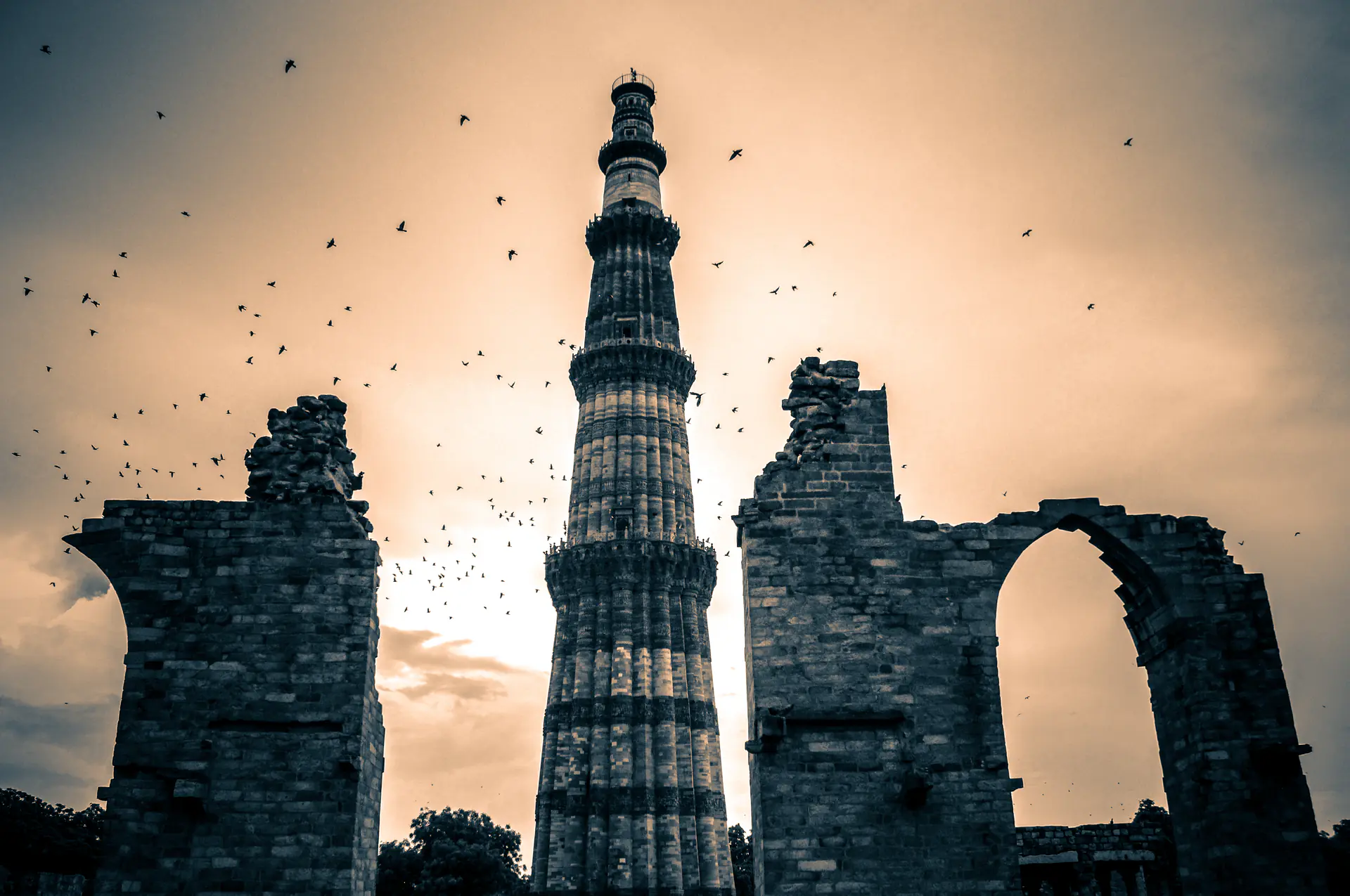
India • UNESCO World Heritage Site
Qutb Minar: Delhi Sultanate's Victory Tower Complex
World's Tallest Brick Minaret and Indo-Islamic Heritage
Inscribed: 1993
Category: Cultural
ID: #233
What Is Qutb Minar and its Monuments and Why Visit?
Qutb-ud-din Aibak began construction of Qutb Minar in 1192 to celebrate the Delhi Sultanate's establishment and showcase Islamic power in India. This 72.5-meter red sandstone tower--the world's tallest brick minaret--rises in five distinct tapering stories decorated with intricate calligraphy and geometric patterns. The surrounding complex features the Quwwat-ul-Islam Mosque (Delhi's first mosque built using columns from destroyed Hindu and Jain temples), the mysterious 1,600-year-old rust-resistant Iron Pillar, Iltutmish's ornate tomb, and the elegant Alai Darwaza gateway. Together they exemplify early Indo-Islamic architecture where Persian design merged with Hindu craftsmanship.
Why It Matters
The Qutb Complex represents a pivotal moment when Islamic architectural traditions encountered Indian building methods and materials. The reused Hindu temple columns bearing Sanskrit inscriptions alongside Arabic calligraphy demonstrate cultural transformation, while the Iron Pillar's rust-resistant metallurgy showcases advanced ancient Indian technology.
How to Visit Qutb Minar and its Monuments
Essential information for visiting this destination
How to Get to Qutb Minar and its Monuments
Fly into New Delhi's Indira Gandhi International Airport (15 km from Qutb Minar), India's main international hub with worldwide connections. From the airport, take the Delhi Metro Airport Express Line to New Delhi Station, then switch to Yellow Line toward Samaypur Badli and exit at Qutb Minar Station (total journey 60-90 minutes, approximately ₹100/$1.20 USD).
Alternatively, use app-based taxi services (Uber, Ola) for direct airport transfers (30-45 minutes depending on traffic, ₹600-900/$7-11 USD). Auto-rickshaws from nearby metro stations cost ₹50-100. Delhi's extensive metro network provides convenient access throughout the city.
Best Hotels Near Qutb Minar and its Monuments
Stay in South Delhi neighborhoods near Qutb Minar for convenience. Mehrauli village (1-2 km away) offers heritage boutique hotels and guesthouses with traditional charm. Hauz Khas (5 km away) provides upscale hotels, trendy cafes, and nightlife within historic village settings.
Saket (3 km north) features modern shopping malls and international hotel chains with reliable amenities. Greater Kailash and Defence Colony neighborhoods offer comfortable mid-range hotels with easy metro access to Qutb Minar and other Delhi attractions.
Book accommodations months ahead for October-March peak season. Summer months (April-June) bring extreme heat exceeding 45°C. Delhi offers accommodation options from budget hostels to luxury heritage properties.
Where to Eat Near Qutb Minar and its Monuments
Delhi's diverse culinary scene reflects its Mughlai heritage and modern cosmopolitan character. Old Delhi neighborhoods serve traditional street food--parathas at Paranthe Wali Gali, kebabs at Karim's near Jama Masjid, and chaats at Bengali Market. These authentic experiences require caution for foreign visitors unaccustomed to local food preparation standards.
South Delhi restaurants near Qutb Minar offer upscale dining with regional specialties including tandoori dishes, rich curries, and aromatic biryanis. Hauz Khas Village combines rooftop restaurants with historic fort views. International cuisines widely available in shopping districts.
Try Delhi specialties: butter chicken, chole bhature (spiced chickpeas with fried bread), and kulfi (traditional ice cream). Mehrauli village near Qutb Minar features several excellent restaurants serving Mughlai cuisine in atmospheric historic settings. Hotel restaurants provide reliable Continental and international breakfast options.
Qutb Minar and its Monuments Entry Fees & Tour Prices
Entry costs ₹600 ($7 USD) for foreign visitors and ₹40 for Indian nationals. Children under 15 enter free. The complex opens 7am-5pm daily year-round. Most visitors spend 2-3 hours exploring the monuments, photographing the minaret, and examining the Iron Pillar.
Audio guides available in multiple languages (₹100-150 rental). Licensed guides offer historical context for ₹500-800 for group tours or ₹1,500-2,500 for private tours. Archaeological Survey of India maintains detailed information boards throughout the complex.
Combine your visit with nearby attractions: Mehrauli Archaeological Park (adjacent, free entry) features dozens of medieval monuments scattered through landscaped grounds. The Garden of Five Senses (3 km away) offers contemporary sculpture gardens and cultural spaces.
Day trips from Delhi include Agra's Taj Mahal (230 km, 3-4 hours), Jaipur (280 km, 5-6 hours), and other Golden Triangle destinations. Delhi city tours explore Red Fort, Jama Masjid, Humayun's Tomb (UNESCO site), and India Gate.
What to Bring to Qutb Minar and its Monuments
Indian visas required for most nationalities. Apply for e-Visas online for tourist visits up to 60 days--process typically takes 3-5 business days with approval arriving via email.
Get comprehensive travel insurance covering medical emergencies, evacuation, and trip cancellations. Delhi's healthcare facilities vary widely from world-class private hospitals to basic clinics, making proper coverage essential for peace of mind.
International eSIM cards activated before departure provide instant mobile connectivity for navigation, ride-hailing apps, and communication throughout India without airport SIM card registration hassles.
India uses Type C, D, and M electrical outlets (220V, 50Hz). Bring universal adapter for charging devices. Delhi's winter (December-February) brings cool mornings requiring light jacket, while summer heat demands lightweight breathable clothing and sun protection. Modest dress shows respect when visiting religious and historical monuments.
Loading map...
Visitor Information
Everything you need to know for your visit
What to Bring
Comfortable walking shoes for exploring the expansive grounds with uneven pathways. Sun protection essential (hat, sunglasses, sunscreen) as limited shade available between monuments. Bring water bottle (vendors available at entrance). Camera for photography allowed throughout complex. Modest clothing recommended for respectful site visit.
Accessibility
Main pathways are paved and wheelchair accessible for ground-level exploration of the mosque courtyard, Iron Pillar, and monuments. However, Qutb Minar tower interior is permanently closed to visitors following safety incidents. Some areas have uneven historic paving requiring assistance for mobility-limited visitors.
Safety Tips
Stay on marked pathways to avoid uneven surfaces and archaeological preservation areas. Qutb Minar tower interior permanently closed--no climbing allowed. Bring sun protection for outdoor exploration especially during midday hours. Guard belongings in crowded areas. Monuments are closed during major festivals and holidays.
Architectural Treasures of the Qutb Complex
Must-See
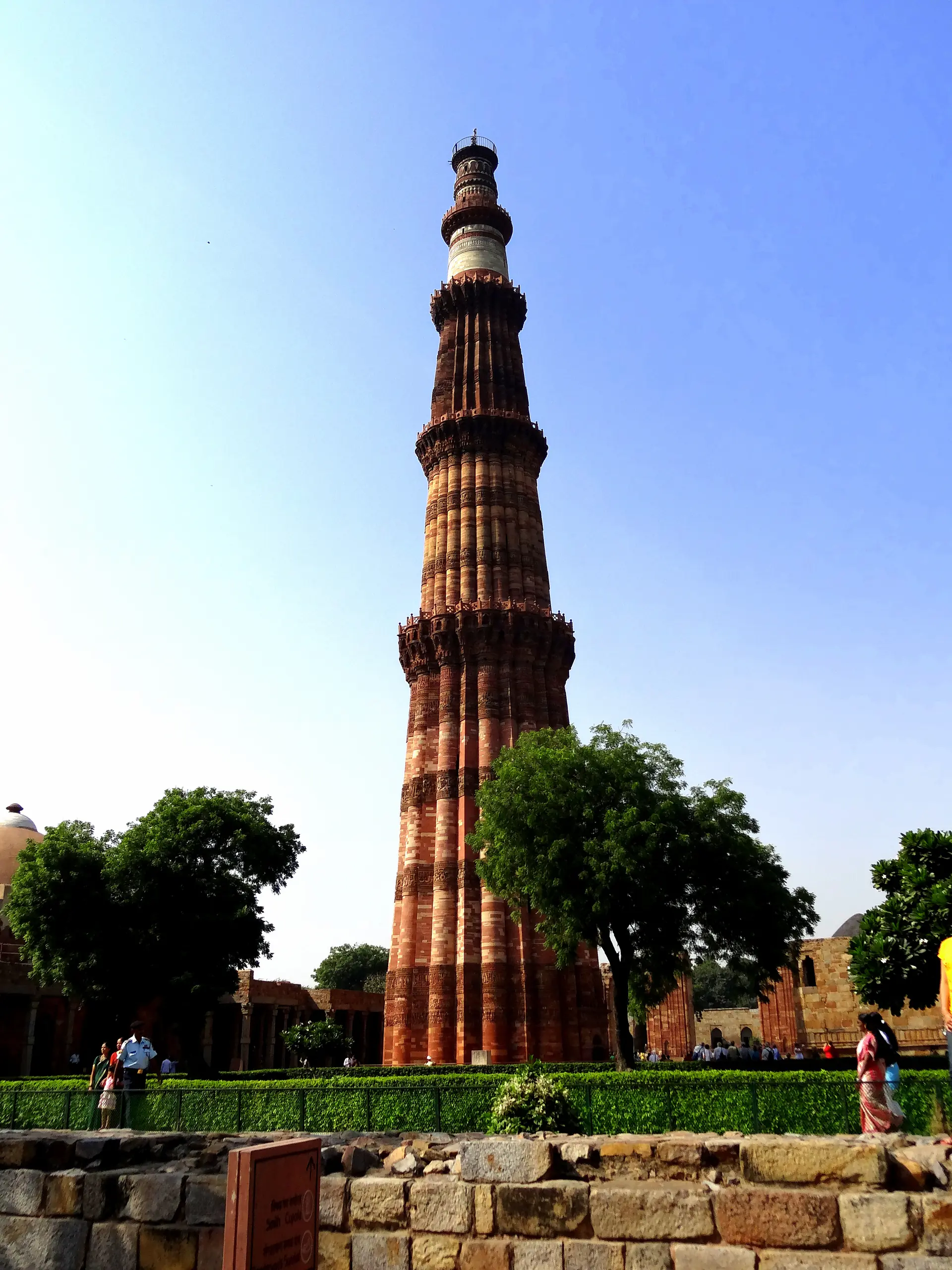
Qutb Minar: The Victory Tower
The magnificent Qutb Minar rises 72.5 meters (238 feet) making it the world's tallest brick minaret and an engineering marvel of medieval India. Five distinct tapering stories--the first three constructed from red sandstone, the upper two from marble and sandstone--create dramatic verticality. Each story features elaborate balconies supported by stalactite corbelling.
Intricate bands of Quranic verses in ornate calligraphy spiral around the tower alongside geometric patterns and arabesque designs. The architectural style blends Afghan and Indian traditions--the fluted columns recall Hindu temple architecture while the inscriptions and decoration follow Islamic artistic principles. The tower likely served multiple purposes: victory monument proclaiming Muslim rule, minaret for the adjacent mosque's call to prayer, and symbol of Islamic learning.
Pro tip: Visit during golden hour (early morning or late afternoon) when horizontal sunlight dramatically illuminates the red sandstone's warm tones and makes the carved calligraphy highly visible--the tower glows magnificently against blue skies.
Must-See
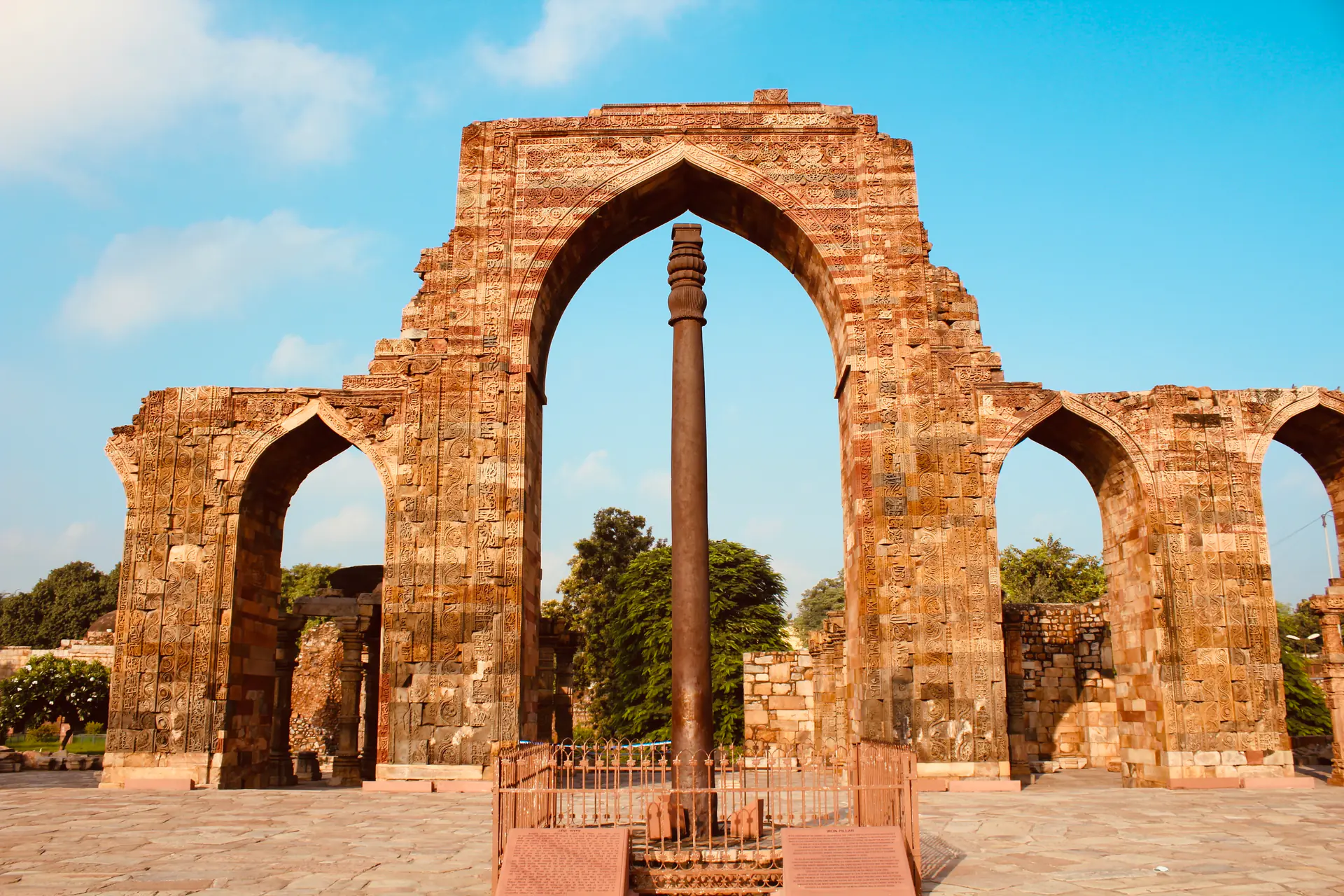
The Iron Pillar: Ancient Metallurgical Wonder
The 7.2-meter Iron Pillar represents one of metallurgy's greatest mysteries. Cast approximately 1,600 years ago during the Gupta Empire, this wrought iron column has withstood Delhi's monsoons for over a millennium without rusting--a feat modern metallurgists find remarkable.
Sanskrit inscriptions identify it as dedicated to Vishnu. Scientific analysis reveals a protective oxide film formed by the iron's unique phosphorus content. Legend claims embracing the pillar brings good fortune, though touching is now prohibited.
Pro tip: Visit early morning for the best photographs--morning light captures the dark metal's lustrous surface without harsh shadows or crowds.
Must-See
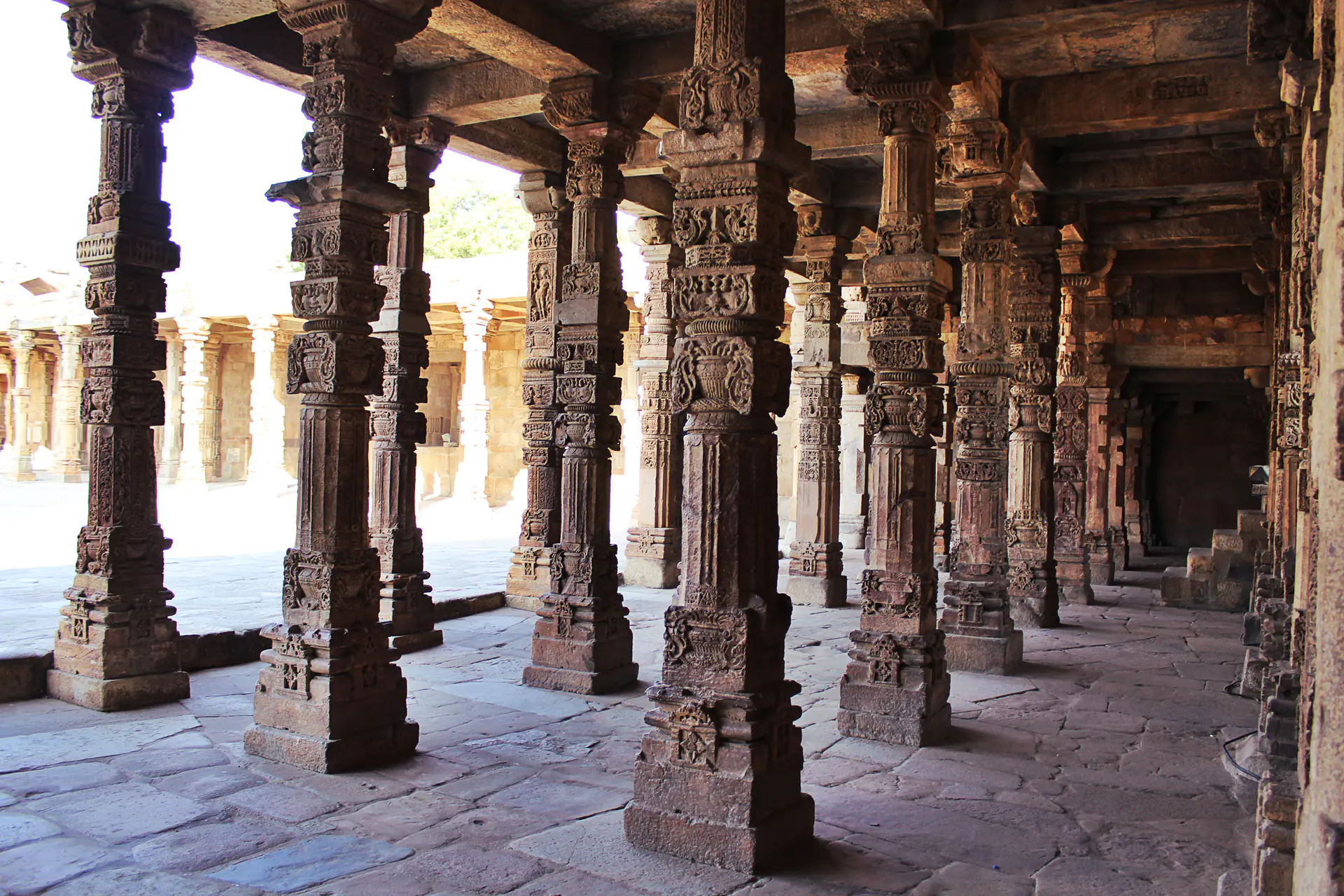
Quwwat-ul-Islam Mosque: Delhi's First Mosque
Built in 1192-1198, the Quwwat-ul-Islam ("Might of Islam") Mosque marks the establishment of Muslim rule in Delhi. Qutb-ud-din Aibak commissioned it using materials from 27 demolished Hindu temples. Ornately carved pillars featuring Hindu deities and Sanskrit inscriptions stand repurposed within Islamic frameworks.
The courtyard colonnade showcases Hindu stonecutters adapting their skills for Islamic architectural forms. Defaced deity carvings reveal the cultural transition's complex nature. This monument demonstrates how traditions merged during India's medieval period.
Pro tip: Examine columns closely to spot Hindu deity figures and Sanskrit inscriptions repurposed for Islamic architecture--this juxtaposition tells the story of Delhi's 12th-century transformation.
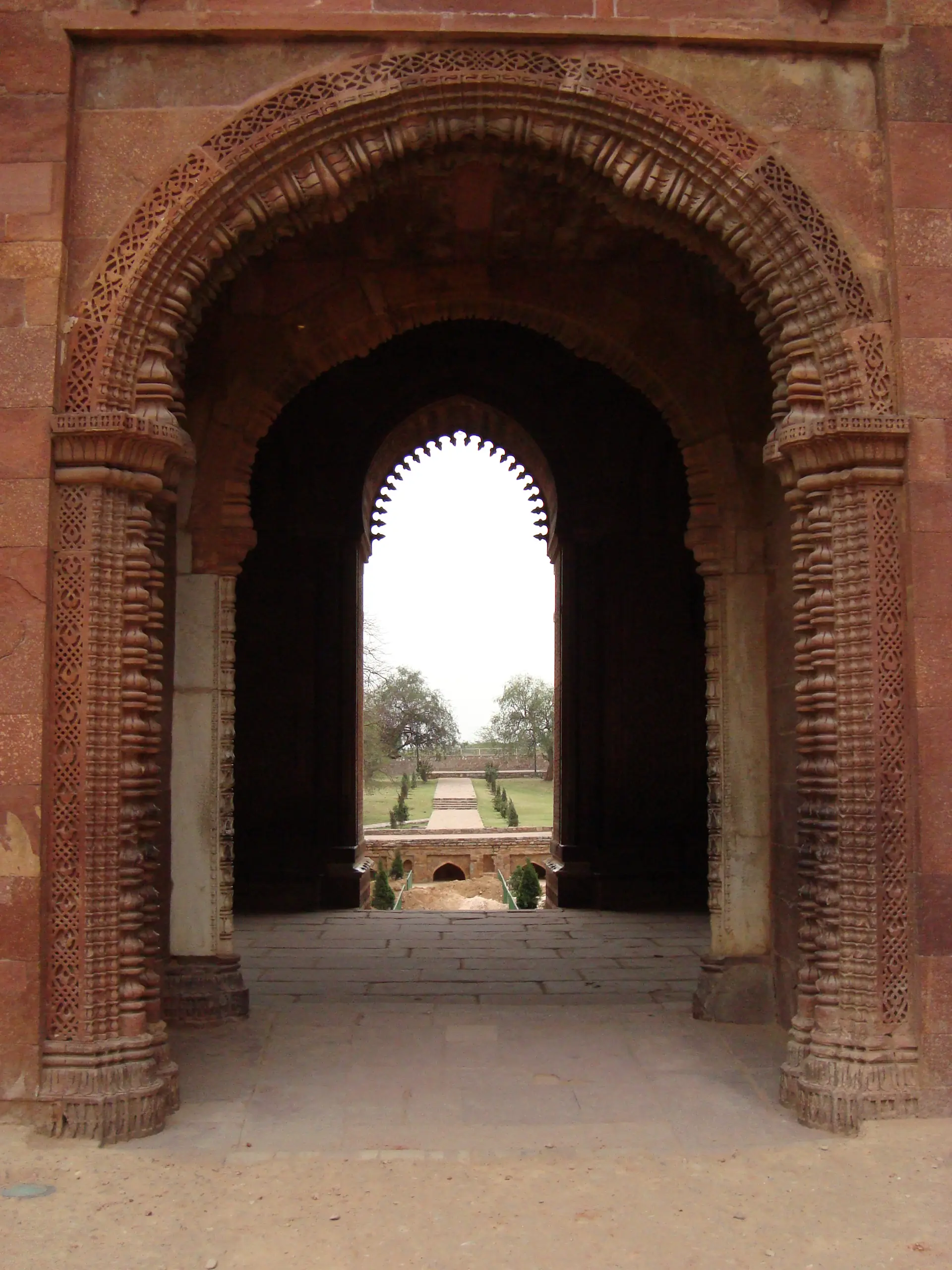
Recommended
Alai Darwaza: Masterpiece of Indo-Islamic Architecture
Built in 1311 by Sultan Alauddin Khilji, the Alai Darwaza gateway represents the pinnacle of early Indo-Islamic architectural refinement. This square domed pavilion features red sandstone walls inlaid with white marble, creating striking geometric patterns. Horseshoe-shaped arches--characteristic of Islamic architecture--frame entrances on all four sides.
The interior dome showcases sophisticated squinches (architectural elements transitioning from square base to circular dome) demonstrating advanced engineering knowledge. Intricate calligraphic inscriptions band the exterior walls, praising Allah and commemorating the Sultan's achievements. Latticed marble screens (jalis) filter light creating delicate shadow patterns inside. The building's perfect proportions and decorative restraint influenced subsequent Mughal architecture including the Taj Mahal's design principles.
Pro tip: Step inside during midday when sunlight penetrates the latticed marble screens creating spectacular geometric light patterns across the interior floor and walls--the filtered rays showcase Indo-Islamic architecture's mastery of controlled illumination for spiritual atmosphere.
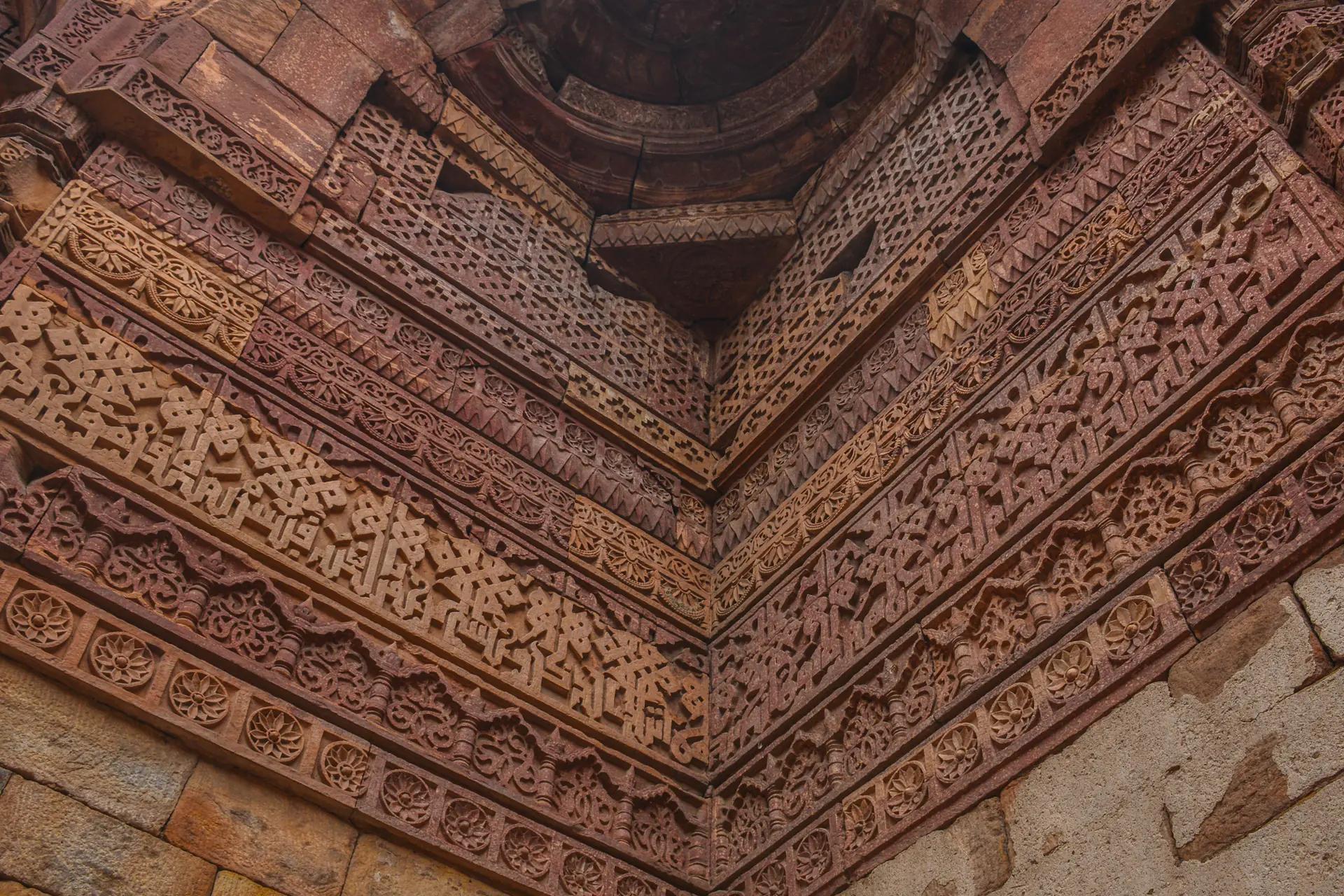
Time Permitting
Iltutmish's Tomb: Exquisite Stone Carving
The tomb of Sultan Iltutmish (died 1236) demonstrates the rapid evolution of Indo-Islamic decorative arts. Built in 1235, this square chamber features extraordinary carved stone covering every surface--geometric patterns, floral arabesques, Quranic inscriptions, and mihrab designs.
Master craftsmen blended Islamic geometric principles with Indian decorative sensibilities. The tomb's dome collapsed centuries ago, leaving the chamber open to sky. The cenotaph sits in the center with beautifully inscribed panels, representing early Delhi Sultanate architecture's transition toward decorative complexity.
Pro tip: Visit during late afternoon when sunlight enters the roofless chamber, dramatically illuminating the carved walls--golden light reveals details shadowed during harsh midday sun.
Historical Context
Delhi Sultanate Foundation (1192-1210)
Qutb-ud-din Aibak began constructing Qutb Minar in 1192 following Muhammad Ghori's conquest of Delhi, establishing Muslim rule in northern India. He commissioned the Quwwat-ul-Islam Mosque using materials from 27 demolished Hindu and Jain temples, creating Delhi's first mosque and marking Islam's architectural presence.
Expansion and Completion (1210-1368)
Sultan Iltutmish extended the mosque and completed the minaret around 1220, adding stories after lightning damage. His ornately carved tomb (1235) demonstrated evolving Indo-Islamic decorative sophistication. Sultan Alauddin Khilji added the elegant Alai Darwaza gateway (1311) and attempted constructing an even larger minaret, abandoned after his death.
Mughal Period and Later Modifications (16th-19th centuries)
Mughal emperors maintained the complex while building their own monuments elsewhere in Delhi. The minaret suffered earthquake damage in 1368 and 1503, requiring repairs by Firoz Shah Tughlaq and Sikandar Lodi. British colonial rulers documented the monuments, removing later additions they deemed inappropriate to restore "original" Islamic architecture.
British Conservation (late 19th-early 20th centuries)
The Archaeological Survey of India, established under British rule, began systematic conservation at Qutb Complex. Major restoration work stabilized the minaret's structure and preserved decorative elements. British scholars documented inscriptions and architectural features, bringing international scholarly attention to Indo-Islamic architecture's significance.
UNESCO Recognition and Modern Conservation (1993-present)
UNESCO designated Qutb Minar and its Monuments a World Heritage Site in 1993, recognizing its outstanding Indo-Islamic architectural importance. Modern conservation efforts address pollution damage, structural stability, and visitor management. The Archaeological Survey of India maintains ongoing preservation programs balancing heritage protection with public access to this architectural masterpiece.
Conservation
Current Status
India's Archaeological Survey manages Qutb Minar through scientific monitoring, structural repairs, and pollution control measures. Conservation balances preserving medieval architecture with accommodating thousands of daily visitors.
Challenges
- Air pollution from vehicular traffic and industrial emissions causing deterioration of red sandstone surfaces and intricate carved calligraphy requiring ongoing cleaning and preservation
- Structural stability concerns for the 72.5-meter minaret requiring continuous engineering monitoring and periodic repairs to prevent tilting or settling over centuries
- Visitor impact from heavy tourism creating wear on historic paving stones and monuments requiring protective barriers and pathway management
- Monsoon water damage threatening foundations and carved surfaces requiring sophisticated drainage systems and weatherproofing treatments
Conservation Efforts
- Advanced structural monitoring systems tracking minaret stability through sensors measuring tilt, vibration, and settlement providing real-time data for conservation planning
- Chemical cleaning treatments removing pollution deposits from carved sandstone surfaces while preserving original material integrity through specialized conservation techniques
- Protective barriers and designated viewing areas managing visitor flow to reduce physical contact with fragile medieval structures and archaeological features
- Educational programs promoting heritage conservation awareness among visitors and supporting local communities through sustainable cultural tourism providing economic benefits while protecting monuments for future generations
Frequently Asked Questions
Absolutely--Qutb Minar showcases exceptional Indo-Islamic architecture and Delhi's medieval history. The world's tallest brick minaret, mysterious Iron Pillar, and exquisite stone carving make it Delhi's most impressive historical monument. Most visitors spend 2-3 hours exploring. Best visited October-March when weather is pleasant.
Entry is ₹600 ($7 USD) for foreigners and ₹40 for Indians. Children under 15 enter free. Optional audio guides cost ₹100-150. Licensed tour guides charge ₹500-800 for groups or ₹1,500-2,500 for private tours. Open 7am-5pm daily year-round.
No--the tower interior has been permanently closed to visitors since 1981 following a tragic incident. You can admire the 72.5-meter minaret from ground level and explore the surrounding monuments including the mosque, Iron Pillar, and tombs throughout the complex.
October through March offers pleasant weather. Visit early morning (7-9am) or late afternoon (3-5pm) for best lighting on the red sandstone and fewer crowds. Avoid midday summer heat (April-June) when temperatures exceed 40°C. Monsoon season (July-September) brings humidity and occasional closures.
Plan 2-3 hours minimum to explore the entire complex including the minaret, mosque courtyard, Iron Pillar, Alai Darwaza gateway, and Iltutmish's tomb. Photography and detailed examination of carved inscriptions may require additional time. Combine with nearby Mehrauli Archaeological Park for a half-day heritage experience.
Qutb Minar is the world's tallest brick minaret at 72.5 meters, built starting in 1192 by Qutb-ud-din Aibak to celebrate Muslim victory in Delhi. It's famous for its height, intricate calligraphy, and representing early Indo-Islamic architecture. The complex also includes Delhi's first mosque and the rust-resistant Iron Pillar.
The 1,600-year-old Iron Pillar's remarkable rust resistance comes from its unique high phosphorus content (about 1%) and wrought iron purity creating a protective passive oxide film. Delhi's alternating dry and humid climate helps maintain this protective coating. Modern metallurgists consider it an exceptional achievement of ancient Indian ironworking technology.
Qutb-ud-din Aibak began construction in 1192 to mark the Delhi Sultanate's establishment. His successor Sultan Iltutmish completed it around 1220, adding upper stories after lightning damage. The minaret commemorates Muslim conquest of Delhi and showcases early Indo-Islamic architecture blending Persian and Indian traditions.
Take Delhi Metro Yellow Line to Qutb Minar Station (exit gate 4), then walk 1 km or take auto-rickshaw ₹30-50. From Connaught Place, the metro journey takes 45-60 minutes. Alternatively, use app-based taxis (Uber, Ola) for direct access, costing ₹250-400 depending on traffic.
Wear comfortable walking shoes for exploring the complex's pathways. Modest clothing is respectful though not strictly enforced. Bring sun protection (hat, sunglasses) as limited shade available. Lightweight breathable fabrics work best in Delhi's heat. Winter months (December-February) may require light jacket for morning visits.
UNESCO World Heritage Criteria
Inscribed in 1993, this site meets 1 of UNESCO's 10 criteria for Outstanding Universal Value
IV
Criterion (iv): Outstanding architectural/technological ensemble
The Qutb Complex exemplifies outstanding Indo-Islamic architecture during the Delhi Sultanate's formative period. The monuments demonstrate fusion of Islamic vision with Hindu craftsmanship--temple columns bearing Sanskrit alongside Arabic, and innovative designs that influenced subsequent Mughal architecture.
Image & Content Attribution
Research & Content Sources
Photography & Visual Media
Nishith Jayaram, CC BY-SA 3.0
Subrata Ghose, CC BY-SA 4.0
Hridya08, CC BY-SA 4.0
Ronakshah1990, CC BY-SA 4.0
Syed07, CC BY-SA 4.0
Last updated: 24 December 2025